
Day 10 is here and today we bring you some tasty sherryness from Glen Scotia one of the few remaining distilleries in Campbeltown who in 1835 here home to 29 different distilleries. But the cream rises to the top, the fat gets cut, ect. ect. and we have a fine example of Campbeltown pride to help us along our journey. We welcome you to dig in and enjoy
Whisky
Country: Scotland
Age: NAS
ABV: 46%
History
 Glen Scotia Distillery was founded in 1832, and has been operating for one hundred and eighty years. Situated in Campbeltown, one of the recognised 5 Whisky producing regions of Scotland, the distillery has a formidable pedigree.
Campbeltown is a small town on the Kintyre Peninsula on the west coast of Scotland. It is affectionately known as the “Wee Toon”, and the Victorian Whisky Capital of the World. At its peak in the 1800s, there were 21 distilleries in this small town with approximately 170 distilleries operating at that time in the UK (129 of those in Scotland) Campbeltown still has 3 operating distilleries: Glen Scotia, Springbank, and Glengyle. These distilleries give a remarkable insight into the history of making whisky in this remote, once prolific, whisky making region of Scotland.
Glen Scotia was formerly known as ‘Scotia’ when it was first founded in 1832 by Stewart & Galbraith and Company. Stewart & Galbraith Co. ran the Distillery for almost 60 years. Notable industrialist Duncan MacCallum purchased the distillery in 1891 and he constructed the large frontage (Malting Floors) which run along High Street.
The distillery was acquired from the trustees of the late Duncan McCallum by the Bloch Brothers in 1933. Production was suspended in 1942 on account of the Second World War but was restarted early in 1945.
Bloch Brothers was acquired by Hiram Walker and Sons of Dumbarton in 1954. In 1955 A. Gilles took ownership and in 1970 this merged with three other companies into Amalgamated Distilled Products (ADP). In 1987, Ian Lockwood, former group marketing director of Amalgamated Distilled Product led a management buyout of part of the business and the sale included the Glen Scotia Distillery, which operated as Gibson International.
In 2014, the distillery was bought by Loch Lomond Group who have invested heavily in the site by developing the brand, increasing capacity, opening warehouses and developing a distillery visitor centre.
Today, the distillery still maintains much of its original design, including the mashtun, the stillroom and the dunnage warehouse which dates back to the 1830s. Glen Scotia distillery currently operates with a staff of just 8 employees: one distillery manager, assistant distillery manager, visitor centre manager and five distillery operators. The visitor centre is open to the public and runs daily distillery tours and tastings, with a Victorian style shop to purchase the whisky, branded merchandise and other goods.
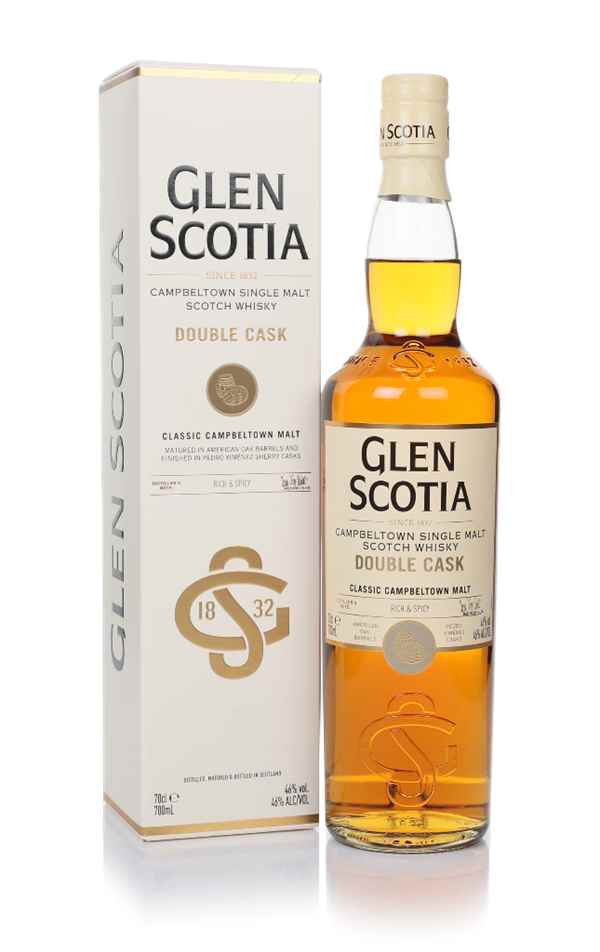 Tasting Notes
Nose: chewy vanilla fudge, a hint of salinity,array of oak-y spices including some char.
Taste: fudge, powdered sugar, oily, german brandy
Finish: Sherry