
Day 25 and we have reached the end. We hope you have enjoyed this adventure and will join us on a similar adventure next year. You will notice today’s whisky is slightly bigger it should allow you to deal with the rest of the day or if you feel the need/desire share some with those around you. Either way it’s good, this is a very holiday whisky, and although low it is cask strength. Our final dram comes to us by way of Caol ila and though peated to a very strong degree I hope any non peat-head can find some tastiness in this wonderful dram.
Whisky
Country: Scotland
Age: 7 years
ABV: 47.5
Profile
Caol Ila’s distillery character manages to combine a fresh pear note, grassiness, a hint of juniper and distinct notes of the seashore – lobster shells, crab creels and gentle smoke. Although it receives the same spec of malt as sister distillery Lagavulin, Caol Ila’s distillation regime – longer fermentation, higher cut point, taller stills – helps to reduce the heavy phenols. Maturation for the single malt is in refill casks. The unpeated variant is equally delicate, with a fresh, estery and almost floral lift.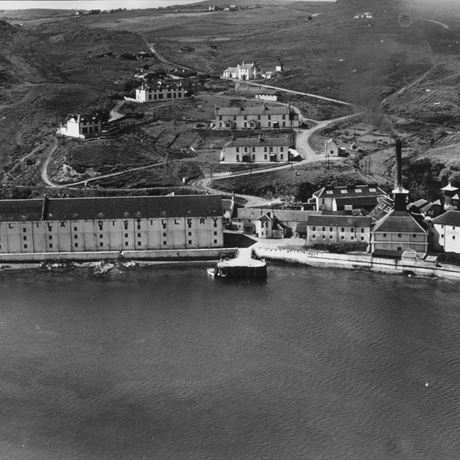
Its importance for blends meant that, until 2002, when a 12-year-old was released, malt lovers had to seek out independent bottlings. Now there is a range including no-age-statement Moch, 18-year-old and 25-year-old, a finished Distiller’s Edition and annual special releases.
History
It was in 1846 that Hector Henderson decided to build a small distillery in a tight bay next to Port Askaig, on Islay’s east coast. He named his venture Caol Ila, Gaelic for the Sound of Islay, the stretch of water which it overlooked.
In 1857 Henderson was bought out by blender Bulloch Lade, which improved the site by building a substantial pier. It was absorbed into DCL (now Diageo) in 1927 and ran continuously until 1972, when the old distillery was demolished and a new, significantly larger one was built with six stills rather than two. This transformed Caol Ila into Islay’s largest producer.
These were still the days before the single malt market had really taken off, and its make was destined for a huge array of blends across the whole whisky industry – most notably within its parent company, it filled requirements for Johnnie Walker.
When the downturn came in the 1980s, Caol Ila began running unpeated ‘Highland style’ for blends. Not only did it have capacity, but doing so allowed the distillery to stay open. Unpeated is still made every year, with volumes dependent on the forecasts of Diageo’s blending team.
In 2011, another major revamp took place with a new mash tun and more washbacks being installed, which resulted in capacity increasing to 6.5m litres per annum. During the silent period when contraction was taking place, Bunnahabhain made the peated requirements.
In 2018, Diageo revealed plans to spend £150m on upgrading tourism facilities, including a new brand home for Johnnie Walker in Edinburgh, and improved visitor centres at Caol Ila, plus Clynelish, Cardhu and Glenkinchie, representing regional styles present in Walker.
At Caol Ila, a new visitor centre will be created in the distillery warehouse, including a footbridge entry, new car parking and a bar with views across the Sound of Islay to Jura.
 Tasting Notes
Nose: Breaded baked Chicken, Slightly smoky candied bacon, Seaside campfire, Early spring west coast trails, Musty spiders, Nail polish remover, Spicy smoked caramel
Taste: Fire roasted red peppers, Spice, Smoke, Bacon
Finish: Pepper corn salmon, Campfires and happiness, Must, Candied salmon