Day 11 — Black Adder Black Snake Vat 1, 5th Venom

Welcome to day 11. When you’re an independent bottler you need to have a shtick and Black Adder has not just one but two. Firstly they don’t have any machine processing on their bottlings and second they either employ the worst or the best graphic artist to design their bottles. Today’s dram they have added one more twist and that is they started with a sherry butt, filled it with whisky, drew 3/4 of it out and called that the first venom then filled it back up and repeated the process. If you can ever find bottles from multiple venoms of the same vat I would recommend picking them up and doing a full a/b comparison. It’s interesting to see how previous inhabitants of the barrel really affect the next usage of the barrel and if your lucky you might even end up with a little chunk of the barrel in your bottle. Who doesn’t like a souvenir? Let’s enjoy the whisky now.

Whisky

Country: Scotland

Age: NAS

ABV: 60.7%

Profile

Blackadder International is owned by Robin Tucek and run in partnership with his daughter, Hannah, out of Coulsdon, Surrey.
The company’s ideology is that ‘cask is king’ – an attitude which has informed the company’s practice of bottling primarily single cask whiskies at cask strength, with no colouring and minimal filtration. To this end the company has gone so far as to deliberately include cask deposits and sediment within the bottles for its Raw Cask range – a practice that has endeared it to enthusiasts over the years.

Other bottling ranges produced by Blackadder – of which there have been many – include Raw Cask Statement and Raw Cask Legendary; Peat Reek and Peat Reek Embers, a series of unnamed, heavily peated single malts, some of which are finished in wine casks; Smoking Islay, a series of unnamed Islay single malts at cask strength; Black Snake, a range of Sherry cask-finished malts bottled at cask strength; Red Snake, a series of Bourbon and rum cask-finished single malts bottled at cask strength; the Chimera range of blended malt whiskies; the Aberdeen Distillers collection of single malts bottled at 46%; Riverstown, a series of cask strength single cask single malts bottled mainly for the Osaka region of Japan; and The Clydesdale Original, single malts bottled at cask strength primarily for the Japanese market.

The company also produces the Blairfindy single malt brand.

Since its founding, Blackadder has played an important role in the popularisation of cask strength, single malt whiskies.

History

Blackadder was founded in 1995 by Robin Tucek and John Lamond, who had together published The Malt Whisky File: The Essential Guide for the Malt Whisky Connoisseur in 1987. The duo named their bottling company after the fugitive 17th century preacher John Blackadder, who evaded the authorities for seven years.

Blackadder’s Raw Cask series was launched in 2000, although the following year Lamond left the business.

Tucek’s daughter, Hannah, joined the company in 2005.


Blackadder Black Snake Vat No.1 Fifth Venom Single Malt ScotchTasting Notes

Nose: Dried hay, Midsummer flowers, Natural sherry funk
Taste: Cask strength, Oily, Super Warming
Finish: Spice, Alcohol burn, Grapes

Purchase Links

None
Day 10 — Compass Box – The circle

Day 10 if you like this whisky I would recommend clicking the link below and getting one. I get the impression that this is not a series that will be repeated much and it’s a shame because it’s darn tasty. Although I am not generally a fan of Compass Box what I like, I like a lot. Compass Box feels like a newcomer to the blenders market but their rapidly growing presence really shows that they have a team of skilled marketers and the flavor shows they also have a person or two with a nose as we have had something form them in our calendar every year for the past couple years. Coincidence? I think not let’s enjoy.

Whisky

Country: scotland

Age: NAS

ABV: 46%

Profile

Compass Box Whisky Company is headed by founder and whisky-maker John Glaser, who spent many years working in the wine trade before moving into Scotch whisky and a role as marketing director for Johnnie Walker.Image

As the company puts it, he established Compass Box Whisky “…based on his commitment to evolving practices in the industry to make great Scotch whisky more approachable and relevant to more people.”

Unsurprisingly, given his wine background, Glaser has a deep commitment to wood quality when it comes to maturation, and at times he has pushed the boundaries of conventional whisky wisdom. For example, he created the first commercial blended grain Scotch whisky, named Hedonism, and Spice Tree, which fell foul of the Scotch Whisky Association (SWA) for its use of suspending staves of toasted French oak within conventional casks.

Compass Box offers a ‘Signature Range, which comprises The Spice Tree, The Peat Monster, Oak Cross, Asyla and Hedonism. Meanwhile, the company’s ‘Limited Range’ offers limited edition whiskies such as Hedonism Quindecimus and Flaming Heart. Compass Box’s third range is Great King Street – blended Scotch with 50% malt content, which also bears the company’s trademark transparency about component whiskies and maturation regimes.

History

Compass Box Whisky was established by John Glaser in 2000, and its first commercial release was the blended grain Hedonism, offered the same year. Peat Monster – originally just The Monster – was launched four years later, comprising heavily-peated Islay and medium-peated Highland malts, which went on to become the company’s best-seller.

The original version of The Spice Tree blended malt was marketed in 2005, but withdrawn the following year, being replaced by a variant with heavily-toasted cask heads instead of the staves disapproved of by the SWA. The Great King Street range of blended Scotch whiskies was inaugurated with Great King Street Artist’s Blend in 2011, followed by Glasgow Blend in 2014.

In April 2015, Bermuda-based Bacardi became a minority shareholder in Compass Box Whisky, having established a relationship with the company through a supply contract for component whiskies.


The CircleTasting Notes

Nose: Barley sugar, Fresh stone fruits, Crisp apple skin, Ginger spice
Taste:  Tarte tatin with vanilla cream, Sweet malt, Cinnamon
Finish: A suggestion of smoke, Oak spice, Floral malt, Vanilla pod

Purchase Links

Legacy Liquor

Day 9 — Bunnahabhain – Ceobanach

Welcome to day 9. Time for a big peat offering. I picked this one as I thought it was a new offering from Bunnahabain but a little research seems to suggest it’s been around for a bit. So if you like this one even though I was only able to find it in a couple places in BC it’s out there, you just have to search. Let’s enjoy it together!

Whisky

Country: Scotland

Age: 10 years

ABV: 46.3

Profile

Burn Stewart Distillers incorporated the Bunnahabhain Distillery Company as a dormant business to oversee the operation of the eponymous distillery it had recently acquired from Edrington.Buy Bunnahabhain Single Islay Malt » Fast delivery

The company is directly owned by Burn Stewart’s South African parent company, Distell.

History

Although Bunnahabhain distillery was constructed during a period of confidence in the Scotch whisky industry in the late 19th century, its current owner appeared over 120 years later.

William Robertson (of Robertson & Baxter) founded Bunnahabhain on Islay’s remote north east coast in 1881, in partnership with the Greenlees Brothers. The partnership was incorporated as the Islay Distillery Company Ltd the following year, and became a founding company of Highland Distillers (the precursor to Edrington) in 1887.

Bunnahabhain’s single malt whisky was always destined for blending, particularly for Robertson & Baxter’s The Famous Grouse, Cutty Sark and – eventually – Black Bottle blends.

In 2003, despite growing demand for single malt whiskies, particularly from Islay, Edrington sold Bunnahabhain and Black Bottle to Burn Stewart Distillers for £10 million. The distillery’s new owner incorporated the Bunnahabhain Distillery Company the same year to oversee its operation.

Burn Stewart itself was sold by the receivers of its Trinidad-based owner CL Financial – which went bust in 2009 – to South African drinks producer Distell in 2013.


Bunnahabhain CeobanachTasting Notes

Nose: Windex/ammonia, Candied bacon, Weeding dandelions in the front yard, Feet after a longish day in shoes, Honeydew, Smoke
Taste: Carrot cake, Happy like a dog chewing on a hardwood stick that’s been lightly charred in the fire, Sweet & savoury
Finish: Smokey apple pie, Vanilla, Differences in wood and moisture content, Heavy smoke, Some sweetness

Purchase Links

BC Liquor

Tudor house Liquor

Day 8 — Glencadam – 10 Years

Welcome to day 8 today we have a lesser known distillery and when picking the notes I am not really sure why. This is light, fruity, and tasty and I will need to find more. I really don’t know what more to say here so let’s just dig in and enjoy!

Whisky

Country: Scotland

Age: 10

ABV: 46%

Profile

The Glencadam Distillery was founded in 1825, by merchant George Cooper, about 200 yards from Brechin Distillery. David Scott was proprietor from 1827 to 1837. The distillery changed hands a number of times between 1837 and 1891. Gilmour, Thompson & Company Limited purchased the distillery in 1891 and used some of the Glencadam product in their Royal Blend brand of blended whisky. The distillery, as with most others, reduced production during World War II owing to fuel and grain rationing.Glencadam Distillery - geograph.org.uk - 779592.jpg

Hiram Walker bought the distillery in 1954, they were bought by George Ballantine & Son Ltd two years later, and ownership of the distillery eventually passed to Allied Domecq through further consolidation in the industry. Allied Domecq mothballed the distillery in 2000 before selling the distillery to the present owners, Angus Dundee plc in 2003. Angus Dundee also own the Tomintoul Distillery.

The present owners quickly resumed production and the product from the distillery is used in their own blended and vatted malt whisky products, as well as being sold to other blenders. As of July 2010 Glencadam Malt Whisky is available in a range of official bottlings aged 10 to 21 years, as a component of Ballantine’s and Stewart’s Cream of the Barley blended whiskies, Angus Dundee’s own blended and vatted whiskies, and in a number of other blended brands. Independent bottlings are also readily available, both as single malt and as vatted malts.

In November 2008, Angus Dundee plc re-launched the Glencadam line with new packaging and added a new 10 year-old single malt. Then, in July 2010 the company added three new expressions: a 21-year-old, a 12-year-old finished in port wood, and a 14-year-old finished in an oloroso sherry cask. More recently a 17-year-old finished in port wood was also released.

History

The company was formed in 2003 by Angus Dundee Distillers to acquire the Glencadam distillery from Allied Distillers.

The Brechin distillery, which was built in 1825, had produced a light, fruity malt whisky for blending, but had been mothballed by its owner since 2000.

Following its takeover by Angus Dundee, Glencadam was reopened and in 2008 released its own range of single malts.


Glencadam 10 Year Old Whisky - Master of Malt Tasting Notes

Nose: Hay, Fruit, Gentle wood influence, Light vanilla, Spice
Taste: Tart fruits, Freshly cut hay, Vanilla sweetness,
Finish: Barley malt, Fruit

Purchase Links


Day 7 — Laird of fintry

Welcome to day 7 first week was a breeze right? You got this only 18 more days left “words of positiveness” etc, etc. Those of you that have done this advent calendar in the past over 25 days will get that. Everyone else I was sincere 😉 . Day 7’s whisky is another one of the few that is limited release in this calendar as it was part of of Okanagan Spirits yearly lottery. This year they offered the opportunity to buy 2 bottles instead of just one as such I added it to the calendar. Even if you only moderately like this whisky I would recommend heading over to Okanagan Spirits website and signing up for their news letter so you can be part of next year’s lottery and also support a Canadian distillery at the same time.

Whisky

Country: Canada

Age: 3 years

ABV: 42%

Profile

Okanagan Spirits Craft Distillery is Western Canada’s original craft distillery, dating back to 2004. The distillery sprung from the idea of using 100% locally grown fruits and grains to make premium, world-class spirits just a tractor-ride away from the orchards and fields where the base ingredients were grown. BC’s original farm-to-flask distillery now offers a selection of more than 30 internationally awarded spirits ranging from Single Malt , BRBN Bourbon-Style, BC Hopped, and BC Rye Whiskies, to Gins, Vodkas, Fruit Liqueurs and Brandies, to Aquavit and even Taboo Genuine Absinthe.


Okanagan Spirits Laird of Fintry | Okanagan SpiritsTasting Notes

Nose: Amaretto, Maple sap, Chilli peppers, Rosemary, Warm, Caramelized pie, Stewed fruit
Taste: Smooth apricots, Fudgy, Creamy Booze, I would like to drink more of this, Creamy
Finish: Cherry tobacco, Oats, Eggplant, Almost burnt caramel, Stone fruit, Sherry/hazelnut

Purchase Links

Not Available

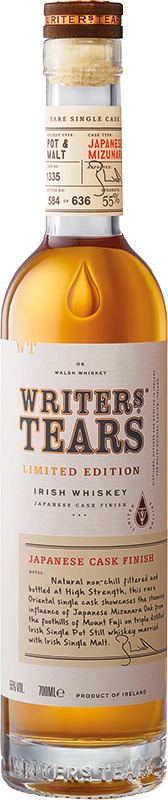
Day 6 — Writers Tears – Mizunara

Welcome to day 6. Writers Tears is definitely on my go to list of distillers when I don’t know what I want but I know I want something tasty to add to the fun who dosen’t like Mizunara. So when I saw this whisky in the BC Liquor premium release catalogu  I braved the outdoors with all the humans and collected 2 of the limited bottles out there, and I think you will agree soo worth it. Let’s enjoy!

Whisky

Country: Ireland

Age: NAS but 9 months in virgin  Mizunara cask

ABV: 55

Profile

Writers’ Tears Irish Whiskey, bottled by Walsh Whiskey Distillery, is a blend of single malt and aged single pot still whiskies, the latter category referring to Irish whiskeys made from a combination of malted and unmalted barley on a pot still. This unique combination means that Writers’ Tears is technically a blend, but it’s one made entirely without grain whiskey. Irish whiskey once suffered from a reputation for being cheap or simple as a result of bootlegged Irish whiskies during Prohibition, but contemporary expressions like Writers’ Tears and many others are changing the way people think about Irish brands.

Writers’ Tears has a modern name, and its label is simple, cool-looking, and contemporary. It’s aged in American bourbon barrels, producing a light, smooth flavor profile. Walsh Whiskey Distillery began in 1999 with Bernard and Rosemary Walsh and their mission to create the perfect Irish Coffee.

In 2006, the company made a long-term deal with an Irish whiskey producer, and were able to make more whiskey to their specifications. This deal allowed the company to expand their distribution and get a head start on the rapidly expanding Irish whiskey market.


Tasting Notes

Nose: Sandalwood, White chocolate, Caramel
Taste: Quite hot & spicy on arrival, Honey, Vanilla, Raw malt
Finish: Tartness, Cinnamon, Lemon rind

Purchase Links

BC Liquor

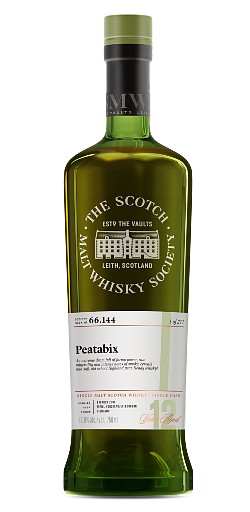
Day 5 — SMWS 66.144 – Peatabix

Day 5 let’s return to Scotland but rather than having a dram form a specific distiller let’s have a dram from a bottler. The SMWS believes that whisky should be about drinking what you enjoy not about who makes it. This is something I fully believe in to that end the SMWS hides bottles behind a code XX.YY where XX represents the distiller and YY equals the number of casks from that distiller. Although there are no exact documents saying what code matches what 66 is believed to represent Ardmore. If you enjoy today’s Dram, it might be because you like Ardmore, it might because this whisky is tasty, or it might be both.  If you’re a fan of whisky variation when COVID lock downs are over ping an organiser and we can help arrange you purchasing a ticket to the SMWS monthly tasting and maybe even score a membership. As all that sounds like a pyramid scheme let’s just drink this whisky and you can mull it over.

Whisky

Country: Scotland

Age: 12 years

ABV: 60.8%

Profile

The Scotch Malt Whisky Society (SMWS) is a private members’ club and one of the oldest of Scotland’s ‘modern’ independent bottlers and an influential whisky institution that has played a significant role in the promotion and expansion of enthusiasm for single malt whiskies, both in the UK and abroad.Welcome to The Scotch Malt Whisky Society Canada

It was one of the key companies to promote the bottling of whiskies at cask strength and the idea of ‘single casks’. Its whiskies are notable for their uniform presentation and the coding system by which the different bottlings are denoted. The SMWS has also bottled Cognac, Armagnac, rum, Bourbon, other American whiskies and even Somerset cider brandy.

Annual membership includes access to the society’s numerous venues around the world, as well as to its bottlings which are exclusively for members only.

History

The SMWS was founded in 1983 by a group of friends including tax accountant Philip ‘Pip’ Hills, actor Russel Hunter, contractor David Alison, writer W Gordon Smith and architect Ben Tindall.

Hills was already an avid whisky enthusiast and travelled around Scotland visiting distilleries. The group of friends purchased a cask of Glenfarlcas, from which they would occasionally draw bottles and share. In 1983 part of the Vaults buildings in Leith became available as previous occupants J G Thomson had been re-located to Glasgow by owner Tennent Caledonian Breweries.

A membership society was established and the cask of Glenfarclas owned by Hills and his cohorts – a 1975 Sherry cask – was released as the first SMWS bottling – labelled 1.1 – in August 1983. Further bottlings were released monthly thereafter until the Society started to grow in size.

In 1995 Hills resigned as a director and it continued as a private company without him. The following year the SMWS offered its members a private share scheme, and the money raised was re-invested into the acquisition of a second members’ club at Greville Street in London.

In 2004 the SMWS opened its third venue at 28 Queen Street in Edinburgh, and was sold later the same year to Glenmorangie.

In 2008, to mark its 25th anniversary, the SMWS updated its livery quite dramatically for the first time in its history with a change to the bottle shape and slight alterations to the label to include a more extensive tasting note. The bottlers were updated again in 2017 to better highlight the whisky styles.

The SMWS was sold to a private consortium of investors in 2015


Bottle - Cask # 66.144Tasting Notes

Nose: Menthol, Grainy, Petrichor, Petrochemicals, Cedar fire on the beach, Flowers and Rain, Smoked applewood, Bacon fat
Taste: Menthol, Seasoned wood, This one’s not fucking around, Chimney fire, I really like this
Finish: Sweet smoke, Iraq on fire (the first time)

Purchase Links

Sold Out

Day 4 — Nikka from the barrel

Day 4 well as I am writing this up a smarter person than me would have noticed that we have back to back “international” whiskies but here we are and the order is set. Japan dosen’t make a lot of whisky compared to the amount they drink. This is reflected in the availability and general size of bottles but what does escape is tasty and I think today’s dram is no exception. As part of BC Liquor’s spring release party this is one that if you look you should be able to find but it might be hard. Let’s dig in and enjoy!

Whisky

Country: Japan

Age: NAS

ABV: 51.4%

Profile

The Nikka Whisky Distilling Co. Ltd. (ニッカウヰスキー株式会社Nikka Uwisukii Kabushiki Gaisha) is a producer of Japanese whisky and other beverages headquartered in Tokyo. It is owned by Asahi Group Holdings.

The company operates a number of distilleries and other facilities in Japan, including two Japanese whisky distilleries, the Yoichi distillery in YoichiHokkaidō (established in 1934), and the Miyagikyo distillery in Aoba-ku, SendaiMiyagi Prefecture, Northern Honshū (established in 1969). It also owns the Ben Nevis Distillery (acquired in 1989) in Scotland.

History

The founder, Masataka Taketsuru, travelled to Scotland in 1918 to learn the process of distilling Scotch whisky first hand. He studied organic chemistry under Prof. T. S. Patterson at the University of Glasgow and malt whisky production at the Hazelburn distillery, in Campbeltown near the Mull of Kintyre. He married Jessie Roberta “Rita” Cowan, the daughter of a Glasgow doctor, and returned with her to Japan in 1920. In 1923 he joined Kotobukiya (currently Suntory) and helped to establish a distillery before starting Nikka in 1934.

After their deaths, the company was run by their adoptive son, Takeshi Taketsuru, who expanded its business substantially.


Nikka Whisky From The BarrelTasting Notes

Nose: Banana again, Cinnamon bread, Sea brine
Taste: Cinnamon buns, Salt
Finish: Warmth, Maybe banana bread? General cosiness, Caramel, Maple salt water taffy,

Purchase Links

BC Liquor


Day 3 — Amrut – Kadhabam

Day 3 now we are starting a pattern but let us not get too crazy today’s whisky comes from India and a solid distillery at that. Amrut has lots of tasty offerings under its belt and I feel this is no exception, and even though colour is not everything just look as that bottle.  Until recent years India was not one of the countries one thinks of when it comes to whisky but if you haven’t had something from this distillery this is a good example of what they can do.Please enjoy!

Whisky

Country: India

Age: NAS

ABV: 50

Profile

Amrut Distilleries Ltd is an Indian company that produces distilled beverages. It is best known for its eponymous Amrut brand of single malt whisky, which is the first single malt whisky to be made in India. The Amrut Distillery uploaded by Ben, 23. May 2016brand became famous after world famous whisky connoisseur Jim Murray gave it a rating of 82 out of 100 in 2005 and 2010. In 2010, Murray named Amrut Fusion single malt whisky as the third best in the world. John Hansell, editor of American magazine Whisky Advocate, wrote that “India’s Amrut distillery changed the way many think of Indian whisky – that it was, in the past, just cheap Scotch whisky blended with who knows what and sold as Indian whisky. Amrut is making whisky, and it’s very good”.

Despite the fame the company has received for the single malt whisky, it accounted for only 4-5% of the company’s revenue in 2011-12. The bulk of its revenue comes from the sales of brandyrumvodkagin and blended whisky, particularly the Silver Oak brandy, Old Port rum and Prestige whisky brands. Approximately 20% of its revenue comes from supplying the Canteen Stores Department. Amrut Distilleries currently sells Amrut single malt whisky in 23 countries, including Australia, Belgium, Canada, Denmark, Finland, France, Germany, Italy, Japan, the Netherlands, Norway, Singapore, Spain, South Africa, Sweden, Switzerland, Taiwan, the United Kingdom and the United States.

History

Amrut Distillery was founded in 1948 by Shri J.N. Radhakrishna shortly after India had become independent. Amrut soon became successful by supplying the Indian army with spirits. Today the company owns three distilleries and several bottling plants. The current main distillery is located in Kambipura, 20 km (12 miles) away from Bangalore, and was built in 1987. It employs 450 people since many production steps such as bottling and packaging are still done by hand.
In 2004 Amrut started to market Amrut single malt internationally. It was the first Indian single malt but wasn’t marketed domestically until 2010. Blends are still the bestsellers of the distillery at home.
Amrut is now the best-known whisky of India and has received important international awards.


Amrut Kadhabam - 70clTasting Notes

Nose: Marsh-mellow orange sherbert, Honeysuckle, Summer squash, Sauternes, White fruit,
Taste: Roasted pine nuts, Warm perfume, Hair spray, Little bit of bite, Underripe fruit, Ginger
Finish: Dry, Strawberry soap, Oaky fruit, Smashed fruit on on oak board

Purchase Links

Tutor house Liquor


Day 2 — Springbank – Longrow Peated

Welcome to day 2. After yesterdays interesting whisky its time to have something more traditional and I feel this checks all the boxes. I will keep todays blurb short lets tuck in and enjoy

Whisky

Country: Scotland

Age: NAS

ABV: 46%

Profile

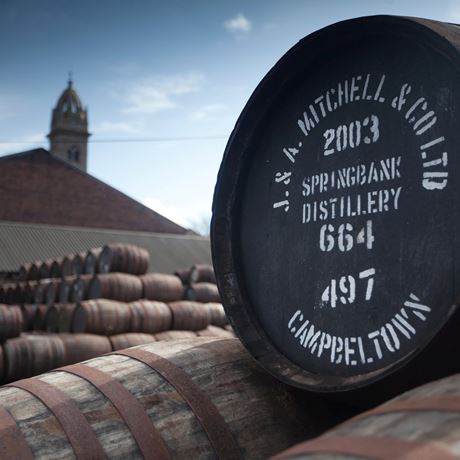
The equipment at Springbank is resolutely old-style: an old Boby mill, an open-top cast-iron mash tun, wooden washbacks made from boatskin larch; and three stills, direct fire on one of them, a worm tub on another.

The malt is handled in three ways to produce three contrasting whiskies – Springbank itself is medium-peated, Longrow is heavily peated, while Hazelburn has no peat at all. Ferments are very long – in excess of 100 hours; with low-gravities which both produces a low-strength wash and high levels of esters. This fruity base is then distilled in three different ways, depending on the style being produced.Image

Springbank is partially triple-distilled. The wash still (which is direct fired) works as normal producing low wines, the strongest portion of which are directed to the spirit still charger. The remainder is redistilled in the intermediate still (which has a worm tub) and put into the feints receiver along with the heads and tails from the spirit still distillation.

This mix makes up 80% of the final charge, with the strong portion of low wines from the wash still making up the remaining 20%.

Unsurprisingly, the result is a highly complex new make that is collected at an average strength of 71-72% – lightly smoky, oily, fruity, delicately fragrant yet powerful.

Longrow is heavier and smokier – the malted barley obviously playing a significant part, but so does distillation in the direct-fired wash still and second distillation in the spirit still which has the worm tub. It is collected at 68%, lower than Springbank.

Hazelburn undergoes standard triple distillation and is collected at between 74-76% abv.

Maturation for all three is in a mix of casks – as well as the standard ex-Bourbon, ex-Sherry and refill, other types [wine and rum] and sizes [60 litre ‘rundlets’ and 50 litre ‘kilderkins’] are used.

History

Continuity is the watchword at Springbank. This distillery has been in the ownership of the Mitchell family and its ancestors since 1837. Indeed, as its founder William Reid was related to the Mitchells by marriage you could argue that they were there from the word go.

It was in 1828 that Reid took out a licence, but there was a rich – and extensive – heritage of illicit distillation in the Kintyre Peninsula. Indeed, thanks to the Still Books of Campbeltown plumber and coppersmith, Robert Armour, we can accurately chart how many there were. The books show that Armour made 400 sma’ stills from 1811-1817, bringing him an income of £350 per year, and the surnames Reid and Mitchell appear in his detailed accounts.

Like many smugglers, Reid didn’t survive long once he joined the legitimate trade and in 1837 he sold to his in-laws John and William Mitchell. The latter brother left in 1872 to join his other two brothers at Riechlachan, at which point John’s son Alexander joined Springbank [hence the J&A Mitchell still on the label].

The 19th and early 20th centuries were a boom time for Campbeltown. Thanks to a fast sea crossing to Glasgow and a small coal seam at nearby Machrihanish it became Scotland’s whisky capital. At some point or other there were 35 distilleries operational. The style tended to be medium- to heavy-bodied, with some smokiness and an oily texture (though each distillery would work its own variation on this theme).

The distilling trade, however, collapsed in the 1920s. All of Scotland was affected with 50 distilleries closing, but Campbeltown was disproportionately affected, with only Springbank, Glen Scotia and Hazelburn surviving the Great Purge. By the 1960s only it and Glen Scotia were left.

That is not to say it was not immune to the vagaries of the whisky trade. Despite beginning to build a reputation as a single malt, Springbank was mothballed between 1979 to 1987. On reopening, owner Hedley Wright [John Mitchell’s great-great grandson] made the momentous decision to no longer sell to blenders, but develop single malt sales. Maltings were re-opened in 1992 and while the combination of managing limited stocks – the result of the mothballed period and somewhat over-eager sales of what was left – it has taken a number of years to get the Springbank range fully balanced, which now it is. It remains, deservedly, one of Scotland’s cult malt whiskies and a template for many new distillers.


Springbank Distillers | PeatedTasting Notes

Nose: Salt, Leathery, A Harbourmaster’s Jacket.,
Taste: Rich and creamy, Slight medicinal hint, Ever present smoke,
Finish: Gentle smoke making you want more

Purchase Links

Strath Liquor

Legacy Liquor