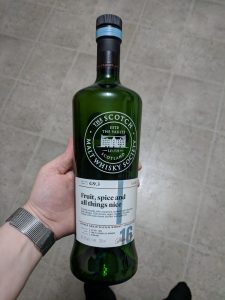
Day 13 — Glenfiddich Fire & Cane

Welcome to day 13 we are just over the halfway mark hope you are all enjoying the ride thus far? Any favourites? I know we have had a few. Today we got one from Glenfiddich’s experimental series. To be exact this is the 4th in their experimental series. If you’re interested in seeing the other expressions they can be read about here. Today’s expression is easy enough to get your hands on but if you’re interested in trying the others you’re going to have to do a bit of searching. I hope you enjoy.


GLENFIDDICH HISTORY

The story of the building of Glenfiddich has the air of a Victorian fairy tale. It was in 1886 that William Grant of Dufftown decided to leave his position as manager of Mortlach and start up on his own. He had saved assiduously and, fortuitously, was starting his project just as Elizabeth Cumming was revamping Cardhu and replacing her old small stills. Along with his wife and nine children, William built his distillery near to the Fiddich river by hand. The first new make trickled out on Christmas Day, 1887. At a time when more distilleries had foundered than succeeded, and those which were being built tended to be bankrolled by brokers, bonders and blenders, his enterprise and stubborn belief was remarkable.Map

He must have been a talented distiller, for his whole output was soon snapped up by Aberdeen blender and broker William Williams. Within 25 years, the family firm had 63 agencies internationally, proving them with their family blend, ‘Grant’s Standfast’.

The firm is still wholly owned by the Grant family (now in its fifth generation), and has expanded to include three more malt distilleries [Balvenie, Kininvie and Ailsa Bay], a grain plant [Girvan] and other brands such as Monkey Shoulder and Hendrick’s gin.

In 1963, after a dispute over grain supply (which prompted the firm to build the Girvan plant) the decision was made to bottle and promote Glenfiddich as a single malt, the first concerted effort to create a global malt brand. In the late 1960s it was one of the first to be sold in new duty free outlets and in 1969 the distillery’s doors were opened to the public – another first.

Today, Glenfiddich remains the world’s best-selling single malt with sales in excess of a million cases a year.


Image result for Glenfiddich Fire & CaneTasting Notes

Nose: banana, rice crispies, fried pineapple, white fruit, mint, distant smoke
Taste: light peat, tobacco, leather, fruity smoke
FInish: light finish, lingering smoke, green apple

Purchase Links

Can be purchased here from Legacy Liquor

or

Can be purchased here from BC Liquor Stores
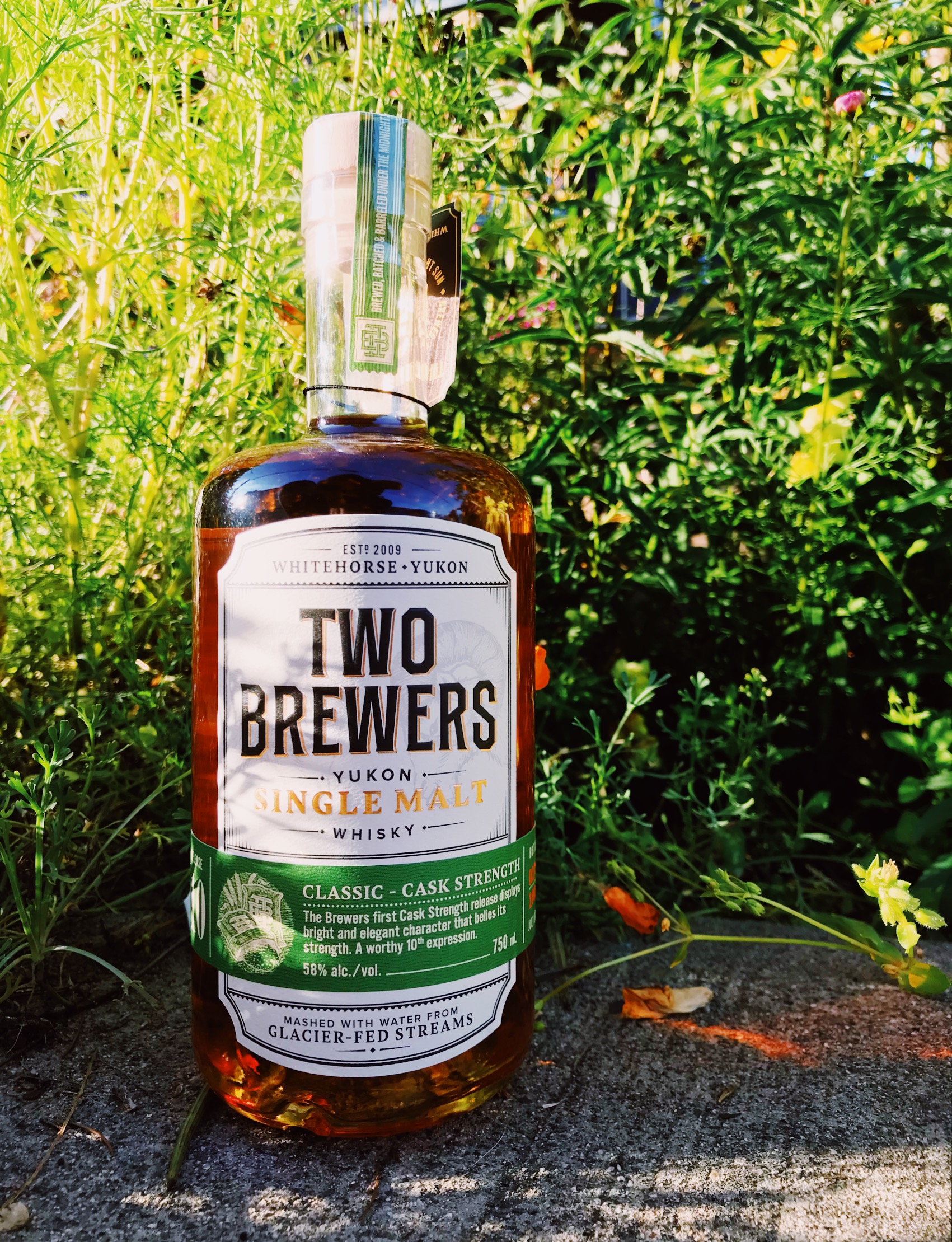


Day 12 — Two Brewers Cask Strength

Oh day 12 hour you keeping up? I know I should have spaced these better but we have anouther cask strenght offering. its kind of loosing its ring isn’t it? Well on the plus side its Canadian?

Two Brewers

Story

Take two lads in the Yukon, stick them on a canoe trip, and lo and behold, in 1997 a brewery was born. Now, making beer is a joyous thing, but in 2009 these two blokes decided to buy a still, apply their brewing knowhow and make whisky. Whisky made in small releases, with a variety of malted roasted grains, using different fermentation techniques and a mix of barrels. The goal is that no two releases are the same, so that as each expression emerges, it is layered and complex and probably never to be repeated.

Almost two decades since that canoe trip, Yukon Brewing and its sister company Yukon Spirits, continue to service the north with quality beer/spirits while keeping jobs and money in the territory. Actively involved in the local community, Yukon Brewing supports countless Yukon events and causes each year.

Bob and Alan continue as owners and chief operators, growing the company outside the Yukon. The brewery’s nine packaged beers are available across Western Canada with some even finding their way as far east as Quebec, Japan, and at the Hannover Zoo in Germany.


Image result for two brewers cask strength Tasting Notes

Nose: grass, cereal, white fruit, lemongrass, sugar cane
Taste: sweet buttery,vanilla, aunt Jemima’s with butter
FInish: ginger, black licorish, figs

Purchase Links

Can be purchased here from Legacy Liquor


Day 11 — Hyde 1938 No. 6 Presidents Reserve

Day 11 the half way point is near i can see it just over the hill. We have a lovely offering from Hyde for those of you that were with us last year do you remember this guy https://wp.me/p9lAA3-1m?  I know I do and I think this is a sold callback but still stands on its own

About Hyde 1938 Whiskey: (In Their Own Words) “The Triple Distilled Irish Whiskey is a premium blend between 18 year old single malt whiskey and 8 year single grain whiskey, matured in Bourbon Barrels and finished for 9 months in Oloroso Sherry Casks and limited to just 5,000 bottles. The label commemorates the inauguration of Ireland’s first President ‘ Douglas Hyde ‘ in 1938.”
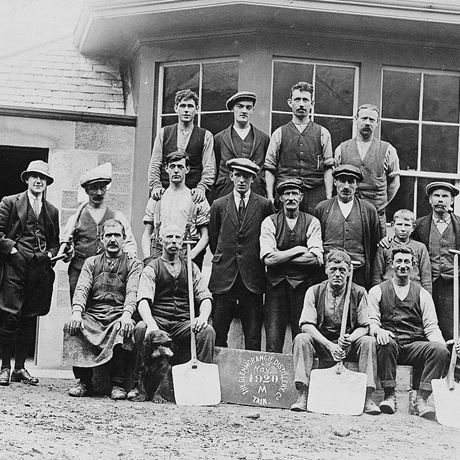
About the Hyde Family: (In their own words) “The Hyde family have a long tradition of being involved in the Irish drinks business. From 1640 until 1962 the family ran a tavern located just outside the picturesque town of Bandon in West Cork. The Hydes sold traditional Irish Whiskey and draught stout straight from wooden casks, tapped by hand with a mallet and brass tap. The drink business runs through twelve generations of the Hyde family tree. At one stage in 1916, their grandfather, granduncle and grandaunt were all publicans in Bandon. Today, Alan and Conor Hyde are the first generation not to own a tavern, but they continue the family tradition by producing some of Ireland’s finest whiskey.”

Image result for Hyde 1938 No. 6 Presidents Reserve

Tasting Notes

Nose: citrus,sea salt, forest near an ocean, butterscotch, campino, creamy, butter
Taste: rich buttery warmth, worthers, salted caramel sauce, cream, hollandaise sauce
FInish: light, dry, slightly medicinal, green pepper, citrus, pepper

Purchase Links

Can be purchased from The Tudor House

Day 10 — Glenmorangie 12

Like the other whiskies in the Extra Matured range the 12 year old Quinta Ruban starts with the 10 year old American Ex-Bourbon matured whisky before finishing for two years before finishing for two years in Ruby Port Pipes from wine estates or Quintas in Portugal. It is a fine day 10 please enjoy

GLENMORANGIE DISTILLERY

HIGHLAND SINGLE MALT SCOTCH WHISKYImage

The process at Glenmorangie starts with mashing unpeated barley with water from the distillery’s Tarlogie Springs – making this one of a small number of hard water sites in Scotland. Although there is no smoke, once a year some chocolate malt is added to the mash for use in the firm’s Signet brand – another of the distillery’s many innovations.

Fermentation is long, while distillation takes place in the tallest stills in Scotland, all of which retain the same long-necked design of the original pair which were brought from John Taylor’s gin distillery in 1887. This extra height allows a long interaction to take place between alcohol vapour and copper, and while the new make is decidedly high-toned [the cut points here are quite high] there is still a little note of cereal adding a dry counterpoint.

The vast majority of Glenmorangie’s make is aged in ex-American oak casks, many of which have been made to the distillery’s exacting specifications: slow-growth American white oak from north-facing slopes in Missouri, which is then air dried. The firm’s Astar bottling uses 100% of these ‘bespoke’ casks.

The casks are only used twice, with the second-fill casks all ageing in damp ‘dunnage’ warehouses to increase oxidative-driven flavours. As the whisky matures, it picks up more lush fruits, some honey, and mint as well as notes of vanilla, crème brûlee and, in the oldest expressions, chocolate.

Some of the mature spirit is then transferred to ex-fortified wine [Port, Sherry] and still wine casks [Sauternes, Burgundy, Super Tuscan etc] for a period of finishing. Glenmorangie was one of the pioneers of this technique.

GLENMORANGIE HISTORY

Situated next to the Dornoch Firth in a series of handsome red sandstone buildings, the Glenmorangie distillery started life as the local brewery for the town of Tain. In 1843, William Matheson converted it to a distillery and it remained in the family until 1887 when it was sold to the Glenmorangie Distillery Co, co-owned by the Maitland brothers and Duncan Cameron. After WWI the business was sold to a partnership between two blending and broking firms, Macdonald & Muir and Durham & Co, soon passing entirely to the former who used the whisky for blends such as Highland Queen. Although it was bottled in small quantities from the 1920s, a change of strategy in 1959 saw Glenmorangie revived as a single malt that soon became Scotland’s top selling.

This was not the first time this had happened however. Records show that at the end of the 19th century Glenmorangie was being sold in the Savoy and other top-end London hotels, as well as being exported.

Early success in the infant single malt category resulted in two more stills being added to the original pair in 1976, a number which was then doubled in 1990. In 2009, four more were added along with a larger mash tun and extra washbacks. Five years previously, French luxury goods firm Louis Vuitton Moët Hennessy (LVMH) had bought the firm [plus Ardbeg] for £300m. More recently, extra warehousing has been built, the result of a decision to mature and vat all the production on site.

Glenmorangie is now the third largest selling single malt in the world.

Image result for glenmorangie 12 quinta rubanTasting Notes

Nose: surprising spice, dried fruits, currants, cherries, almond, amaretto,walnuts, raisins
Taste: walnut, cinnamon bun with raisins, cream, fruit, pepper, medicinal
FInish: lasting, rich, spice, nutty, full, chocolate bitterness

Purchase Links

Can be purchased here from Legacy Liquor

or

Can be purchased here from BC Liquor Stores


Day 9 — Tullibardine Sovereign

Welcome to day 9. Today we have a Tullibardine. In an effort to make up for last years sad Sauternes we have what I belive is a better representation of this fine distillery

TULLIBARDINE HISTORY

Alcohol has been produced in Blackford for over six centuries. A brewery was operational in 1488 when James IV [the King who famously asked Friar John Cor to make aqua vitae from eight bolls of malt in 1495] stopped to buy a barrel of ale after his coronation at Scone. It could lay claim to be the oldest ‘public’ brewery in the kingdom.

Distilling was also tried. In 1798, William & Henry Bannerman opened the first Tullibardine distillery, though it only ran for a year. In 1814, Andrew Bannerman (presumably a relative) tried again. This time it operated until 1837. By the 19th century, the town had a maltings and three breweries: the original one, Gleneagles Brewery, now owned by the Sharp family, the other two by the Eadie family. Both of Eadie’s plants closed by the turn of the 20th century, leaving Gleneagles to soldier on until 1927. At this point it seemed as if this rich tradition had finally ceased, but in 1949 the famous distillery designer William Delme-Evans bought the Gleneagles Brewery site and built a new distillery there. It was the first to be built in Scotland since 1900.

In 1953 it was bought by blender Brodie Hepburn which increased capacity (see Glenturret) and from there via Invergordon (which bought Brodie Hepburn) into Whyte & Mackay (which in turn bought Invergordon) which promptly mothballed it, though retaining its extensive warehousing.
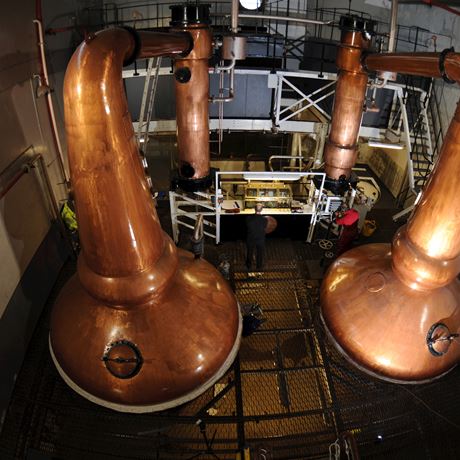
Tullibardine lay silent from 1994 until 2003, when a business consortium snapped it up. Their idea was to sell off some of the site as a retail park, using the money raised to get distilling up and running again.

In a similar fashion to Bruchladdich, the new owners found that most of the stock had been filled into old, tired casks which though suitable for some aspects of blending were not ideal for a stand-alone single malt brand. An extensive – and expensive – re-casking operation started along with the inevitable rash of ‘finished’ whiskies. The group sold their interest in 2011 to the French wine and spirit group, Picard which owns the Highland Queen and Muirhead’s brands and was looking for capacity.

The (failed) retail park venture has been bought back and a newly repackaged and reformulated range of single malts has been introduced.

In a nod to tradition, Tulibardine has joined with Bridge of Allan brewery to produce an ale, appropriately enough called 1488.


Tasting Notes

Nose: Soft vanilla and cocoa butter on the nose. White chocolate, allspice and charred oak
Taste: pear cider, allspice and creamy chocolate, rich malt ,hints of maple syrup.
FInish: creamy finish, Plenty of vanilla , cinnamon

Purchase Links

Can be purchased here from Legacy Liquor

Day 8 — Glenglassaugh Torfa

Welcome to Day 8. Today we head back to Scotland with a nice little bit of a peated offering from Glenglassaugh distillery.  Lets tuck into that whisky

Story

Glenglassaugh Distillery, at the east end of the beautiful Sandend Bay, was founded by Col. James Moir in 1875. He quickly established a reputation for making a quality whisky and the company prospered.
He ran the distillery with his two nephews until 1892, when Glenglassaugh was purchased by Highland Distillers. After being completely re-built in 1960, the distillery continued to produce whisky until 1986 when it was mothballed.

The distillery sat silent for over 20 years until it was purchased by a group of investors and started production again in December 2008. In 2013, the BenRiach Distillery Company took over Glenglassaugh distillery with the intention to bring this iconic distillery fully back to life by giving it the investment, commitment and care it deserves.

Glenglassaugh is produced using the highest quality of Scottish barley and traditional distilling methods, our key focus being on quality. While many distilleries have become highly automated, here at Glenglassaugh our spirit is still handcrafted by a small, highly skilled team dedicated to creating the highest quality product. Only the finest casks are selected to slowly mature our precious spirit in our coastal warehouses until it is ready.

Image

HISTORY

A late-Victorian distillery, Glenglassaugh was built in 1874 by local businessman James Moir and 18 years later became part of Highland Distillers. It didn’t have a huge amount of time to prove itself as a downturn in the market saw it close in 1907 and not re-open until 1960, when once again the market was showing a sharp increase.

Blenders however found it a difficult customer, one of those highly individual malts which didn’t rub along particularly well with other elements in a blend. Had the single malt market been up and running in the 1970s its story might be very different, but its sheer awkwardness meant it was deemed surplus to Highland’s requirements when the whisky loch was filling in the early 1980s and firms were rationalising their estates. When it closed in 1986, no-one thought it would ever re-open.

Amazingly however it did. In 2008, a Russian-financed firm bought the plant and restarted production. In 2013, it changed hands once again, becoming the third member of the BenRiach Distillery Co. [with Benriach and Glendronach].

Although there is obviously a massive 22-year hole in stock, releases are being cleverly balanced between occasional (very) old bottlings and incremental works in progress from the new regime.

Glenglassaugh was purchased – along with Benriach and Glendronach – by Jack Daniel’s producer Brown-Forman in 2016.


Image result for Glenglassaugh Torfa

Tasting Notes

Nose: light smoke, butterscotch, apples, pears, light cream, hint of cinnamon
Taste: need more, Doritos, cream, eggnog, cookie batter
FInish: delicious, light smoke, something sweet, charcoal, fresh cookies, lingering charcoal

Purchase Links

Can be purchased here from Legacy Liquor

Day 7 — Trust maderia

Day 7! you have just past the quarter mark. Still hanging in? We in a effort to help get you to that coveted 25 days of straight drinking we got a nice soft one for you. In a effort to have more Canadian content in this calendar introducing Trust from The Liberty Distillery in Vancouver this is the second of our Canadian offerings witch is alot more than last year with zero. I hope you enjoy

Story

Established in 2010, The Liberty Distillery is a true artisanal distillery. We select only the best organic BC grains which are carefully fermented and triple-distilled in our traditional hand crafted copper pot stills; producing ultra-premium Vodka, Gin, Whiskey, and other seasonal limited batches with character and distinction. Open seven days a week, we welcome you to experience our Signature Cocktails, take a distillery tour, or to purchase your own bottle of Liberty Distillery’s best!


Image result for liberty distillery trust madeira whisky review

Tasting Notes

Nose: butterscotch, cacao bean and caramel
Taste:  Lemon, almond
FInish: cinnamon, chocolate

Purchase Links

Can be purchased from Strathcona Liquor Store

or

Can be purchased here from Their physical location

Day 6 — The Quiet Man 8 Year

Welcome to day 6. How about a little Irish? You’ll never get me lucky charms.. Uh yah I though that was weird too who writes this dribble. Any ways, yes today’s Whisky is a Irish.  It is a quet offering but dont let that tripple distiled irish slip by you it has fighting spirit and compaired to some of the other days its quite easy to aford. Please do enjoy

Story

During the 1800s, Derry was producing more whiskey than anywhere in the world. The city’s famous golden liquor was cause for local pride and international notoriety.

But the industry, like so many great industries, began to suffer at the turn of the century. By 1921 there were no distilleries left in the once thriving Derry. Whiskey production in the area was over… Until now.

The Quiet Man is bringing whiskey production back home with a brand-new state of the art whiskey distillery, opening right in the heart of the town at the old Ebrington Naval base. We are retro fitting four of the original buildings dating from 1841 with a fully working distillery. Visitors will be able to follow the production process from grain milling through to triple distillation in copper Pot Stills before taking the weight off their feet and sampling TQM in our walled whiskey garden.


The Quiet Man 8 Year

Tasting Notes

Nose: Icing sugar, malt, citrus rind.
Taste: Very fruity, apricot, banana, malty sweetness, slight amount of  bitter orange peel and cinnamon.
FInish: Surprising amount of spice , clove , allspice , hint of cinnamon. Medium to light burn which fades nicely

Purchase Links

Can be purchased at the Strathcona Liquor Store

Day 5 — SMWS G9.3 – Fruit, spice and all things nice

Welcome to day 5 and I have another cask for you. Today’s bottle comes from the SMWS who in my option are the masters of finding what a distillery can do  and I think you will agree its good

The SocietyImage result for smws

The Scotch Malt Whisky Society is a club unlike any other.  As well as being a place to connect with other like-minded whisky lovers, we are also internationally renowned for our mission:  to provide our members with an adventurous and fun journey of discovery of the world’s widest selection of single cask whiskies.  As a member, you will join over 25,000 other members in 19 countries and have access to the very best single cask, single malt whisky available anywhere. Only members can purchase The Society’s fantastic and interesting whiskies.

With access to our monthly new bottling list, Outturn, you’ll have plenty of choices from which to find your ideal whisky. Also available exclusively to members is Unfiltered, an award-winning magazine that is guaranteed to provide you with fascinating insights into The Society and its events and the world of single malt whisky.

Members also gain access to Members’ Rooms in Leith, Edinburgh, London and elsewhere – and with the privilege of taking up to three guests with you, you’ll be very popular.

Straight from the cask, to the bottle, to you. Unfiltered. Undiluted. Unrivalled. Capturing rarity and perfection in a glass, The Scotch Malt Whisky Society’s bottlings attract curious and discerning whisky lovers from all corners of the globe.

History

The origins of the Society lie in Phillip “Pip” Hills’ travels around the Scottish Highlands in the late 1970s, during which he sampled several whiskies drawn straight from the cask.

Hills was so affected by what he tasted that, in 1978, he persuaded several acquaintances to share in the cost of a cask from the Glenfarclas distillery. Over time, the group of friends expanded to become a small syndicate and more casks were purchased, bottled and distributed to subscribing members.

Coinciding with the decision to open membership to the wider public in 1983, the Society purchased its first property, The Vaults, in Leith; a building, whose vaulted wine cellars reputedly stretch back to the 12th century.

The Society created a set of members’ rooms there.

In 1996, the Society launched a share scheme for its members, the proceeds from which were invested in the purchase of a London venue.

2004 saw the Society purchase a second venue in Edinburgh – a Georgian townhouse on Queen Street. In the same year, the Society was acquired by Glenmorangie PLC.

To mark the 25th anniversary of its foundation, the Society redesigned its bottles, to include more information and a full tasting note on the front of the bottle.

In 2015 the Society was sold back to private investors from Glenmorangie PLC.

Tasting Notes

Nose:  That’s sure cask strength, pear, old books, orange, watermelon, pear, baseball glove, honeydew
Taste: dry, medicinal, old leather, green apple, brown sugar, pear, leather
FInish: crumbling boards, leather, hint of brown sugar, leather, leather

Purchase Links


Day 4 — English Whisky Company Smoky

Welcome to day 4. We have a solid peated offering here this is a new for 2017 release of whisky from England’s St. Georges Distillery. The whisky is matured in Ex-Bourbon and produced with peated barley and is a good way to first encounter peat in this calendar

About St George’s

“St George’s is the home to The English Whisky Co. The beautiful distillery was designed and built by the Nelstrop family for the specific purpose of producing the very finest English Single Malt Whisky.

“Why England and more specifically Why Roudham, Norfolk? Well, there are only two main ingredients in whisky, barley and water and we have them both. We draw the purest, cleanest water from the Breckland aquifer deep beneath our distillery. Norfolk is one of the world’s premier growing barley regions, so our supply is plentiful and local.

“The only other thing needed to create the very best malt whisky is oak casks. We don’t add colour, we don’t add flavour, we let the barrels do that for us, so we have to buy only the very finest oak casks. Most of ours are supplied by direct from America, having first been used for the maturation of bourbon. We also mature in sherry casks, and various other wine casks.
Our whisky is batch made by hand with no computers, filled into casks and then left to sleep until our distillers consider it perfect for bottling, which of course we do by hand – one bottle at a time.

“We are really proud of these things and believe you will taste the difference too.”


Image result for English Whisky Company SmokyTasting Notes

Nose: bright orange, cigar ash and grassy malt; a touch green and youthful with some tart grapefruit, honey and vanilla.
Taste: creamy with a firm base of clean smoke and chewy green malt; more vanilla and honey, white fruits and citrus: bright orange a touch of tart grapefruit; there is a flinty minerality to the spirit that also has clean oily body.
FInish: medium, smooth and coating; the smoke quickly fades leaving the fruit, malt and vanilla.