Day 3 — Arran 14

Welcome to day 3. Well today we have some real whisky and I am sure any one would agree that this a  tasty one normally we see a lot of cask finishes from Arran but today its their pure 14 year spirit. Enjoy


ARRAN DISTILLERY

ISLANDS SINGLE MALT SCOTCH WHISKY

As an island whisky, it might be thought that Arran would always have been peaty. Instead, it started life as a non-smoky ‘Highland-style’ malt. Like any new build distillery, the equipment is in an easily managed single tier space with small semi-lauter mashtun, wooden washbacks and a pair of small stills.

The character shows light cereal crunchiness behind a distinctly citric note. Arran has also shown that this distillate, allied to a quality-focused wood policy, has given single malt that is capable of extended ageing. These days, peated malt is also being run.

ARRAN HISTORY

Although the Arran distillery is relatively new (production started in 1995), the island in the Firth of Clyde has a long history of whisky-making. A fertile place, the farmers in the south of the island had plenty of raw materials to work with, and when home distillation and small stills were effectively banned in the late 18th century, they simply went underground.

After all, demand for smuggled whisky was on the rise and Arran had excellent links to Glasgow. There is some evidence that molasses was also distilled here. When the law changed a legal distillery ran at Lagg from 1825, but it closed in 1837 and Arran’s distilling heritage was seemingly lost forever.

All that changed in 1995 when a consortium, headed by former Chivas Bros MD Harold Currie, chose a site at Lochranza in the north of the island. The decision to move to a part of Arran that was previously unknown for whisky was a result of two facts: a good water supply and potential for tourism. Today, in excess of 60,000 people visit the distillery every year.

Further cash was made by selling casks of whisky to private individuals but the scheme was halted when it was discovered that though the money raised was useful in creating initial cashflow, it resulted in the distillery not owning a significant percentage of its own stock – a problem when trying to build a brand.

Bottling started with a limited edition three-year-old in 1998 and the range has continued to expand, although today there are fewer ‘finished’ variants than in the past. A peated expression ‘Machrie Moor’ has also been introduced.

Image result for arran 14Tasting Notes

Nose: Dried fruits, vanilla and toffee
Taste: An initial burst of brine leads onto warming toffee apples and hazelnuts. This is followed by dates, chocolate orange and spiced tea cake
FInish: Cinnamon spices leading back to a classic island-style salty wave balancing the sweet fruit of the palate.

Purchase Links

Can be purchased here from Legacy Liquor

or

Can be purchased here from BC LIquor Stores


Day 2 — Knob creek batch 7023

Did you save any day 1? Shame someone should have warned you, oh well here we are at day 2 and we got the same thing a 2nd time? Well yest and no this is the second Exclusive cask bottling for BC Liquor Stores. This cask matured in warehouse M on the 3rd floor. It really demonstrates how the same spirit can be influenced by nothing more than its position in a room or change in building

Just as the last if you enjoyed this whisky and are lucky it can be purchased here.

History

Knob Creek® Bourbon was named after a little creek that runs just south of the distillery, the same creek that ran by Abraham Lincoln’s childhood home. Booker Noe, 6th generation Beam and master distiller emeritus created Knob Creek to reflect the strength, flavor, care, and patience that defined pre-prohibition bourbon. The bottle embodies the handmade look and feel of the turn-of-the century bourbon as well. It is reminiscent of a bootlegger’s flask with newspaper scrawled on the label, harkening back to the decade’s old custom of wrapping bottles in newspaper at the distillery.

Image result for knob creek small batch

Tasting Notes

Nose: cinnamon hearts, mint, honey, bourbony vanilla, butterscotch, pear, toffee
Taste: sweet, rich, low complexity, surprisingly spicy, caramel
Finish: clove, vanilla, cinnamon

Purchase Links

Can be purchased here from BC Liquor Stores

Day 1 — Knob Creek — Single Barrel Cask #7024

Welcome to day one and we got us a doozy for you. Not only is day one a cask strength one but it’s also a bourbon. Trust me though this is not any old bourbon.  This bottle is part of the  Knob Creek Single Cask line and is an exclusive cask bottling for BC Liquor Stores. This cask was aged in warehouse E on the 4th floor. Then bottled at 60%

Take some time today and relax kick your feet up and enjoy this fine dram. Then get on to whiskydev.slack.com #advent-calendar and start a discussion.

If you enjoyed this whisky and are lucky it can be purchased here.

Story

Knob Creek is a brand of Kentucky straight bourbon whiskey produced by Beam Suntory at the Jim Beam distillery in Clermont, Kentucky. It is one of the four Jim Beam small batch bourbon brands targeted for the high-end liquor market. Its siblings in the line are Booker’s, Baker’s, and Basil Hayden’s.

The primary expression of the brand is bottled at 100 proof (higher than the typical 80 that is the minimum required by U.S. Federal labeling requirements). Knob Creek was formerly aged for nine years, but is now sold with no age statement.

Knob Creek comes in a rectangular bottle with a corked or twist-on cap and wax-sealed top. The bourbon has a dark, golden-brown color. According to the company, this is due to the relatively long aging process, which allows it to absorb more sugar from the wood than is the case for the other Jim Beam Small Batch brands. The company describes the flavor as “rich, sweet, woody, full-bodied, almost fruity”, and the aroma as “toasted nuts, grain, oak”.

In 2009, Beam ran a campaign to publicise their shortage of Knob Creek bourbon. Demand exceeded the 2000 forecast, when the stock began the ageing process.

Image result for knob creek small batch

Tasting Notes

Nose: Very sweet. Brown sugar and caramel hit first, with apple and toffee that follow.
Taste: rich and creamy sweetness You’ll definitely notice the 120 proof,vanilla, maple syrup and brown sugar that the nose foreshadowed.
FInish: Hot and long lasting. Full of cinnamon, oak and leather.

Purchase Links

Can be purchased here from BC Liquor Stores

How to Calendar and welcome

Well if you’re here and I know you are because how else could you read these words I welcome you all to the 2nd annual WhiskyDev advent calendar. For those of you that have never been on this ride sit down buckle up and get ready. For those of you that have taken this journey before don’t be too relaxed I added some surprises this year.


Time for some super awesome paint skills:

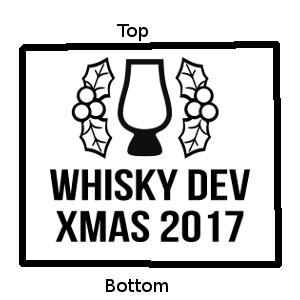
This is your box.

The top is the top.

And the bottom is the end 🙁


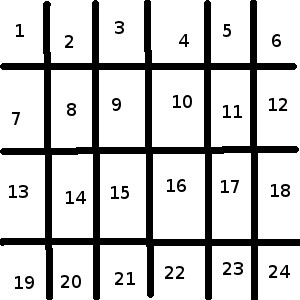
The Days read like this.

And have been ordered so that you only need to see the basics allowing each day to be as much of a surprise as possible.

Until the 19th I don’t even see the last row in my house.


But on Day 25 and the box is empty don’t worry yet we got your day 25 surprise all queued up and ready to help you deal with whatever the day has to throw at you. If it’s going to be a long day or you feel the need to  share it’s in a larger but still very portable package.


We hope you enjoy the ride,

The Whisky Dev Team

Day 25 — Jura 16

Well unfortunately our Journey is at a end with day 25 but I hope you made it all the way though and you’re standing enough to talk about it. If you are, today’s bottle should help you deal with what ever you have gotten yourself into and at 20cl there is enough of it that if you feel the need you can share and not feel like you’re losing out.

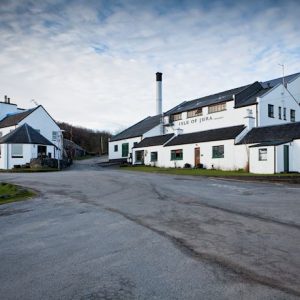
JURA DISTILLERY

ISLANDS SINGLE MALT SCOTCH WHISKY


Inside, Jura is a classic 1960s distillery – large rooms, a clear flow from a semi-lauter tun, stainless steel washbacks, and a capacious stillhouse with very tall (7.7m) stills with capacity in excess of 20,000 litres. Clearly it was not built solely to satisfy the thirst of the local populace. Relatively short ferments give Jura’s background rigidity – meaning that this is a whisky that needs time (or active casks) to open fully.


Whyte & Mackay’s master blender Richard Paterson is a great advocate of ex-Sherry casks and while the bulk of Jura is aged in ex-Bourbon and refill, in terms of single malt bottlings the Sherried element has a higher presence, adding some dried fruit sweetness.

Peated malt began to be run for a small period annually from the late 1990s onwards. This is blended with unpeated in some expressions, as well as on its own.


JURA HISTORY

Although the large southern Hebridean island of Jura has always been sparsely populated, it has a fascinating distilling heritage. It was on 18th century Jura where it was reported that the natives made spirit from rowan berries, as well as using the bitter fruit to acidulate their whisky punch.

Illicit distillation took place, but there was a legal site in the island’s only settlement, Craighouse, in 1810 licensed to the island’s owner Archibald Campbell. There is debate as to whether there was a legal distillery in Lagg.

The distillery went through a number of names: Craighouse, Small Isles, Caol nan Eilean, Jura, and owners without garnering any great fame until 1901 when it was among many to close in whisky’s first great sales slump. The cost in running a remote island site is always expensive and a lack of direct transport to the mainland [all ferry traffic still has to go via Islay] also counted against its survival.

It was these economics which ruled Jura out of the distilling equation for over six decades. Then, in 1963, two of the island’s landowners, Robin Fletcher and Tony Riley-Smith, decided to start whisky-making once more – predominantly as an incentive to stop any further decline in the island’s population. With financial backing from Leith-based blenders Charles Mackinlay & Co., the famous designer William Delme-Evans was hired and a large, modern distillery was built which was further expanded in 1978 to its current size. In 1985, Invergordon Distillers bought Mackinlays and from there the firms were folded into Whyte & Mackay.

It began being sold as single malt in 1974, and the range has grown steadily since. The start of peating saw some smoky whisky being included in the no-age Superstition brand, launched in 2002, while a 100% smoked Prophecy was released in 2009.

Tasting Notes

Isle of Jura 16 Year Old (Diurachs' Own)

Nose: grapefruit, Mildly sherried, as befits the finish. If there’s any Island peat present, it’s in the form of a soft, ferny, heathery aroma in the distance. The fruit is fresh and bright, and backed up by a capable maltiness with breakfast cereal and spongecake. Soft, lovely, and floral. Very nice.

Taste: Slightly chewy texture, and quite sweet. Candied orange peels, tawny fudge, blanched almonds, and marzipan. Not an ounce of burn on the tongue. Ladylike, even.

Finish: The heather notes return, with honey and a bit of oaky tannins. A final wave of very mild citrus – just pith, maybe – and a ghost of bitterness.

Day 24 — Ardbeg Uigeadail

Welcome to day 24. The end is in sight, I hope you all are close to the whisky a day that this doctor prescribes. I know a bunch of you are peat heads and seeing as this is the last day before the big one I found a little something special. Now even though we have already had a Ardbeg in our line up I think you will agree that this one stands on its own.  Pronounced ‘Oog-a-dal’, it’s a special vatting that marries Ardbeg’s traditional deep, smoky notes with luscious, raisiny tones of old ex-Sherry casks. Try it with a little water and you might find it will open right up for you.

Tasting Notes

Nose: salty Dutch licorice, coal fired kitchen stove, burnt bacon dripped in maple syrup and seared dates and figs; big dark chocolate with cayenne spice, cinnamon hearts and raw new leather.

Palate: very big, bold, fruity and chewy; smooth smoke drifting over plump wet malted barley; rich spices emerge: fennel, clove and anise leading the way to firm oily peat and Cuban cigar smoke; candied fruits and Christmas cake with bacon infused spicy dark chocolate; underneath the whisky’s bold outer shell are soft fruits: orange, melon, banana and mango; the salt and smoke come back as the whisky comes full circle.

Finish: big, long, oily and coating; more juicy malt, coal smoke fading in and out of earthy peat; the fruits, chocolate and bacon notes are all there too.

Purchase Links

Can be purchased here from Legacy Liquor

Day 23 — Aberlour 12

Welcome to day 23. While maybe not a house hold name Aberlour is consistently a good choice if you want a quality dram at a good value. This is a whisky that I drink when I want to think of the time just before winter where things are crisp and the air is fresh there are still a few leaves on the trees but the wind comes along whips up a the fallen ones and you get a quick puff of must.

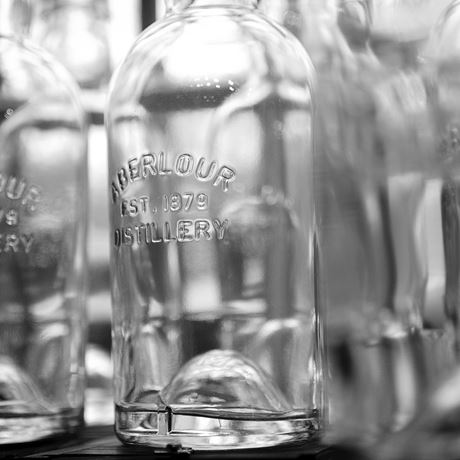
ABERLOUR DISTILLERY

SPEYSIDE SINGLE MALT SCOTCH WHISKYImage

The range is large, with many different variations on ex-Sherry and ex-Bourbon cask matured whiskies – some mixed, some 100%, others finished. Its greatest cult following is for the small batch, 100% Sherry-matured, cask-strength variant A’Bunadh which has run since 2000. Aberlour was also one of the first distilleries to offer a ‘bottle your own’ whisky to visitors.

ABERLOUR HISTORY

The first distillery in the village of Aberlour was established in 1825 and ran until 1833, when the co-lessees James and John Grant left to build their own distillery, Glen Grant, in Rothes. The current distillery was the brainchild of James Fleming who built it in 1879 using water from St. Drostan’s Well, named after an early Columban monk, which is situated on the site.

Like many Victorian distilleries, it burnt down and, in 1898, had to be rebuilt. During World War II when the distillery was on short-term working, locals used to smuggle wash up the Aberlour burn and distil illicitly under the Linn Falls.

The distillery became part of Campbell Distillers in 1945, passing into the Pernod Ricard stable in 1974, the year after it had been expanded from two to four stills and wholly modernised internally. Its ownership has long given it a strong following in France. It is now part of Pernod’s whisky division, Chivas Brothers.

Tasting Notes

Nose: coco nibs, light salt,dry tea, light peat,leather,raisins,marzipan,leather,must,orange,vanilla
Taste: Chocolate, Thick, dry tea, leather,marzipan,cigar, creamy,dark fruits,cloves,oak, marzipan
FInish: Vanilla, Oily, citrus,old books,habanero pepper

Purchase Links

Can be purchased here from Legacy Liquor

Day 22 — G&M Glenburgie 10 Year

Welcome to day 22. Today we have a bit of a rarity as the vast majority of Glenburgie ends up in Ballatine’s blended whisky. Gordon & MacPhail bottles a small number of expressions, primarily this 10 year old, as single malts.

Gordon & MacPhail History

Image result for Gordon Macphail

Gordon and MacPhail opened their premises on South Street, Elgin on the 24th May 1895. The company was founded by James Gordon and John Alexander MacPhail and they decreed their product would be ‘a superior article at a popular price’. As did many whisky traders, Gordon and MacPhail sold other products in addition to whisky; they were a grocers as well as a wine and spirits merchant. However, there was always an inclination toward dark spirits. The original whisky products included their range of own-label blends and matured whiskies.

Today, Gordon and MacPhail are a leading distributor as well as a selector and vendor of many whiskies and blends. Today, they have an extensive range of fine, and often rare, single malts, known as Connoisseur’s Choice. Gordon and MacPhail also stock one of the largest ranges of whisky to be found anywhere, operating from their original premises on South Street. In 1993, Gordon and MacPhail purchased the silent Benromach distillery which was reopened by the Prince of Wales in 1998. In 2004, Benromach launched Traditional, the first official release from Benromach since its previous closure.

On the 24th May 2005, the company celebrated 110 years of business. Gordon and MacPhail have also released various blends under names including Glen Calder, Avonside and Ben Alder.


Tasting Notes

Nose: decadent, honeyed with dried apricots and diced candied fruits (before mixing into Christmas cake); buttery with bright pineapple, creme brule and clotted cream on crumbly scones; big notes of candied orange and lemon drops.

Taste: big, creamy, leathery and fruity with layers of spice; still decadent: powdered sugar; more dried apricots and diced candied fruits; Glosset Raisins, cooked pineapple and more creme brule; clotted cream on moist but crumbly scones; nuttier than expected with some darker edges; citrus is still there but just an accent.

Finish: medium short, but very pleasant; the creaminess clings to the palate as the decadent sugars and fruits fade.

Day 21 — A.D. Rattray Cask Islay

Welcome to day 21. Today we have a bit of a misleading label as the bottle is not cask strength but is from the A.D Rattray Cask collection. While it is rumoured this single malt was distilled at Laphroaig, and the palate has some Laphroagian characteristics, this Islay single malt’s origins are not explicitly known. Enjoy!

A.D. Rattray History

A.D. Rattray is a family firm with long established roots in Scotland. I’ll let the firm summarize it in its own words: “In the latter part of the 1800s A D Rattray Ltd came to represent a number of well-known Highland Malt distilleries – most notably Stronachie – selling bulk whisky to West of Scotland wine and spirit merchants, publicans and the main Scotch whisky blending houses in and around Glasgow. A D Rattray Ltd has now returned to the family and is owned by Mr Tim Morrison, previously of Morrison Bowmore Distillers and fourth generation descendent of Andrew Dewar Rattray. The company’s resurgence came about in 2002 with the bottling of a ‘new’ Stronachie 12yo. In April 2004, using his extensive knowledge and expertise in the whisky industry, Mr Morrison then bottled a selection of his own handpicked stock of whiskies for market release and the A D Rattray Cask Collection was born.”

A.D. Rattray today bottles a range of whiskies including Stronachie, Cask Islay and the Bank Note blend. They also bottle a range of whiskies under their “Cask Collection” range. These whiskies are hand selected single casks, bottled at cask strength. The first of the casks were acquired by the owner Tim Morrison, before he sold his remaining interest in Morrison Bowmore to Suntory. Other casks have been collected over the intervening years. While the firm no longer owns a distillery, they have a visitor center and shop in Kirkoswald, Ayrshire. If you’re visiting the Ayrshire region to pay homage to the Bard, you might want to make time for a tasting.

About Cask Islay: (From the Producer) “Cask Islay is carefully crafted from a relatively small number of selected casks from one distillery. Between 5 to 10 casks make up one batch of our delicious malt which is then bottled. This is called a small batch whisky. Every cask that goes into a batch of our Cask Islay has been carefully measured and monitored during its maturation to ensure it has reached the desired flavour profile for inclusion in the mix.”


Tasting Notes

Nose: creamy with clean smoke, juicy barley and earthy peat oils; red berry fruits in a bowl smothered in whipped cream; fresh squeezed lemon and hotel brunch sliced melons.

Taste: thick, coating and rich with more juicy barley, clean smoke and building brooding peat notes; still very creamy, boozy whipped cream atop fresh red berries; it becomes more medicinal and peaty while simultaneously releasing more delicate fruit notes including the hotel buffet sliced melons and soft citrus notes.

Finish: medium in length but bold and creamy with fading fruits.


Day 20 — Bunnahabhain 12 Year

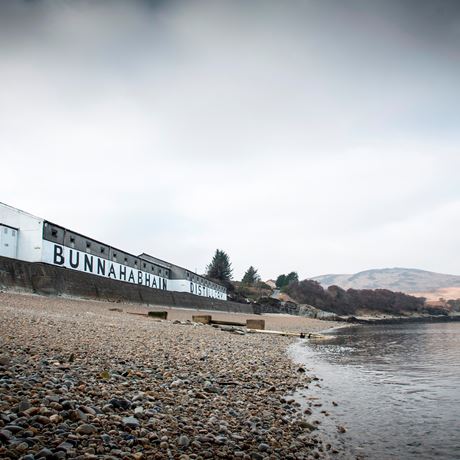
Welcome to day 20. When you think of whisky from Islay you generally think of peat and smoke but Bunnahabhain has taken a different approach from its many counterparts on Islay, championing itself as “the gentle taste of Islay,” boasting what they say is a “dram that embodies the island’s more approachable side.” I think you will agree they did good.

BUNNAHABHAIN DISTILLERY

ISLAY SINGLE MALT SCOTCH WHISKYImage

Everything about it is large, from the huge courtyard to the stills. It is these with their low fill levels and massive amount of available copper which help to craft what has always been a light style of malt. Ageing has traditionally been in ex-Sherry casks which adds a sumptuous sweet richness to the spirit though quite where the spicy ginger note, which is a marker for Bunna’, comes from is unclear. Occasionally refill casks show an almost salty edge.

Although peat levels had dropped to virtually nothing from the 1960s onwards, Bunna’ did start life smokier than it is now, something which Burn Stewart is reviving. These days, around 20% of production is heavily peated, destined for a variety of bottlings, the main one being Toiteach.

BUNNAHABHAIN HISTORY

Islay’s remote north east coast might seem a strange place to find a substantial Victorian distillery, but it was chosen in 1881 by William Robertson (of Robertson & Baxter) in partnership with Greenlees Bros. as the perfect spot for his island vision. Constructing it meant not only building the distillery but houses as well, putting in a road, and adding on a pier so that casks and barley could come in, and whisky go out. It cost Robertson £30,000 (£2.6m in today’s money). In 1887, when Bunnahabhain merged with Glenrothes, Highland Distillers [now Edrington] was formed.

While other Islay distilleries sold their make as single malts and for blending, Bunna’s destiny was always with the latter. While it was used across the industry, it performed a central role in three R&B blends: Famous Grouse, Cutty Sark and, in time, Black Bottle.

Rapid growth for Scotch in the early 1960s saw the stills being doubled in 1963, the same year as the floor maltings came out. Its good fortunes weren’t to last and like many distilleries it was mothballed in 1982. Although this only lasted two years, production levels were kept low for many years. By the end of the 1980s it was finally ready to emerge as a single malt with the tag-line ‘the unpronounceable malt’. The vast bulk of its make was however still making its way into blends.

Despite an upturn in the whisky market, Edrington sold it (while retaining fillings contracts) in 2003 to Burn Stewart for £10m. Burn Stewart itself was owned by Trinidad-based conglomerate CL Financial which went spectacularly bust in 2009. In 2013 CL’s receivers sold Burn Stewart to its long-term South African distributor, Distell. Since then production levels have increased as have sales of the single malt – with significant success in Africa and Taiwan.

Tasting Notes

Nose: apple pie filling,butter, apples,black olives,fresh laundry,licorice,vanilla,port,stewed apples
Taste: licorice,vanilla,port,oily,cooked apples
Finish: mead,peat,mild finish with a burns that comes back,soft fruit,apples,pears,brine,licorice

Purchase Links

Can be purchased here from Legacy Liquor