Day 19 — Penderyn Single Malt

Welcome to day 19. As we enter the last week of the calendar we have a fun one from Wales. This is first whisky to be distilled in Wales in over 100 years, and is a welcome addition to the world of single malt whisky. Matured in used American Oak casks, and enhanced in Madeira casks.

Background and products

Penderyn Distillery.jpgIt is distilled in the village of Penderyn, Rhondda Cynon Taf, in the Cynon Valley, from which the brand takes its name.

The company was launched in 2000 as the Welsh Whisky Company. Whisky had been distilled in Wales for hundreds of years, but stopped in 1894. Penderyn became the first whisky to be manufactured in Wales for over a century when sales started in 2004. It remains the only whisky currently produced in Wales.

The Penderyn Distillery also produces non-Whisky products: Merlyn Cream Liqueur, Five Vodka and Brecon Gin.Brecon Gin was awarded “Gold Best in Class” at the International Wines & Spirits Competition in 2011.

Penderyn Distillery is situated in Brecon Beacons National Park and sells internationally to markets such as Taiwan, Australia and France.The company opened up a visitors centre in June 2008, with Prince Charles, Prince of Wales leading the proceedings. The visitors centre now sees more than 35,000 visitors per annum.

Tasting Notes

Nose: fuzzy peach,Lemon, chocolate,Citrus,cherries,nail polish,grapefruit pith,flora,hay, banana
Taste: Fuzzy peach, citrus,grapefruit,lemons,oatmeal, hay or straw,honey,butterscotch,mineral, lemon drop,custard
Finish: Plastic, Light quick finish, hint of oak

Day 18 — Glendronach 8 Year Hielan

Welcome to day 18. Today we have our second offering from Glendronach. Unlike that last one there are no hints of peat and yet it is still complex and interesting. Bottled at 46% the Hielan is composed of a mix of Ex-Bourbon & Ex-Sherry Casks. The name is a “a heartfelt tip of the hat to the extraordinary Forgue distillery, Glendronach’s spiritual home in the Highlands and one of Scotland’s oldest distilleries.” We’re not entirely sure what that means, but we’ll take it as is. Looking forward to sampling it and providing our own tasting notes.

Tasting Notes

Nose: malty, a touch of barnyard and wet hay; raisins and waxy chocolates; Fig Newtons, juicy orange and Bananas Foster.

Taste: big, rich, nutty and fruity; loads of caramel, more malt and wet hay; Sunrype boxed raisins and Glosset Raisins; more Fig Newtons, juicy orange and cooked banana; soft new leather and a touch of spice.

Finish: medium in length and light; leather, dark fruits and spice last the longest


Day 17 — Glenmorangie Original 10 Year

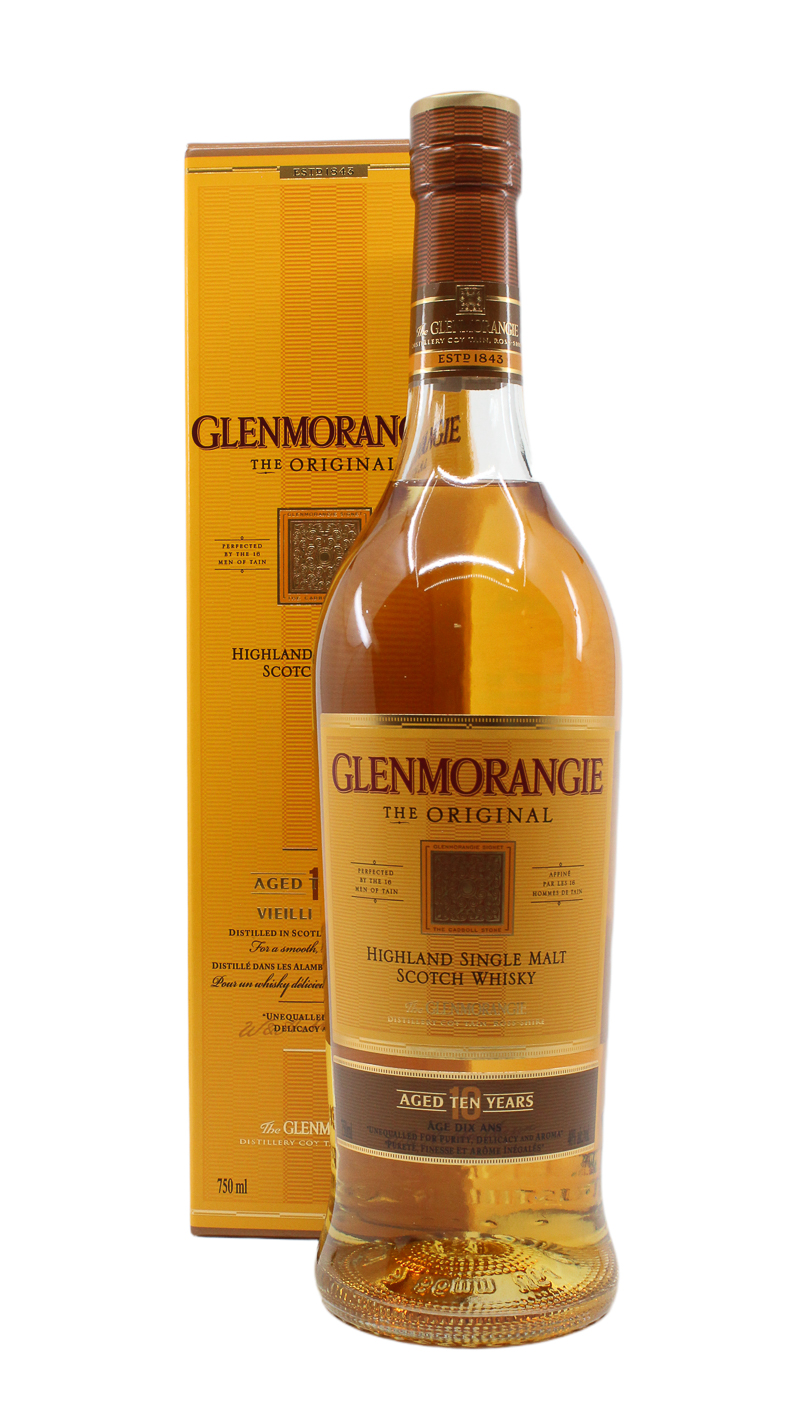
Welcome to day 17. Today we have the flagship of the Glenmorangie line, the Glenmorangie 10. A simple offering but it has a firm base and it’s easy to see why Glenmorangie has chosen this as their flagship.

GLENMORANGIE DISTILLERY

HIGHLAND SINGLE MALT SCOTCH WHISKYImage

The process at Glenmorangie starts with mashing unpeated barley with water from the distillery’s Tarlogie Springs – making this one of a small number of hard water sites in Scotland. Although there is no smoke, once a year some chocolate malt is added to the mash for use in the firm’s Signet brand – another of the distillery’s many innovations.

Fermentation is long, while distillation takes place in the tallest stills in Scotland, all of which retain the same long-necked design of the original pair which were brought from John Taylor’s gin distillery in 1887. This extra height allows a long interaction to take place between alcohol vapour and copper, and while the new make is decidedly high-toned [the cut points here are quite high] there is still a little note of cereal adding a dry counterpoint.

The vast majority of Glenmorangie’s make is aged in ex-American oak casks, many of which have been made to the distillery’s exacting specifications: slow-growth American white oak from north-facing slopes in Missouri, which is then air dried. The firm’s Astar bottling uses 100% of these ‘bespoke’ casks.

The casks are only used twice, with the second-fill casks all ageing in damp ‘dunnage’ warehouses to increase oxidative-driven flavours. As the whisky matures, it picks up more lush fruits, some honey, and mint as well as notes of vanilla, crème brûlee and, in the oldest expressions, chocolate.

Some of the mature spirit is then transferred to ex-fortified wine [Port, Sherry] and still wine casks [Sauternes, Burgundy, Super Tuscan etc] for a period of finishing. Glenmorangie was one of the pioneers of this technique.

GLENMORANGIE HISTORY

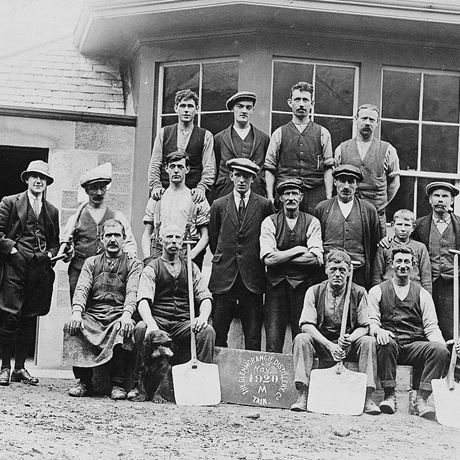
Situated next to the Dornoch Firth in a series of handsome red sandstone buildings, the Glenmorangie distillery started life as the local brewery for the town of Tain. In 1843, William Matheson converted it to a distillery and it remained in the family until 1887 when it was sold to the Glenmorangie Distillery Co, co-owned by the Maitland brothers and Duncan Cameron. After WWI the business was sold to a partnership between two blending and broking firms, Macdonald & Muir and Durham & Co, soon passing entirely to the former who used the whisky for blends such as Highland Queen. Although it was bottled in small quantities from the 1920s, a change of strategy in 1959 saw Glenmorangie revived as a single malt that soon became Scotland’s top selling.

This was not the first time this had happened however. Records show that at the end of the 19th century Glenmorangie was being sold in the Savoy and other top-end London hotels, as well as being exported.

Early success in the infant single malt category resulted in two more stills being added to the original pair in 1976, a number which was then doubled in 1990. In 2009, four more were added along with a larger mash tun and extra washbacks. Five years previously, French luxury goods firm Louis Vuitton Moët Hennessy (LVMH) had bought the firm [plus Ardbeg] for £300m. More recently, extra warehousing has been built, the result of a decision to mature and vat all the production on site.

Glenmorangie is now the third largest selling single malt in the world.

Tasting Notes

Nose: soft, silky and velvety; loads of white fruit, Red Delicious apples, citrus: hand pick California desert oranges; soft toffee, marzipan and grassy malt; floral with peaches.

Taste: still soft, silky and velvety; layers of white, citrus and stone fruits; more sliced apple, pears, orange, lemon and peaches; more toffee chews, chewy-grassy-malt, soft floral notes and gentle toasted oak notes.

Finish: medium and light, but layered and pleasant; vanilla, fruits and oak gently fade.

Purchase Links

Can be purchased here from Legacy Liquor

Day 16 — Ileach Cask Strength

Welcome to day 16. We return again to the peated offerings and another cask strength one to boot. The Ileach Cask Strength is a mystery malt from Islay. In other words, the distillery of origin is a mystery but look closely at the label and you’ll see a couple of clues: the distillery has its own bay, presumably passable on only the one side; its water-front has a distinct appearance; and could that be the ruins of the Dunyvaig Castle on the far right?

THE ILEACH PROFILE

ISLAY SINGLE MALT SCOTCH WHISKY

The Ileach is a young and peaty single malt from an unnamed Islay distillery, available in 40% abv and cask strength (58% abv) expressions.Image

Bottled by Highlands & Islands Whisky Co. Ltd, ‘the man from Islay’ is extremely popular in Sweden, where it’s the second best-selling single malt.

THE ILEACH HISTORY

Brian Crook established bottling company Vintage Malt Whisky Co. Ltd in 1992 upon leaving Morrison Bowmore Distillers, launching the business with new brands such as Finlaggan and Glenalmond.

The Ileach wasn’t launched until 1997, when Crook created Highlands & Islands Whisky Co. Ltd as a sister company. The single malt’s cask strength expression was introduced three years later, and the brand given a redesign in 2013.

Tasting Notes

Nose: hospital on fire,campfire bbq
Taste: Sweet BBQ Sauce, Honey, Heather,hint of orange,campfire with a wet dog nearby
Finish: Smoke

Purchase Links

Can be purchased here from Legacy Liquor

Day 15 — Tomatin Cask Strength

Welcome to day 15. I swear that I’m not trying to kill you with all these cask strength bottles, but here we are again with yet another one. Our offering today is full of fun and exciting flavors.

TOMATIN DISTILLERY

HIGHLAND SINGLE MALT SCOTCH WHISKY

It is Tomatin’s much improved wood policy which has brought it to the notice of single malt lovers. A higher percentage of first-fill casks – ex-Bourbon and ex-Sherry – has given more flesh and structure to the always top-notch spirit.

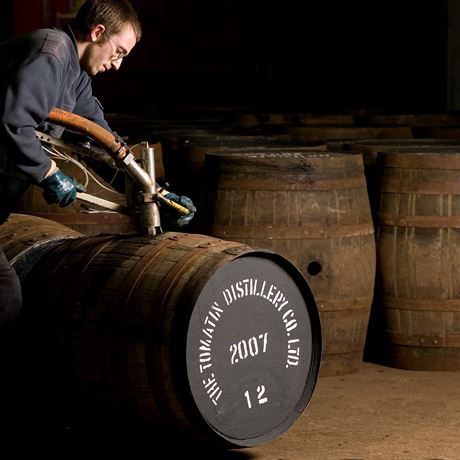
TOMATIN HISTORYImage

Although the first manifestation of Tomatin only ran between 1897 and 1906, its reopening under new management in 1909 saw the start of a remarkable journey which would culminate in this remote Highland outpost in between Aviemore and Inverness becoming the largest malt whisky distillery in Scotland.

Its expansion (and contraction) mirrors accurately the mood of the industry: from two stills to four in 1956, four to six in ‘58, an upping to 11 in ’61 and then in 1974 the most dramatic expansion of all, with 12 stills being installed, bringing the total to 23 and overall capacity to 10m litres per annum.

It couldn’t last. Even in 1974 the first indications of a downturn in Scotch’s fortunes were being noticed. Tomatin never ran at full capacity and in 1986 went into liquidation.

The site was saved however by two of its Japanese bulk customers, Takara Shuzo and Okura & Co [Okura’s stake was taken by Marubeni in 1998], making it the first Scotch distillery to be under Japanese control.

There has been a slow but steady recalibration ever since. The company bought blending firm J.W. Hardie in 1997, adding the prestigious Antiquary blend to its portfolio. Eleven of the stills were taken out of commission in 2000 and today only 2m litres are produced from six wash and four spirit stills.

The other major change has been a shift in emphasis from bulk supply to single malt (as well as Antiquary) – again Tomatin is mirroring the market’s continuing evolution. The single malt range has been widened in terms of age statements and introduced a peated variant, Cu Bocan.

Tasting Notes

Nose: leather, Christmas cake, chocolate, warm ginger snaps from the oven and citrus airfreshner; nutty, molten brown sugar, candied fruits and mixed Christmas nuts.

Taste: big, rich and spicy, massively sherried; huge, brooding and drying nutty Oloroso sherry notes; firm leather, wet muddy leaf litter, more candied fruits in medium dark chocolate and tingling spices: cinnamon hearts, candied ginger and some clove just pulled out of honey baked ham.

Finish: long, leathery and very sherried; drying and nutty with fading Oloroso sherry, chocolate and spice.

Day 14 — Kavalan Bourbon

Welcome to Day 14. Today is one of the whiskies that I am most excited for and is the second of our international offerings. Although not quite as good as Solist Ex-Bourbon it is still quite tasty. I hope you enjoy it, I know I will.

History

Kavalan Distillery was the vision of Mr. T.T. Lee, the founder of the King Car Group, a large pharmaceutical / agrifoods business. Taiwan is one of the world’s hottest whisky markets, and it only took King Car four years to get the project rolling from concept to distillation. The distillery was built in Yilan province south of Taipei over a 9 month period in 2005. The founders vision was to create a world class single malt whisky in Taiwan, he spared no expense, sought the most respected experts and they achieved their aim in a stunningly short period period of time. It doesn’t hurt that Taiwan’s steaming hot climate supercharges maturation, in just three years they can loose up to a third of a barrel and develop flavours that take 10-18 years in Scotland or Ireland. In 2010, just four years after the whisky first started flowing from Kavalan’s stills, the distillery started racking up awards.

Taiwan is a very mountainous island, it has 286 peaks over 3000m, and a range of rugged mountains separates the distillery from bustling metropolis of Taipei to the north. The drive from Taipei to Yuanshan, the town nearest the distillery, used to take two hours, but a tunnel through the mountains cuts the journey down to an hour. It is a beautiful and easy drive if you are ever in Taipei, and a curiosity if you’ve ever visited a whisky distllery i Scotland. The distillery is named for the indigenous people who once inhabited Yilan’s “Kabalan plain”. The King Car Group built the distillery here because of the plentiful pure waters that flow from Snow Mountain and Central Mountain, but also because of the location’s proximity to Taipei. Kavalan receives over 1,000,000 visitors a year!

Kavalan produces a range of whiskies, but their most sought after are those in the Solist Range, consisting of: Solist Bourbon, Solist Sherry, Solist Vinho (Whisky Magazine World Whisky of the Year) and atop the range Solist Fino. Today we are sampling the Bourbon Oak 46%, who’s closest approximation is the Solist Bourbon. Each of the whiskies in the Solist Range has a general style, but as they are always bottled as single casks there can be quite a lot of variation. While they will be quite similar, the Kavalan Bourbon 46% we are sampling here is not the same as the one you can currently get from the shop. But then the Solist Bourbon you find in stock is always changing as each Bourbon Barrel Kavalan bottles will yield little more than 100 bottles. Chances are every time you buy a bottle it will be a different single cask.

Tasting Note:

Kavalan Bourbon Oak

Nose: thick cream, polished new leather shoes, French perfume and Jujubes; soft melon and gentle orange notes; marzipan and almond paste filled croissants. 

Palate: creamy, round and velvety; loads cultured butter, more French perfume, Jujubes and Wine Gums; loads of citrus, soft melon, some pineapple and homey.

Finish: light, clean and honeyed; more Jujubes, Wine Gums, soft fruits and creamy buttery notes.

Purchase Links

Can be purchased here from Legacy Liquor

Or Solist If you want something really special

Day 13 — SMWS 35.168 – Essence of BFG

Welcome to day 13. If today is your 13th day in a row then I congratulate you on making it this far in the appropriate time. If you are drinking this whisky sometime after the 13th, well do not worry it is not a competition but you’re falling behind the pack.  In order to celebrate the middle of the calendar I picked out a little something special from the SMWS. As with all bottles from the SMWS, this one is bottled at cask strength and adding water is definitely recommended as this one comes out at 60.4%. But before you do, get the first hit at full strength. It’s rare to have something with so much depth at full strength and this one seems to deliver well.

The SocietyImage result for smws

The Scotch Malt Whisky Society is a club unlike any other.  As well as being a place to connect with other like-minded whisky lovers, we are also internationally renowned for our mission:  to provide our members with an adventurous and fun journey of discovery of the world’s widest selection of single cask whiskies.  As a member, you will join over 25,000 other members in 19 countries and have access to the very best single cask, single malt whisky available anywhere. Only members can purchase The Society’s fantastic and interesting whiskies.

With access to our monthly new bottling list, Outturn, you’ll have plenty of choices from which to find your ideal whisky. Also available exclusively to members is Unfiltered, an award-winning magazine that is guaranteed to provide you with fascinating insights into The Society and its events and the world of single malt whisky.

Members also gain access to Members’ Rooms in Leith, Edinburgh, London and elsewhere – and with the privilege of taking up to three guests with you, you’ll be very popular.

Straight from the cask, to the bottle, to you. Unfiltered. Undiluted. Unrivalled. Capturing rarity and perfection in a glass, The Scotch Malt Whisky Society’s bottlings attract curious and discerning whisky lovers from all corners of the globe.

History

The origins of the Society lie in Phillip “Pip” Hills’ travels around the Scottish Highlands in the late 1970s, during which he sampled several whiskies drawn straight from the cask.

Hills was so affected by what he tasted that, in 1978, he persuaded several acquaintances to share in the cost of a cask from the Glenfarclas distillery. Over time, the group of friends expanded to become a small syndicate and more casks were purchased, bottled and distributed to subscribing members.

Coinciding with the decision to open membership to the wider public in 1983, the Society purchased its first property, The Vaults, in Leith; a building, whose vaulted wine cellars reputedly stretch back to the 12th century.

The Society created a set of members’ rooms there.

In 1996, the Society launched a share scheme for its members, the proceeds from which were invested in the purchase of a London venue.

2004 saw the Society purchase a second venue in Edinburgh – a Georgian townhouse on Queen Street. In the same year, the Society was acquired by Glenmorangie PLC.

To mark the 25th anniversary of its foundation, the Society redesigned its bottles, to include more information and a full tasting note on the front of the bottle.

In 2015 the Society was sold back to private investors from Glenmorangie PLC.
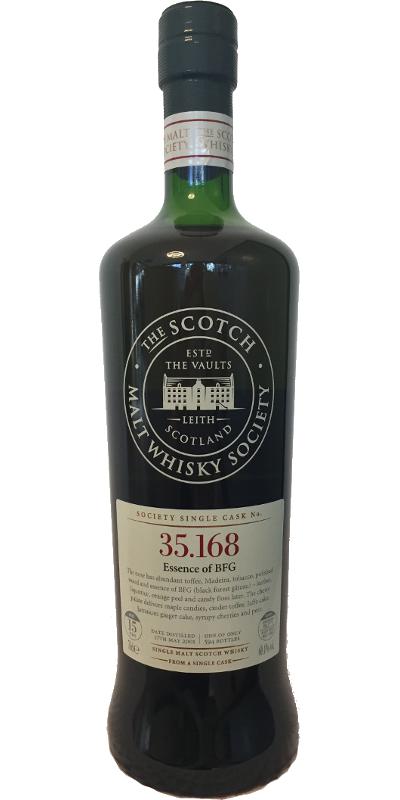
Glen Moray 2001 SMWS 35.168Tasting Notes

Nose: peat,orange,chocolate,half assed liqurice, Black marker,sharpie
Taste: candy corn,orange,chocolate,cherry,black Forrest cake
Finish: butter cream icing,black forrest cake,vanilla, panna cotta,cream

Purchase Links

If they still have stock can be purchased from the Strath No link avalible

Day 12 — Nikka Coffey Malt

Welcome to day 12. Today’s whisky comes from Japan and one of 2 international options in this calendar. There is a lot of interesting stuff going on in the whisky world and today’s bottle I hope symbolizes some of what we can expect to see in future years.

MIYAGIKYO Distillery

The location was selected for whisky production because of its clean air, just the right humidity for storage, and abundant underground water filtered through a layer of peat. In Yoichi, Masataka Taketsuru saw numerous reminders of Scotland, and this convinced him that this should be the home of Japanese Whisky.

The Miyagikyo Distillery is also in northern Japan, in Sendai (lat.38 N), Miyagi Prefecture, northern Honshu. Travelling in the area one day, Masataka came upon this site completely enclosed by mountains and sandwiched between two rivers. He immediately knew that this was the perfect site for whisky distilling. Sendai’s fresh water, suitable humidity and crisp air produce soft and mild malt.


Tasting Notes

Nose: sharpie,peat,salty,marzipan,oily
Taste: medicinal,Swiss cheese,grand mariner,oil
Finish: brie, salt

Purchase Links

Can be purchased here from Legacy Liquor

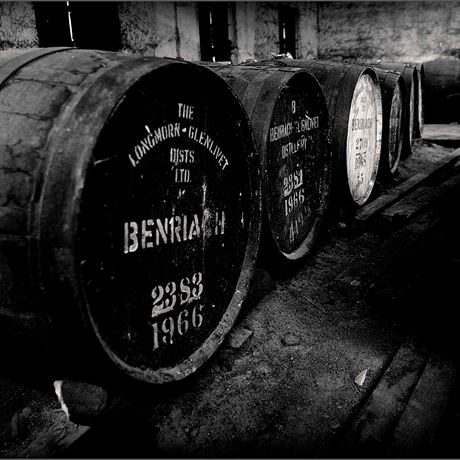
Day 11 — Benriach 10 Year Curiositas

Welcome to day 11. Curiositas is so named because relatively few Speyside malts are peated, especially to this degree. It is not exactly an attempt to imitate the Islay style, which often has more maritime flavors of seaweed, brine, and iodine. Instead, BenRiach seems to be experimenting with the earthy, woody aspects of peating.

BENRIACH DISTILLERY

SPEYSIDE SINGLE MALT SCOTCH WHISKYImage

Vibrant when young, it matures well – especially in refill casks where fruits take on a more tropical edge and extra spiciness steadily develops.

In the latter years of the Seagram era, Benriach produced a smoky distillate for blending purposes. The enthusiastic reaction to this style when its new owner bottled examples means a peated season takes place every year. A wide range of finishes – of both styles – is also available. Many of the bottlings have been given Latin names and the brand name has been rewritten as BenRiach.

The distillery is currently operated by Jack Daniel’s producer, Brown-Forman.

BENRIACH HISTORY

‘The best laid schemes o’mice and men gang aft a-gley’

Robert Burns could well have been writing about John Duff [builder of Glenlossie and Longmorn] and his intention to establish a whisky-making fiefdom close to Elgin. His Longmorn distillery had been built in 1893, and having achieved early success he decided what was needed was another  plant next door. In 1897, he built Benriach. Sadly, his timing could not have been worse.

The Pattison crash of 1899, coupled with a downturn in the domestic market, saw a huge number of distilleries (many of which had only just opened) close down. Benriach was once of those, only running for two years before languishing in silence for the next 65, during which its large malting facility was used to supply Longmorn’s requirements.

The upturn in whisky’s fortunes in the 1960s saw Benriach run from 1965 onwards. A single malt was bottled in 1995 as part of then owner Seagram’s version of UDV’s Classic Malts, but volumes were limited and its reputation was not particularly high. As a result, most malt whisky drinkers dismissed it.

When Pernod Ricard took over Seagram’s whisky division in 2001 Benriach was closed once again, but bought in 2003 by Billy Walker, the former production director of Burn Stewart, and two South African entrepreneurs (an ironic echo of Duff’s attempts to establish whisky production in that country in the late 19th century). The BenRiach Distilling Co. now owns Benriach itself, Glendronach (where, incidentally, John Duff was once manager) and Glenglassaugh.

As a former blender, Billy Walker had insight into the true quality of Benriach. A selective series of bottlings, mixing old (from Seagram days), very young (from their ownership) and peated (from both) proved an eye-opener to malt drinkers. It has rapidly become a strong performer on the global market. Today it is back in full production and in 2013 the floor maltings reopened.

The distillery was picked up by Brown-Forman, one of the largest US wine and spirits producers, in 2016 along with the Louisville-based company’s acquisition of the entire BenRiach Company.

Tasting Notes

Nose: honey, ash and malt leap out of the glass with crisp citrus and melon; toasty oak and dried cranberries also develop with a freshly opened pack of tennis balls.

Taste: the ash hits first with some baked apple and poached pear, the citrus is still there, but so is the whiff of a fresh tennis ball; very malty with building smoke, spices, melon and honey; dark muddy peat emerges over time with clove and Dutch licorice.

Finish: long, malty and honeyed with the fading ashy embers of peat fires.

Purchase Links

Can be purchased here from BC Liquor

Day 10 — Hyde 10 Year Sherry Finish

Welcome to Day 10. For the 10th day I figured a 10 year offering would be a good plan. Enter the Hyde 10 Year Sherry Finish Irish Single Malt Whiskey. This is a whiskey that’s gotten a fair bit of press in recent years, winning some impressive awards. But it is likely one you’ve never heard of before.

The curious thing about Irish Whiskey, is that even though it was the most respected whisk(e)y in the world in the late 19th Century, by 1975 there were just two active distilleries in Ireland. Bushmills in the North and New Midleton in the Republic. I know some of you will be surprise to hear that, and are about to ask “But, what about: Jameson, Tullamore, Powers, Paddy, Red Breast, Midleton etc… ? Again, I’m glad you did. The reality is these are just brands, some of which were once distilleries, but today they are largely produced by a single distillery.

The whiskey from Hyde is sourced from Cooley, a new distillery that cropped up in Ireland in 1987, converted from a potato ethanol plant. When it opened, challenging the industry that was there, it was just the third active distillery on the whole of the Emerald Isle. In the last few years distilleries have begun popping up like mushrooms after the rain. In just a couple years time there may be as many as a couple of dozen new distilleries. William Grant & Sons has built a new Tullamore Distillery for that brand. The Teeling Family, who opened and then sold Cooley distillery have built a new distillery in Dublin. Will the Hydes follow suit?

Ireland’s first President, Douglas Hyde!

About the Hyde Family: (In their own words) The Hyde family have a long tradition of being involved in the Irish drinks business. From 1640 until 1962 the family ran a tavern located just outside the picturesque town of Bandon in West Cork. The Hydes sold traditional Irish Whiskey and draught stout straight from wooden casks, tapped by hand with a mallet and brass tap. The drink business runs through twelve generations of the Hyde family tree. At one stage in 1916, their grandfather, granduncle and grandaunt were all publicans in Bandon. Today, Alan and Conor Hyde are the first generation not to own a tavern, but they continue the family tradition by producing some of Ireland’s finest whiskey.”

About the Whiskey from the Producer: “HYDE Single Malt Irish whiskey is made from 100% malted Irish barley, distilled at a single location. It is made in small batches on a traditional copper pot still. Then matured for over 10 years in flame charred, first fill, ex-bourbon casks from Kentucky in the U.S.A., before finishing for a further six months in either a Sherry or an Oak cask. The flamed bourbon casks initially add a sweeter vanilla and caramel flavour, followed by the toasted sherry casks which add a nutty, spice, dried fruit, and toffee character to the final dram. Sherry oak casks are far more expensive but our view is that they are worth it for the richer character they add to our final HYDE whiskey. (Oloroso Sherry cask cost €800 each. Bourbon Casks cost just €80 each!).”

Tasting Notes

Nose: floral, loads of vanilla, marzipan and silky caramel tones and polished oak shelves; candied fruits and Christmas cake, mom’s orange heavy mince meat pie in a buttery crust warm from the oven.

Palate: round, soft, chewy and silky; loads of big juicy barley, more vanilla and some lovely toasted oak notes; creamed honey leads to melon, orange and some darker fruits; candied fruits and Christmas cake are still there and build with some firm spice; a touch meaty, like a mom’s mince meat pie right out of the oven!

Finish: rich, coating and long; although the creamy vein continues to the finish, it is the darker elements (fruits and spices)  that dominate.