Day 9 — Arran Port Cask Finish

Welcome to day 9.  Much like Tullibardine, Arran is a master of finishes. Today we sample their port cask offering, however if you’re not a fan of peat then I do apologize. Thankfully the peat levels are much more minor today.

ARRAN DISTILLERY

ISLANDS SINGLE MALT SCOTCH WHISKY

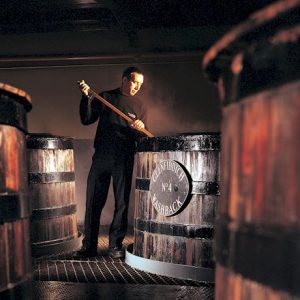
As an island whisky, it might be thought that Arran would always have been peaty. Instead, it started life as a non-smoky ‘Highland-style’ malt. Like any new build distillery, the equipment is in an easily managed single tier space with small semi-lauter mashtun, wooden washbacks and a pair of small stills.

The character shows light cereal crunchiness behind a distinctly citric note. Arran has also shown that this distillate, allied to a quality-focused wood policy, has given single malt that is capable of extended ageing. These days, peated malt is also being run.

ARRAN HISTORY

Although the Arran distillery is relatively new (production started in 1995), the island in the Firth of Clyde has a long history of whisky-making. A fertile place, the farmers in the south of the island had plenty of raw materials to work with, and when home distillation and small stills were effectively banned in the late 18th century, they simply went underground.

After all, demand for smuggled whisky was on the rise and Arran had excellent links to Glasgow. There is some evidence that molasses was also distilled here. When the law changed a legal distillery ran at Lagg from 1825, but it closed in 1837 and Arran’s distilling heritage was seemingly lost forever.

All that changed in 1995 when a consortium, headed by former Chivas Bros MD Harold Currie, chose a site at Lochranza in the north of the island. The decision to move to a part of Arran that was previously unknown for whisky was a result of two facts: a good water supply and potential for tourism. Today, in excess of 60,000 people visit the distillery every year.

Further cash was made by selling casks of whisky to private individuals but the scheme was halted when it was discovered that though the money raised was useful in creating initial cashflow, it resulted in the distillery not owning a significant percentage of its own stock – a problem when trying to build a brand.

Bottling started with a limited edition three-year-old in 1998 and the range has continued to expand, although today there are fewer ‘finished’ variants than in the past. A peated expression ‘Machrie Moor’ has also been introduced.

Tasting Notes

Nose: Vanilla spice and ripe citrus running into dried fruits and nuttiness.

Taste: Layered fruits and spice combine, with cinnamon baked apple wrestling with raisin and plum pudding.

Finish: long with barley-sweetness.
Purchase Links

Can be purchased here from Legacy Liquor

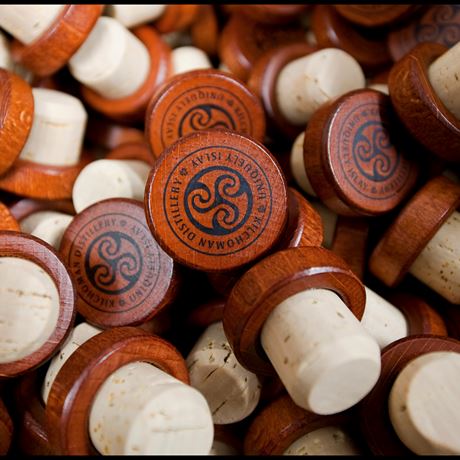
Day 8 — Kilchoman Machir Bay

Welcome to day 8. Today would be a good day to take your dram to the beach and just watch the tide go in or out. This strong peated offering goes well with campfires and friendship so sit back, kick your feet up and remember good times.

KILCHOMAN DISTILLERY

ISLAY SINGLE MALT SCOTCH WHISKY

ImageThese days 25% of its barley requirements come from Islay (mostly from fields around the distillery). It has a small malting floor and kiln which produces a medium-peated malt – the heavily peated with which it is mixed comes from Port Ellen. Inside the distillery, fermentation is long – helping to create fruitiness to balance the shoreline/shellfish like phenolics, while an enlightened (and pricey) wood policy has seen a high percent of first-fill ex-Bourbon and ex-Sherry casks being used. The result is that Kilchoman has hit the start of its mature period at a remarkably young age.
KILCHOMAN HISTORY

The location of Kilchoman on Islay’s west coast has some historical resonance. It was in this parish that the MacBeatha/Beaton family settled when they came across in 1300 from what is now Co. Antrim. They were doctors (a Beaton was the hereditary physician to the kings of Scotland for hundreds of years) who translated medical texts about distillation from Latin into Gaelic.  There is therefore a theory (albeit unproven) that Islay was the first place where distillation took place in Scotland – and that Kilchoman parish was where it occurred.

It wasn’t so much this which caused Anthony Wills to build his farm distillery here in 2005 – it was more the fact that there was a spare steading at Rockside farm available. In building Kilchoman, the Wills family has brought farm distilling back to Islay.

Now surrounded by barley fields, the distillery has expanded once (in 2007) built new warehouses and in 2010 hired a hugely experienced manager in John MacLellan who had spent many years at the helm of Bunnahabhain. The history may be short, but the long-term vision is very much in evidence.

Tasting Notes

Nose: campfire,leather,sharpie,must,smoke, wine gums
Taste: musty,campfire,sweets, smoke,marzipan
Finish: smoky watermelon jolly rancher,light sharpie

Purchase Links

Can be purchased here from Legacy Liquor

Day 7 — Tullibardine 225 Sauternes

Welcome to day 7. Today we have an interesting offering if you are a fan of seeing what a finish can do to the same whisky. Tullibardine is a distillery that likes to play around, they have finishes like today’s in sauternes casks, burgundy casks, sherry butts, & first fill bourbon casks.

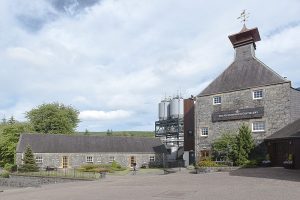
TULLIBARDINE DISTILLERY

HIGHLAND SINGLE MALT SCOTCH WHISKY

Image

The requirements of a single malt house – which Tullibardine became – necessitated some tweaking of the spirit run (introducing more high-toned floral notes now coming to the fore, with the nuttiness being dialled down) and a more 21st century wood policy with a massive influx of fresh casks.

TULLIBARDINE HISTORY

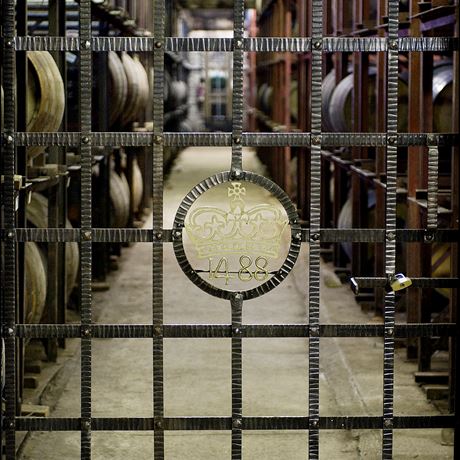
Alcohol has been produced in Blackford for over six centuries. A brewery was operational in 1488 when James IV [the King who famously asked Friar John Cor to make aqua vitae from eight bolls of malt in 1495] stopped to buy a barrel of ale after his coronation at Scone. It could lay claim to be the oldest ‘public’ brewery in the kingdom.

Distilling was also tried. In 1798, William & Henry Bannerman opened the first Tullibardine distillery, though it only ran for a year. In 1814, Andrew Bannerman (presumably a relative) tried again. This time it operated until 1837. By the 19th century, the town had a maltings and three breweries: the original one, Gleneagles Bre

wery, now owned by the Sharp family, the other two by the Eadie family. Both of Eadie’s plants closed by the turn of the 20th century, leaving Gleneagles to soldier on until 1927. At this point it seemed as if this rich tradition had finally ceased, but in 1949 the famous distillery designer William Delme-Evans bought the Gleneagles Brewery site and built a new distillery there. It was the first to be built in Scotland since 1900.

In 1953 it was bought by blender Brodie Hepburn which increased capacity (see Glenturret) and from there via Invergordon (which bought Brodie Hepburn) into Whyte & Mackay (which in turn bought Invergordon) which promptly mothballed it, though retaining its extensive warehousing.

Tullibardine lay silent from 1994 until 2003, when a business consortium snapped it up. Their idea was to sell off some of the site as a retail park, using the money raised to get distilling up and running again.

In a similar fashion to Bruchladdich, the new owners found that most of the stock had been filled into old, tired casks which though suitable for some aspects of blending were not ideal for a stand-alone single malt brand. An extensive – and expensive – re-casking operation started along with the inevitable rash of ‘finished’ whiskies. The group sold their interest in 2011 to the French wine and spirit group, Picard which owns the Highland Queen and Muirhead’s brands and was looking for capacity.

The (failed) retail park venture has been bought back and a newly repackaged and reformulated range of single malts has been introduced.

In a nod to tradition, Tulibardine has joined with Bridge of Allan brewery to produce an ale, appropriately enough called 1488.

Tasting Notes

Nose: Flintstones Vitamins,Citrus peels, and allspice.
Taste: peppercorns,melon,toasted grains,lemon,honey
Finish: Melba toast,lingering sweet spices.

Purchase Links

Can be purchased here from Legacy Liquor

Day 6 — Ardbeg 10 Year

Welcome to day 6. Today’s offering is what most of us thing when we think scotch. Smokey, rich and interesting Ardbeg never fails to deliver. Whether you are having this dram to strengthen your morning or after a hard day (hey I don’t judge), I am sure you will find today plenty interesting and tasty. For those of you that are not fans of peat, this being calendar of secrets tomorrow is a different whisky…. or is it?

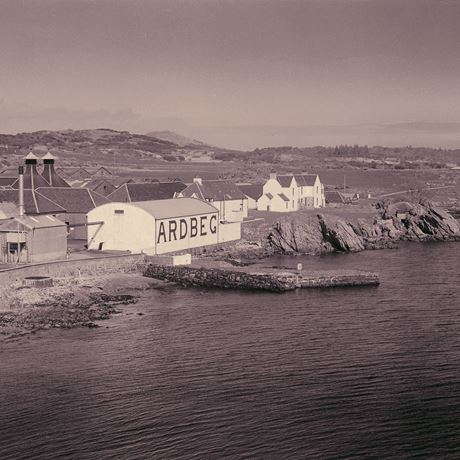
ARDBEG DISTILLERY

ISLAY SINGLE MALT SCOTCH WHISKYImage

Heavy peating at Port Ellen maltings gives the smoke, long fermentation helps to increase softness and a clean, acidic fruitiness, while it is the use of a purifier pipe in the lyne arm of the spirit still which adds an oily, textural quality to the final product but also helps to refine the spirit. A new, modern and very Glenmorangie wood policy has also helped to give more roundness to the final mature product.

ARDBEG HISTORY

By the end of the 19th century, Ardbeg had become a valued fixture on Islay’s southern coast. Founded in 1815 by the McDougall family, the site had grown into a small community with housing, a hall, greenhouses, a bowling green and a school for 100 pupils. The reason for its success was tied to the growing popularity of blends and the need for most to have some smoke running through them.

When the combination of war and iconic depression hit the blended market in the 1920s however it – like most distilleries – was finding the going tough. It wasn’t to be the last time. The Hay family, which had taken the licence in 1853, steered it back to profitability before the distillery was bought by DCL and Canada’s Hiram Walker in 1959.

A rise in demand for peated whisky saw production increase in the 1960s and 70s, with demand necessitating that the distillery bring in peated malt from Port Ellen from 1974. For aficionados the end of Ardbeg’s self-sufficiency was the end of an era – and a style. Seven years later, Ardbeg’s kiln was finally extinguished.

The Canadian distiller took full control in 1979 buying out DCL’s 50% share for £300,000. By that time, blends were once again on the slide and to compensate for the drop in demand for smoky malt an unpeated make [Kildalton] began to be produced.

In 1981 the distillery was mothballed but restarted again in 1989, albeit on an intermittent basis, by which time it had joined Laphroaig in the Allied Distillers stable.

In 1996, it was silent once more, but saved a year later by Glenmorangie which paid £7m for the distillery and stock – or what there was of it. By this time, Ardbeg had built its reputation as one of the cult single malts. Glenmorangie’s task therefore was both to manage expectations, eke out the remaining stock, and start recreating the brand. In an inspired move they also invested in a visitor’s centre and cafe (for years pretty much the only place to eat in the south of Islay).

The stock profile meant that its first age statement release was a 17-year-old, while it would take until 2000 for its own Ardbeg 10-year-old to appear. From 2004 however there had been incremental releases, ’Very Young’, ‘Still Young’ and ‘Almost There’ showing the work in progress.

The portfolio still concentrates on no-age-statement releases, some exclusively from (now very rare) old stock, others from new, some from a mix. Different oaks have also been used as part of a general improvement in the quality of casks used.

Despite demand continuing to rise, Ardbeg will remain small and will remain a cult – albeit one with a global community, ‘The Committee’ numbering in excess of 120,000 people.

Tasting Notes

Nose: orange and tangerine with French bakery notes and chewy peated malt; honeyed and fruity, some licorice and candied fennel emerge; then sweet smoke and salted caramel.

Taste: sweet, fruity and very smoky; the chewy peated malt dances with more salted caramel while the more delicate fruit notes are left at the edges of the room to watch; becomes peatier and earthier with the dark spices emerging on the second and third sip; coming in waves it softens and settles down becoming creamier and more fruity.

Finish: long, coating, salty and smoky; the malty notes linger as the palate dries with the fruits and caramel fading first.

Purchase links

Can be purchased here from BC Liquor

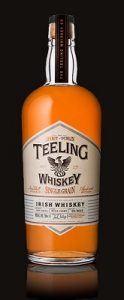
Day 5 — Teeling Single Grain Irish Whiskey

Welcome to Day 5. Like single malt, the implication of the word single with reference to grain whisk(e)y, is that it is from a single distillery. Grain whisky is typically made from either corn or wheat in Column, Continuous or Coffey stills. If single malts are the highlights of a Blended whiskey, grain whisky is the body. But that doesn’t mean there isn’t potential.

Grain whisky is generally cheaper to make and less characterful. It is less expensive to produce because the distillation can be done more quickly and in larger batches. It is less charaterful because they distill or refine the alcohol to a much higher level of alcohol, which leaves behind fewer impurities. It is these impurities which give different single malts their own house character. Grain whiskies are much less easily distinguished from one another. Most grain whisk(e)y is not very interesting, because it is put into poor quality wood. It is not there to add pleasant characteristics. That being said there are some fabulous grains out there, and some of the older Scottish single grains are starting to become very popular. This is in no small part because they offer the consumer much better value.

But what of this Teeling Single Grain Irish Whiskey? It is fully matured in California red wine barrels and bottled at 46%. The whiskey was awarded the “World’s Best Grain” at the 2014 World Whiskies Awards. It is one of very few single grain Irish whiskies, and was distilled at the Cooley distillery, before the family sold it to Beam. See below.

http://www.irelandwhiskeytrail.com/?pg=cooley_distillery_tour_ireland.php

Dublin’s last distillery closed its doors in 1976, part of an industry-wide consolidation which saw the Emerald Isle left with but two distilleries, Bushmills in Northern Ireland and the giant new Midleton Distillery in the Republic. Even to this day most Irish whiskies hail from the New Midleton Distillery in Cork. But this has begun to change, in recent years distilleries have been popping up all over Ireland. It all began with John Teeling in 1987 when he converted a closed government potato ethanol plant into a whisky distillery. The Cooley Distillery made quite a name for itself in the two and a half decades it operated independently, until selling to Beam Global (now Beam Suntory) in 2011 for USD $95 million. In addition to a huge pile of cash, John Teeling and his sons walked away from the sale with impressive stocks of matured whiskey, the are the basis of the Teeling Whiskey brand which includes award winning single malts, single grain and blended Irish whiskies.

The sale of Cooley Distillery and the success of the Teeling brand has afforded the family the opportunity to bring the it’s distilling heritage back to Dublin’s, Liberties area. The Teeling Distillery, Dublin’s only active distillery is the first one to be built in the city in 125 years. The Irish whiskey industry’s fortunes are changing, where as in 1987 there were just 3 distilleries including the new Cooley distillery, there are now more than a dozen active distilleries in Ireland and more planned. It will be many years before the whiskies from Teeling’s new distillery reach maturity, in the meantime lets hope they keep releasing excellent stocks from their old one. Especially single malts like this one which consist of stocks distilled as far back as 1991 and finished in 5 different wine casks (Sherry, Port, Madeira, White Burgundy, Cabernet Sauvignon. Like all the other whiskies in the range, the Teeling single grain is non-chillfiltered and bottled at 46%.

Tasting Notes

Nose: double caramel corn, brandy filled chocolates, silky honey and pure vanilla extract; soft earthy tones, crisp but gentle spice and subtle leather; easily identifiable as a grain whiskey, but not sharp or rough.

Taste: huge caramel notes, butterscotch and creme brule; more caramel corn, white chocolate and mixed berries smothered in whipped cream; fruits become darker and more jammy, with more crisp but delicate spice and soft leather; waxy Strawberry Twizzlers.

Finish: light but long; warming and full of character: more berry fruits, Straberry Twizzlers and slowly fading spices.

Purchase Links

This Whisky can be purchased at the Strath, no link available

Day 4 — G&M CC Inchgower 2005

Welcome to Day 4. If you have ever had a whisky calendar before you probably have seen that Gordon MacPhail whiskies tend to frequently crop up for a couple of reasons. Firstly, the family owned firm has one of the broadest ranges of bottled whisky in the world. Then there is the issue of quality, they won’t put their name on anything they don’t believe in, and it shows. Finally, and perhaps most crucially is the fact that they bottle quite a number of whiskies in both full size (700ml) and  50ml formats.

Inchgower is a whisky we almost never see bottled by its owners, Diageo, and even independent bottlings of it are infrequent. The distillery is about median sized by Scottish standards today, with an annual production of 3.2 million liters. Virtually all of this however goes into blends, principally Bell’s, Johnny Walker and White Horse.


Photo Courtesy: http://lostdistillery.com/photos/tochineal01.jpg

Inchgower was founded in 1871 in the Banffshire town of Buckie, on Scotland’s Moray coast, near where the Spey River empties into the sea. The distillery was built by Alexander Wilson & Co., with equipment they had removed from their Tochineal Distillery (Est. 1825), shut down the same year. In 1936 Alexander Wilson & Co. goes bankrupt, and the town of Buckie purchased the distillery for £1,600. This seems like a ludicrously small sum by today’s standards, but the town council was no doubt quite pleased to sell the distillery on to Arthur Bell & Sons for £3,000 just two years later. Quite a tidy profit.


Photo courtesy: http://www.smwhisky.com.au/resources/common/libexec/image.php?image=1101

Th distillery’s capacity was doubled in 1966 at the beginning of the 20th Century’s first whisky boom. By the 1980s boom had turned to bust, and in 1985 Guiness acquired Arthur Bell & Sons after nearly 50 years of operating the Inchgower distillery and a number of others. Arthur Bell & Sons was merged with Distilleries Company Ltd in 1987 to form United Distillers under the Guinness umbrella. In the nearly 30 years which Diageo (a later reorganization of Guinness and United Distillers) has run Inchgower, there have only been a handful of official releases. Inchgower has remained one of the most important components in the Bells Blended Scotch whisky over the period. 26 million bottles of Bells were sold in 2015. The brand is the second best selling blend in the UK, and #10 in the world.

I have always found Inchgower to be a meaty, and naturally sulphurry whisky. A number f whiskies, like Mortlach and Dailuaine, are also made to have meaty-sulphurry styles, which add weight and complexity to Blends. In the case of Inchgower, its style is largely influenced by its long middle cut. The distillery starts its spirit run, or heart, at 72% (which is common), but runs it down to 55%, much lower than most distilleries. This particular bottling of Inchgower by Gordon MacPhail has been bottled at 46% without colouring or chill-filtering.

Tasting Notes

Nose: flan, salty,ginger,tobacco, leather,vanilla,sea breeze,brine
Taste: ocean, salt,custard,Standing naked at the seashore throwing rocks at seagulls,tobacco,leather, licorice
Finish: fading fudgy chocolate, dark fruits and leather, burning pear

Day 3 — Glendronach Peated

Welcome to day 3. Hopefully yesterdays whisky did not kill you, seeing as you’re here that’s probably not the case. Or maybe it did in that case welcome all new Zombie Dev’s to the first ever 23 Day day calendar. Why 23 days you ask… oh look over to your left I bet their brain is tasty they probably would not mind if you snacked on a bit of it don’t worry about the smell coming from the bottle it’s just tasty peat. Today’s whisky is the first of many peated offerings. I hope you enjoy today’s whisky and now to the blurb.

GLENDRONACH DISTILLERY

HIGHLAND SINGLE MALT SCOTCH WHISKYGlenDronach distillery

Inside are a traditional rake and plough mash tun, wooden washbacks and four stills which were coal fired until 2005, the last in Scotland to be heated in this way. Today there is just a quiet susurration of steam in the stillhouse, but the oddly shaped wash still and the plain sides of the spirit still cut back on reflux, helping to build weight in the spirit.

These days, ex-Sherry casks are the distillery’s signature style. Some is 100% Sherry matured, some is started in ex-Bourbon casks to pick up vanilla sweetness before being racked into ex-Sherry.

GLENDRONACH HISTORY

One of a trio of distilleries in the Garioch, Glendronach was founded in 1826 by a partnership of local farmers headed by James Allardice. Under his charismatic lead, it built a strong reputation (it was on sale in London soon after its foundation) but tragedy struck in 1837 when a fire virtually destroyed the distillery. The bad news continued when Allardice went bankrupt in 1842.

His promotional activities had however stood the whisky in good stead. Seeing its potential, Walter Scott (not the author) came forward in 1852, and rebuilt the distillery into its current condition. Its next most significant owner arrived in 1920, when Capt. Charles Grant, the youngest son of William Grant of Glenfiddich, bought it. It remained with the family for 40 years when it was sold to Wm Teacher & Sons. who added a second pair of stills in 1967.

It passed into the orbit of Allied Distillers in 1976, when that firm purchased the Teacher’s estate. In 1991, it was released as two 12-year-old expressions – one aged in ex-Bourbon, one in ex-Sherry – a real innovation for the time, but the brand never received any serious backing. Placed in mothballs between 1996 and 2002, it ended up with Pernod Ricard which sold it in 2008 to The BenRiach Distilling Co.

Since then, a new visitor’s centre has been opened and a new range of single malts has been released. It is fast becoming a favourite with Sherried malt lovers globally and has built a considerable following in Taiwan.

Glendronach was purchased by Jack Daniel’s Tennessee whiskey producer Brown-Forman in 2016 along with its acquisition of The BenRiach Distillery Company.

Tasting Notes

Nose: honey, Glosette raisins and hot apple cider with a cinnamon stick by the peat fire; juicy malt and clean smoke with marmalade and green grasses.

Taste: very honeyed, more dark fruits: Glosette raisins and prosciutto warp figs with date bars; only a hint of smoke at the start but successive waves bring phenols and gradually build up the strength of the peat; still very juicy and malty, the smoke is clean and ashy, not unlike BenRiach’s with late soft leather and tobacco adding weight.

Finish: honey, malt, dark fruits and clean ashy smoke linger long.


Day 2 — Glengoyne Cask Strength Batch 4

Welcome to Day 2. Just to make sure you’re all awake we figured that a cask strength would be fun right off the hop and this Glengoyne does not fail to deliver at 58.8% this should help get you in that festive mood or give you the excuse you need to get your humbug on. Batch four of Glengoyne’s Cask Strength bottling has been aged in a combination of first-fill sherry casks and refill casks.

GLENGOYNE DISTILLERY

HIGHLAND SINGLE MALT SCOTCH WHISKY

It runs a combination of long (and very long) fermentations, while distillation in its three stills (one wash, two spirit) is extremely slow. All of the stills have boil bulbs, which increases the amount of copper availability, while the gentle heating of the wash and spirit also helps to maximise the amount of time the alcohol vapour can play with the copper. This maximising of reflux produces a gentle, sweet, and fruity new make.

There is however sufficient weight in the spirit to be able to balance with maturation in ex-Sherry butts – a signature of Edrington’s distilleries – which has been retained by Ian MacLeod.

GLENGOYNE HISTORY

Glengoyne Distillery

A distillery has stood on this site since 1833, when the Edmonstone family (the main landowner of the area) began production, passing control to the MacLelland family in the 1850s who, in turn, sold it to the Glasgow-based blender Lang Bros in 1876. It was they who changed the distillery’s original name, Burnfoot, to Glen Guin which was anglicised to Glengoyne in 1905.

It played a vital role within Lang Brothers’ blends [the best known being Supreme] and those of Robertson & Baxter (now Edrington). The latter firm bought Lang Brothers. in 1965.

Single malt bottlings began in the early 1990s, when Glengoyne was sold as ‘the unpeated malt’, while much was also made of the fact that, geographically, the distillery is in the Highlands while its warehouses, directly across the road, are in the Lowlands.

Edrington considered it surplus to its requirements in 2003, selling it to Ian MacLeod for £7.2m. Its new owner has subsequently (and successfully) focused on developing the brand as a single malt and the distillery as a multifunctional tourist destination. It now gets in excess of 50,000 visitors a year.

Tasting Notes:

Nose: taffy, butterscotch lifesavers, vanilla wafers, butterscotch, Rum
Taste: leather,ginger,fruit cake, butter, cucumber end
Finish: Butterscotch, Leather, Jalapeno,pepper, hint of raisins,short,fruit cake

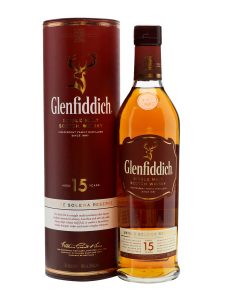
Day 1 — Glenfiddich 15

Welcome to the first of what I hope is the beginning of an annual tradition. We start out our first day with a simple but tasty offering. Each day we will offer a bit of a ramble and then some tasting notes and where possible a link to purchase the full sized bottle. So now without much further ado let’s get the first day on the road if you have not already cracked the lid on this fine bottle.

GLENFIDDICH DISTILLERY

SPEYSIDE SINGLE MALT SCOTCH WHISKY

All of the stills in ‘Stillhouse 2’ remain directly fired (by gas). The size and shape of the stills have not changed since 1886 (see below) which seems to contradict Glenfiddich’s new make character – light, estery, pear and apple-accented. Small stills and direct fire are meant to combine to make a heavy style. Here, however, having an early cut point preserves that delicacy. The number of stills is another clue. More spirit could have been made with a smaller number of stills by widening the cut, but that would have meant that character would have been lost. The only solution was to add more stills.

That delicacy is seen most clearly in the 12-year-old. After that, a steady increase in the amount of ex-Sherry casks used adds increasing layers of fruit and weight but the light notes seen in the new make are never fully lost.

The firm has also pioneered (or maybe revived) a type of solera ageing. This involves a set recipe of mature stock from specific cask types being mingled together in a solera vat which is then never more than half emptied.

The technique was pioneered for the 15-year-old expression and now three more vats have been constructed for the Select, Reserve and Vintage Cask range. The vatting cask for the 40-year-old, containing whiskies from the 1920s, is also never fully emptied. Because none of the vats are fully emptied some of the original whiskies are still contained in the mix, something which adds mouthfeel and harmony to the final whisky.

Indeed, all Glenfiddich undergoes a marrying process – if not in solera vats then in marrying tuns where the component parts are allowed time to meld together. It is time consuming – and expensive – but William Grant & Sons believes it adds quality to the final product.

GLENFIDDICH HISTORY

The story of the building of Glenfiddich has the air of a Victorian fairy tale. It was in 1886 that William Grant of Dufftown decided to leave his position as manager of Mortlach and start up on his own. He had saved assiduously and, fortuitously, was starting his project just as Elizabeth Cumming was revamping Cardhu and replacing her old small stills. Along with his wife and nine children, William built his distillery near to the Fiddich river by hand. The first new make trickled out on Christmas Day, 1887. At a time when more distilleries had foundered than succeeded, and those which were being built tended to be bankrolled by brokers, bonders and blenders, his enterprise and stubborn belief was remarkable.

He must have been a talented distiller, for his whole output was soon snapped up by Aberdeen blender and broker William Williams. Within 25 years, the family firm had 63 agencies internationally, proving them with their family blend, ‘Grant’s Standfast’.

The firm is still wholly owned by the Grant family (now in its fifth generation), and has expanded to include three more malt distilleries [Balvenie, Kininvie and Ailsa Bay], a grain plant [Girvan] and other brands such as Monkey Shoulder and Hendrick’s gin.

In 1963, after a dispute over grain supply (which prompted the firm to build the Girvan plant) the decision was made to bottle and promote Glenfiddich as a single malt, the first concerted effort to create a global malt brand. In the late 1960s it was one of the first to be sold in new duty free outlets and in 1969 the distillery’s doors were opened to the public – another first.

Today, Glenfiddich remains the world’s best-selling single malt with sales in excess of a million cases a year.


Tasting Notes


Nose: An intriguingly complex aroma. Sweet heather honey and vanilla fudge combined with rich dark fruits.
Taste: Silky smooth, revealing layers of sherry oak, marzipan, cinnamon and ginger. Full-bodied and bursting with flavour.
Finish: Satisfyingly rich with lingering sweetness.


Purchase Links

Can be purchased here from Legacy Liquor

Here from BC Liquor

How to Calendar

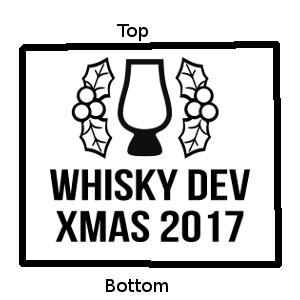
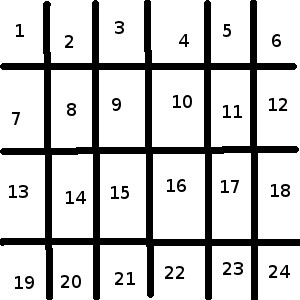
Tomorrow is Dec 1st and I know your all excited to open those boxes of tasty goodness but you are wondering how do i know which days are which. Well below I have a quick image guide to your calendar

Step 1
This is your box

it goes this way

Step2

Days are arranged

like this

Step 3

Collect Day one from calendar and put liquid in the glass

DO not open day 2,3,6, or 17 and especially not Day 25


Step 4

Image result for drink whiskey cartoonDrink Day 1 and enjoy


Repeat all above steps on day 2 but use 2 in all the appropriate steps