Day 15 — Writers tears cask Strength

Welcome to day 15. Today we have one of my favourite whiskys or at least my go to when i have no idea what i want and just want whisky. That said i don’t normal grab the cask strength so lets dig into this and see if I could be a daily driver

Whisky

Country: Scotland

Age: NAS

ABV: 40%

Profile

Writers’ Tears Irish Whiskey, bottled by Walsh Whiskey Distillery, is a blend of single malt and aged single pot still whiskies, the latter category referring to Irish whiskeys made from a combination of malted and unmalted barley on a pot still. This unique combination means that Writers’ Tears is technically a blend, but it’s one made entirely without grain whiskey. Irish whiskey once suffered from a reputation for being cheap or simple as a result of bootlegged Irish whiskies during Prohibition, but contemporary expressions like Writers’ Tears and many others are changing the way people think about Irish brands.

Writers’ Tears has a modern name, and its label is simple, cool-looking, and contemporary. It’s aged in American bourbon barrels, producing a light, smooth flavor profile. Walsh Whiskey Distillery began in 1999 with Bernard and Rosemary Walsh and their mission to create the perfect Irish Coffee.

In 2006, the company made a long-term deal with an Irish whiskey producer, and were able to make more whiskey to their specifications. This deal allowed the company to expand their distribution and get a head start on the rapidly expanding Irish whiskey market.

Tasting Notes

Nose: Pear drops, candied fruits.
Taste: Heather honey, fennel, cinnamon spice.
Finish: Creamy chewy toffee.

Purchase Links
BC Liquor


Day 14 — Peats beast

Welcome to day 14. Normally we don’t stack peat to peat but this year looks like we did. That said who doesn’t like a misery whisky so we preset to you Peats beast. The story below is about all most places had on this whisky. So without much adieu lest try this whisky out and see if we can gleen more information

Whisky

Country: Scotland

Age: NAS

ABV: 4%

Story

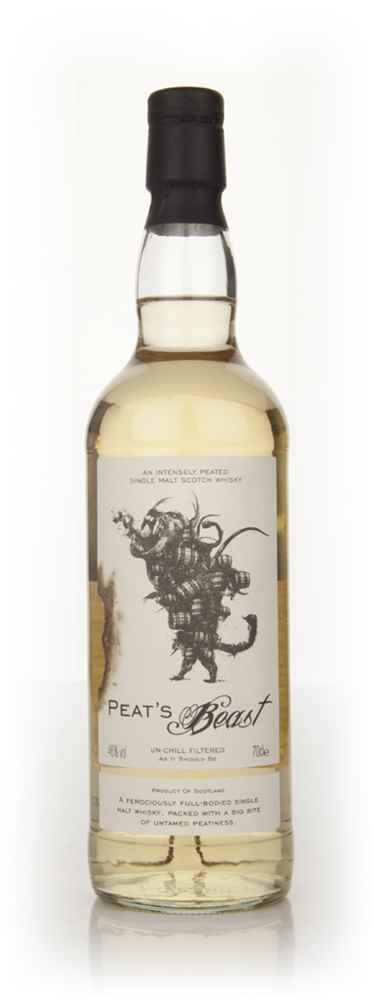
A lightly coloured young, extremely peaty whisky from an unnamed distillery somewhere in Scotland. It’s got the rampant smoke you’d expect from a beastly named whisky as well as a pleasant, citrussy fresh fruitiness. The packaging is pretty striking too, with a scary monster and a (deliberately) singed label. Bottled at 46% and un-chillfiltered, just how we like ’em.

Peat's Beast

Tasting Notes

Nose: Crashing waves, wood smoke, ash and tar. A hint of apple
Taste: salt and kippers, a bit of butter and hot pepper spice. Water brings out some apple and banana
Finish: lasts for ages, ash, dark chocolate, pepper riding, oily base

Purchase Links


Day 13 — Ardnamurchan AD 01.21:01

Welcome to day 13. If you are making it here on day 13 congratulations we know from experience that 13 days straight is an achievement. To honour that achievement we have a quite new distillery so its unlikely you have had anything from it. As such lets tuck in quickly maybe you found a new favourite?

Whisky

Country: Scotland

Age: NAS

ABV: 46.8%

Story

Image

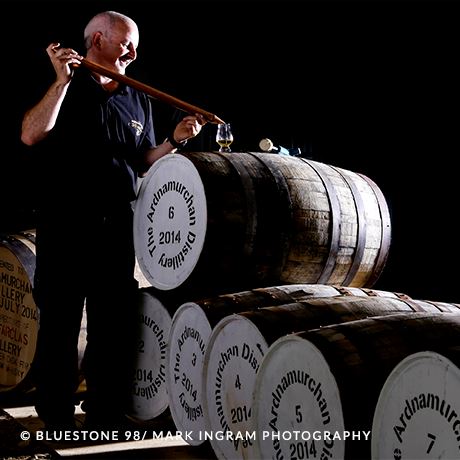
A hydro-electric generator in the river which also provides Ardnamurchan’s cooling water generates all the power required, while a biomass boiler using wood chips from a local forest provides all the hot water. The draff heads to local herds and pot ale goes as fertiliser for the fields.

Two styles of spirit have been made from the outset – peated and unpeated. Both use barley grown on the estate of one of the owners.

History

Legal distilling was unknown on the remote Ardnamurchan peninsula until independent bottler Adelphi opened its distillery there in 2014. This is not however the first distillery to bear the Adelphi name.

The original was built in the Gorbals district of Glasgow in 1826, passing into the hands of Archibald Walker in 1880, making the firm the only distiller to make whisky in Scotland, Ireland and England. By 1887 it was producing over 500,000 gallons of both malt and grain whisky a year. It was bought by DCL in 1903 and its pot stills stopped four years later. Grain was made until 1932. The site is now where Glasgow’s Central Mosque stands.

Archibald Walker’s great-grandson, Jamie, started Adelphi as an independent bottler in 1993. Its current owners bought the firm in 2004.

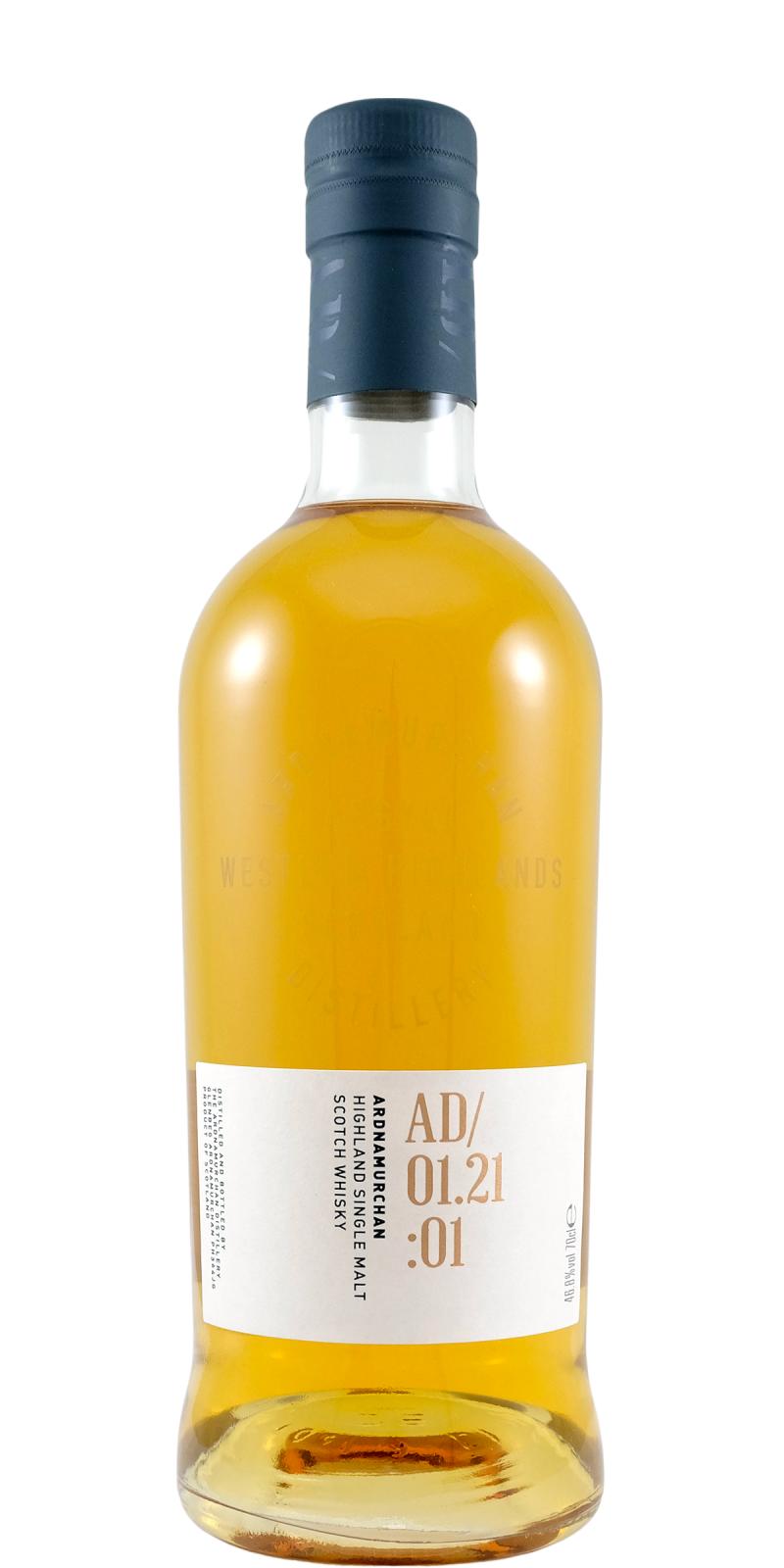
Ardnamurchan AD/01.21:01

Tasting Notes

Nose:Citrus notes, cheesy funk, light peat smoke, Steel-cut oats fresh from the bag or box, lemon meringue pie, grainy bread dough just starting to bake in the oven.
Taste: poutine, Key Lime tarts, oatmeal, a stick of juicy fruit gum.
Finish: Coastal, smoky and sweet mineral note

Purchase Links


Day 12 — Okanagan blk brbn

Welcome to day 12. Although technically a repeat this version of the brbn compared to the 2019 dram is cask strength and a couple of experienced years later and we think it shows. This is a vary approachable bourbon style whisky even at cask strength. It shows that the Okanagan is not only good at fruit production.

Whisky

Country: Canada

Age: 3 years

ABV: 54%

Profile

In 2004, when Okanagan Spirits Craft Distillery first opened their doors they were the only liquor producers in the Canadian province of British Columbia, making them industry leaders in Western Canada. With British Columbia’s restrictive tax laws in place, it was difficult for small operations to get their production up and running. Attitudes changed in 2013, when legislation passed making it easier for craft distilleries to set up shop and since then, many have, but Okanagan still remains the first to carve the way for a rapidly growing whisky industry in Canada.

Father-son duo Tony Dyck and Tyler Dyck run the self-proclaimed “farm-to-flask” company together. Their dedication is apparent in their robust line of products and list of pretty impressive list of awards. Okanagan Spirits has garnered a reputation for quality, receiving World Class Distillery accolades from the European-based World Spirits Awards (WSA), and Distillery of the Year from WSAs in Denmark and Austria in 2013.

Tasting Notes

Nose: Buttered popcorn, toasted vanilla, asian pear, allspice, sourdough bread, maple syrup, orange peels
Taste: lingering spice, lavender, coriander, charred oak, apricot, orange-vanilla cream soda
Finish: short and sweet, notes of vanilla, maple syrup.

Purchase Links

Ok spirits

Day 11 — Kilchoman sanaig

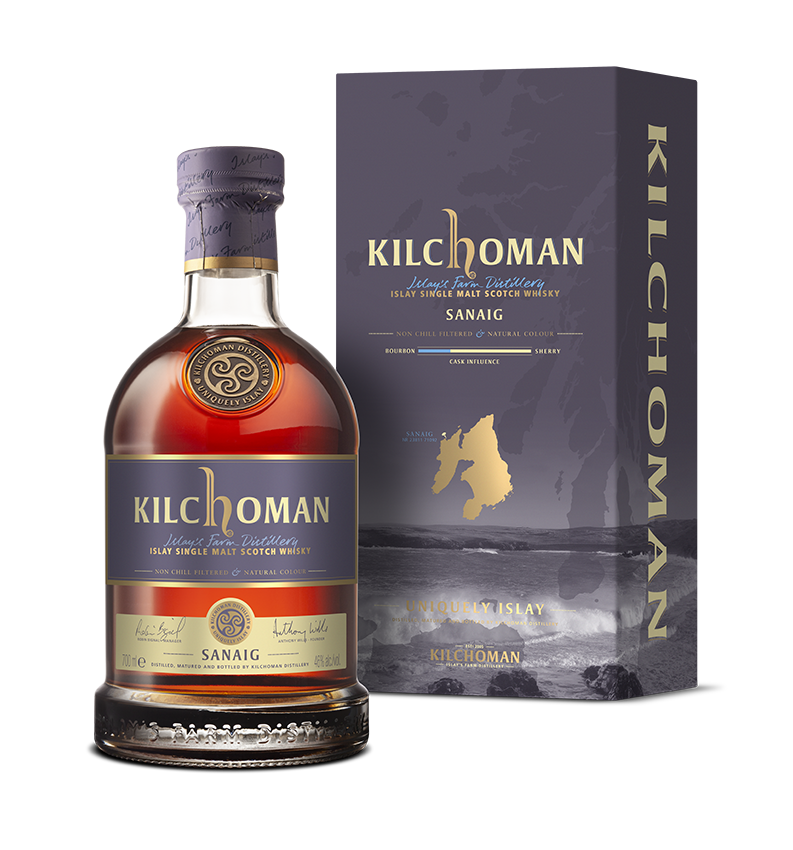
Day 11. Why would ?I present a lazy whisky here just because its Sunday. This whisky will punch you in the face tell you you deserved it then demand an apology. And you know what you will probably come back for another this whisky is yet another that its hard to say bad things about. They know what they are doing and they do it well. Lets all tuck in together.

Whisky

Country: Scotland

Age: NAS

ABV: 46%

Story

Image

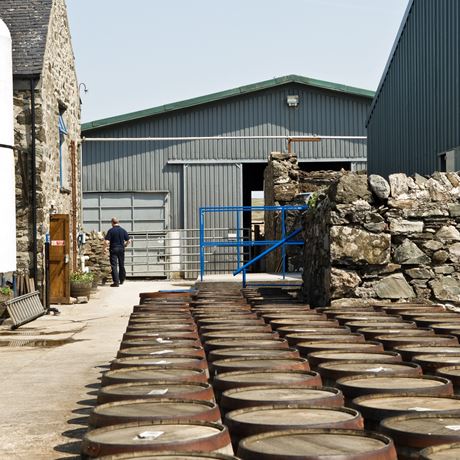
Kilchoman is a small-scale, farm-based distillery located at Rockside Farm, not far from Bruichladdich distillery and is owned by founder Anthony Wills and his family.

The distillery malts barley on site, with a significant amount being grown on Rockside Farm, and after all the processes of production have taken place, followed by a period of maturation, bottling is also carried out on-site, giving rise to the expression ‘From barley to bottle.’

The core range includes Machir Bay, Loch Gorm and 100% Islay, the latter of which is made entirely from barley grown on the island. Kilchoman single malt sells in some 35 countries.

History

Kilchoman commenced production in 2005 – three years after plans for the distillery were initially produced. It was the first distillery to be established on Islay in over 124 years.

Anthony Wills, managing director of the Kilchoman Distillery Co, ran his own independent single cask bottling company for eight years before coming up with the idea of creating a farm-based distillery.

Islay was chosen as the location for the distillery because of its global reputation for producing high-quality malts, and also because the family of Wills’ wife originated on Islay. Rockside Farm was selected as the distillery site because it had suitable buildings available and was noted for growing the best malting barley on the island.

Raising the funds proved the most challenging aspect of the project, and having secured £1 million from private individuals, the local enterprise board and a bank, a further £3.5million had to be provided by shareholders within two to three years of starting the project.

The first release of three-year-old spirit took place in September 2009, followed by a variety of limited editions and finally three core products. In 2015 Kilchoman Distillery Co purchased Rockside Farm from Mark and Rohaise French.

Tasting Notes

Nose: oceanside BBQ pit in need of a deep clean, with nearby lavender; suggestion of smoke; classic sherry, almost salt, sour cherry
Taste: veal; meaty, hint of sulfur; classic peat
Finish: smoked bubblegum on meat; basic peat

Purchase Links

Tudor house Liquor

Strath Liquor

Day 10 — Tullibardine 500

Day 10 and the hits keep coming and they don’t stop coming. Today we we have another well know name that has presented us with a sherry bomb and who doesn’t love that. I am not going to stop you from digging in immediately what better way to start a Saturday right?

Whisky

Country: Scotland

Age: NAS

ABV: 43%

Story

A visit to Tullibardine Distillery plus review The Murray Marsala Cask  Finish – Whisky Reviews

The Tullibardine Distillery may be a relatively young distillery in terms of Scotch production, but the area it comes from has a long and distinguished history of producing alcohol, dating all the way back to 1488. That was the year that King James IV of Scotland stopped off in Blackford in Perth and Kinross on his way to his coronation and wanted a beer.

He bought one from Friar John Cor at the local Gleneagles brewery, which went on to receive a Royal charter in 1503 as a celebration of that fine ale the King drank there on his big day. Hundreds of years later, the brewery had ceased production and work began in 1949 to transform it into the Tullibardine Distillery, which commemorates the Royal visit by having 1488 in its logo.

This wasn’t actually the first attempt to start whisky production in the town, with William & Henry Bannerman opening the first Tullibardine distillery in 1798, which closed after only a year. Andrew Bannerman tried again in 1814, and this second distillery lasted until 1837. When the Tullibardine distillery opened in 1949 it became the first new distillery to be built in Scotland since 1900.

The new distillery on the site of the Gleneagles brewery was founded by William Delmé-Evans and is named after nearby Tullibardine Moor. It draws its water from the Danny Burn, benefitting from being in an area renowned for its water quality, to the extent that it’s where Highland Spring bottled water comes from.

In 1971, Tullibardine was bought by Invergordon and saw its stills increased from two to four but after being bought by Whyte & Mackay, it was mothballed in 1995 before reopening again in 2003. Today the distillery is owned by French firm Picard Vins & Spiritueux and they have revamped the whisky produced here.

Traditionally Tullibardine was known to be floral and nutty but now it is lighter while still being floral and malty in character. Its single malts are available in the Marquess Collection, Custodians Collection and its Signature Range.

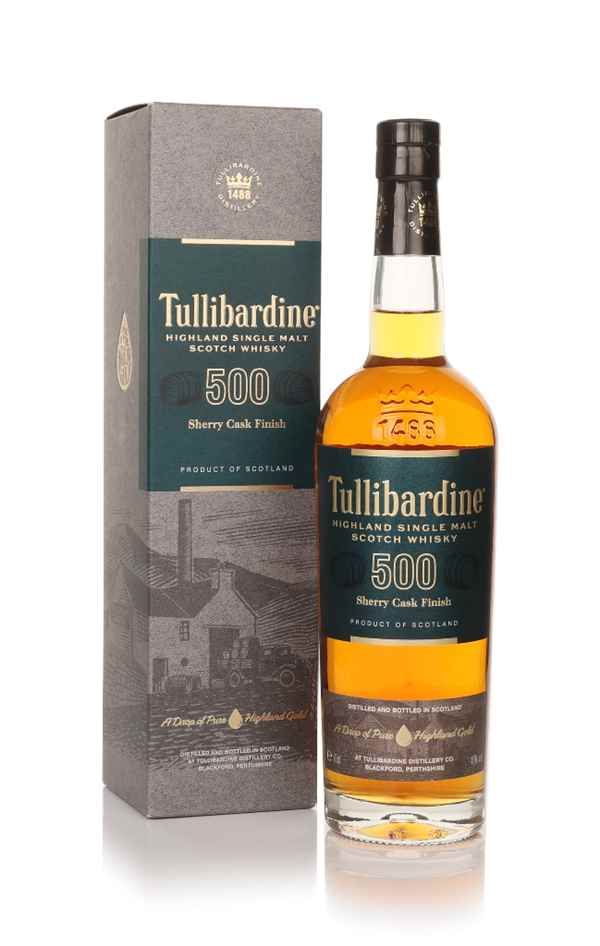
Tullibardine 500 Sherry Cask Finish

Tasting Notes

Nose: Spiced, dark brown sugar, toffee apples
Taste: Cooked fruit, cinnamon, manuka honey, Dates, hints of allspice
Finish: Long, creamy finish, butterscotch, ground almonds.

Purchase Links

Tudor house Liquor


Day 9 — Loch lomond 18

Day 9. Today we got ourselves a old favourite. Loch Lomon is one of those distilleries that no one has bad stuff to say about. As such today is a nice relaxing tram that should be easy to drink but proably very little to say about, That said I look forward to the discussion onver on the #advent-calendar channel in slack

Whisky

Country: Scotland

Age: 18 years

ABV: 46%

Story

Image

The original distillery held a set of pot stills with rectifying plates in their necks (also known as Lomond stills), allowing different flavour streams to be produced. Expansion in 1990 saw a second pair of the same design being installed, before the distillery installed two continuous stills three years later in which to make its own grain whisky. Two ‘traditional’ swan neck pot stills were added in 1998, before an additional continuous still, set up to produce grain whisky from a 100% malted barley mash, was installed in 2007. With the recent addition of two more Lomond stills, Loch Lomond has the capability to produce 11 different distillates for its whisky brands (not including the spirit coming from Glen Scotia). Wine yeasts have also been used to help create different flavours. In many ways it is more akin to a Japanese approach to distilling than a Scottish one.

As well as the High Commisisoner blend, Loch Lomond has produced a range of single malt brands, including Inchmurrin, Inchmoan, Inchfad, Old Rosdhu, Croftengea and Craiglodge. While all have been available as official and independent bottlings at one time or another, only a handful continue to be bottled as part of the distillery’s current range.

History

A product of the 1960s distillery building boom, Loch Lomond was built in ’66 by a joint partnership between Duncan Thomas, the American owner of [now demolished] Littlemill, and Chicago-based Barton Brands. The American firm took full control in 1971, but closed it in 1984 when that boom turned to bust. It passed into the hands of Inver House the year after, before they flipped it to Glen Catrine Bonded Warehouse Ltd in 1986. The firm added Glen Scotia to its portfolio in 1994.

Glen Catrine was the bottling and ageing arm of Bulloch & Co, a well-established blending and retail firm which owned the High Commissioner brand as well as, in time, Glen’s Vodka. Under Glen Catrine’s ownership, Loch Lomond grew to become the most flexible – and arguably the most innovative – distillery in Scotland. Its specialisation in the private label and export business however meant that its operations were never widely reported, or understood.

The firm was sold in 2014 for an undisclosed sum (believed to be in the tens of millions) to private equity firm Exponent whose new distilling division, Loch Lomond Group, is headed by former Diageo executives.

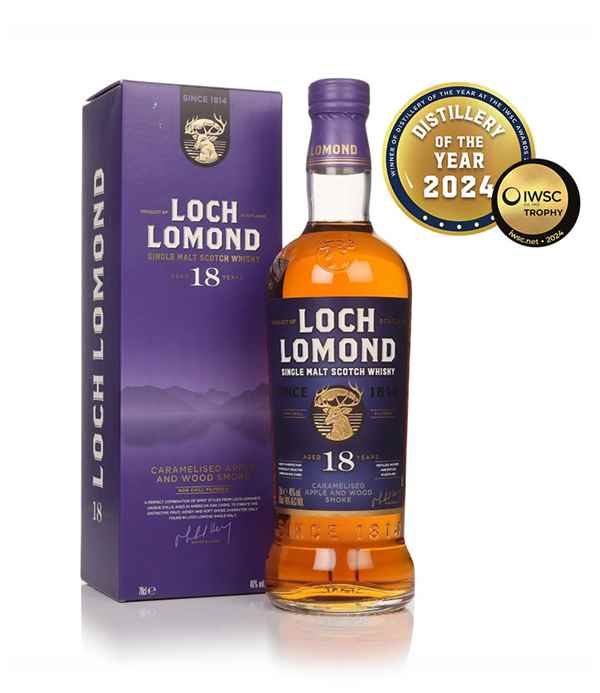
Loch Lomond 18 Year Old

Tasting Notes

Nose: Old oak furniture, tobacco, honey’d cereal
Taste: Nutty brown bread, blackcurrant jam, Slight smokiness
Finish: Lingering peat

Purchase Links


Day 8 — Yeun Elez – Jobic

Welcome to day 8 after a banger yesterday lets try something a bit experimental. Todays whisky is from France and althouth they dont have an amazing track record they do also make some super tasty stuff see Day 23 — Michel Couvreur Intravagan’za from 3 years back witch was just so dam good. So as to not colour your perceptions lets crack today’s open and see what we got

Whisky

Country: France

Age: NAS

ABV: 46%

Story

In Brittany, cousin to Ireland and Scotland, where the Celtic soul continues to thrive,  whisky has found a coastal heathland environment perfect for ageing under the best possible conditions. The sea, wind and rain have forged its character that is second to none.  Two copper stills for a traditional double distillation, an ageing cellar enabling different types of casks to thoroughly mature the products and a cellar master passionate about obtaining the right aromatic balance are all elements that make Armorik Whiskies great.

Located in Lannion, Brittany, the distillery Warenghem has been making high quality liqueurs and spirits for over 100 years. In 1900, Leon Warenghem created his first product, the Elixir d’Armorique, a distillate of 35 plants, which won awards at international exhibitions in 1902. Since then, from one generation to the next, the distillery has created a small range of unusual fruit and plant based liqueurs, honey liqueurs, apple brandy, beers and whiskies. 25 years ago, Warenghem was the first and only distillery to ever produce double distilled whisky in France and today it remains the most renowned.

Inheriting a century-old craftsmanship, the character of the Warenghem distillery is forged by the expertise and passion of the men and women who have transmitted their know-how from year to year. Alcohol and spirit production is thus raised to an art form.

History

The Warenghem family has been living here in Lannion since the end of the 19th century. Léon Warenghem founded the distillery in the city centre. It soon became renowned for a spirit flavoured with 35 herbs, the “Elixir d’Armorique”, which is still being produced today. This herbal Liqueur is nowadays rounded off with Whisky beside honey. Various fruit brandies and Liqueurs were soon added to the broad range of Warenghem Distillery, which was taken over by the son, Henri, in 1919.
In 1967 Yves Leizour became shareholder and manager of the Warenghem family company, which belonged to Paul-Henri in the third generation. The distillery relocated to the outskirts and expanded its range continuously.
In 1983 the son of Yves Leizour, Gilles Leizour, a trained chemist, took over management of the family company. He’s credited for developing Chouchen Melmor, the famous Breton mead aquavit.
With the development of the first Breton Whisky Gilles entered unchartered territory. He got his knowledge and inspiration from travels to Scottish colleagues. In 1987 the first Blended Whisky was released; in 1988 the first Armorik Single Malt Whisky followed. After its success in France, Warenghem Distillery started international distribution in 2010 and is now a successful actor on the international Whisky scene. David Roussier is now the executive officer of the Warenghem Company, which is still family-owned with Gilles Leizour at the head.
Warenghem contributed decisively to the development and establishment of the protected designation of origin ‘Whisky Breton’.

Storage

The new make is diluted to 63% abv before it is filled into the casks. Warenghem uses Bourbon and Sherry casks, but also fresh casks made from French oak from the forests of Cranou and Brocéliande. With Jean Baptiste Le Floc’h in Douarnenez, there’s only one cooper left in Brittany. The forests are protected so you need to cooperate closely with Office National des Forêts (ONF) if you want to use this wood.

The angels’ share, the yearly loss through evaporation, is 3.5% in Lannion. That’s a bit higher than in Scotland due to the slightly milder climate, and the Whisky matures a bit faster.

Tasting Notes

Nose: hints of brine, salt, peat, grass, and sea spray.
Taste: peat, honeysuckle, lemon, camphor, grapes, and rhubarb
Finish: Medium length, gently drying, medicinal note, lingering clove spice.

Purchase Links

BC Liquor

Day 7 — Balblair 91

Welcome to day 7. We got a chunky boy for you and if you managed to get dividers pretty sure this one will probably wreck your box but it will be worth it as today’s offering is packed full of flavour . With that lest dig in

Whisky

Country: Scotland

Age: 27 years

ABV: 46%

Story

ImageThe aim here is to produce a richly fruity new make character, meaning clear worts, long fermentation in wooden washbacks before distillation in small, stumpy stills. This produces a sulphury/meaty note to the new make. In time this does two things: the sulphur lifts to show the delicate fruits behind, while the meatiness changes to add sweet toffee notes and, after extended ageing, a notable spiciness. Like most sulphury sites, time is required for this to happen.

History

The first Balblair distillery was built by the Ross family near Edderton in 1790, but in 1872 production was shifted to a new site next to the (then new) railway line which linked Wick to Inverness. The Ross family ran the site for its first 100 years, before Alexander Cowan took charge, but like so many distilleries it suffered at the start of the 20th century and was closed in 1911, not reopening until after WWII when Churchill set out his edict that whisky needed to be made, and sold to the US.

Robert ‘Bertie’ Cumming, the owner of Old Pulteney, bought the silent site and ran it until 1970 when Canadian distiller Hiram Walker took over – before it was absorbed into what became Allied Distillers. The latter firm sold it on to the enterprising Inver House in 1996.

Bottlings had been intermittent – Balblair Elements was released in 2000 – but in 2007, Inver House radically repackaged the single malt and, taking a leaf from Glenrothes’ book, began bottling it in ’vintage’ releases. From being a pretty much unknown malt, the new look and the quality of the liquid were both revelatory.

In 2013 Balblair acted as the distillery where the (fictitious) only extant cask of Malt Mill was auctioned in Ken Loach’s whisky caper ‘The Angel’s Share’.

Tasting Notes

Nose: Rich citrus fruits, toffee, chocolate, juicy apricots
Taste: Rich creamy chocolate, stewed apples, pears
Finish: Christmas pudding, vanilla sauce

Purchase Links


Day 6 — Hirsch – The Horizon

Welcome to day 6. Today we have another bourbon but the flavours on this one are a bit unique due to its high rye content. All in all a very fun and interesting whisky. Lets dig in

Whisky

Country: USA

Age: 5 ish years

ABV: 40%

Story

In 1974, when A. H. HIRSCH first imagined his now legendary bourbon, he set the gold standard for thoughtful American whiskey. Today, HIRSCH continues to pursue whiskey as an explorer might consider uncharted territory. We believe the world is full of possibility, there’s always room for discovery, and craft is best balanced with experimentation. With obsessively discerning selections, HIRSCH continues to blaze trails for the adventurous.
About

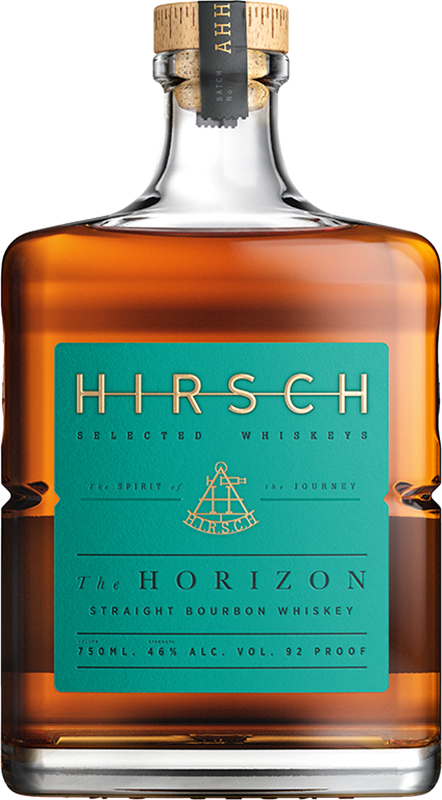
HIRSCH’S newest offering, The HORIZON, honors our forward-looking nature: steadfast, determined, moving onward at a brisk pace, forever in search of the next adventure. The HORIZON isn’t an end result, a destination on a map; it’s something we spend our lives in search of.

The HORIZON combines two straight bourbons distilled in Lawrenceberg, Indiana: 94% of the blend is distilled from a traditional mash bill and aged a minimum of 4 years. The remaining 6% is distilled from a “high rye” mash aged 6 years for added complexity. Bottled at 92 proof, The HORIZON is crafted to be enjoyed neat or on the rocks.

Tasting Notes

Nose: black licorice, shoe polish, butterscotch, fresh leather. hints of bubblegum, lavender
Taste: cherry, cranberry sauce, cinnamon red-hots
Finish: touch of licorice, Slightly bitter barrel char, tobacco, assorted spice cabinet

Purchase Links

BC Liquor