Day 5 — Compass Box KWM 30th Anniversary Blend

Welcome to day 5. Yet another hit but this time a blender how doesn’t love Compass Box? for a blender its rare to have hit after hit and at such affordable pricing and I am sure you will agree this one is also a banger. Unfortunately this is a special one so unless you have a way to get a bottle you probably wont taste its like again but there will always be another one around the corner so lets think positive and dig into this dram

Whisky

Country: Scotland

Age: NAS

ABV: 46%
ImageProducer Description (From the back label of the bottle!):

“The city and the wilderness: two compelling spaces for the imagination to wander around. And few spots combine the appeal of both like Calgary in Alberta, Canada. Here you can find metropolitan comforts, but with something of a Wild West mentality. We have chosen to reflect this dualism through the whisky you hold in your hand, created with Andrew Ferguson of Kensington Wine Market to celebrate the store’s 30th Anniversary.

“Pour a glass and experience a whole basket of ripe peaches and golden apples from the farmers’ market, flavours delivered by single malts from the Mortlach and Teaninich distilleries, aged in active American oak barrels. They duke it out with the whiskies from the Caol Ila and Ardbeg distilleries, single malts from Scotland’s wild west coast. Like a ranger from the mountains, they stride into town with the scent of campfire on their clothes.

“Lush and fruity; complex and smoky – the city skyline and the Rocky mountains brought together in one whisky. Whether or not you are able to beat a path to Calgary in 2022, we hope you will join us in toasting Kensington Wine Market and 30 years committed to bringing delicious wines and spirits to Canada.

“John Glaser, Founder & Whiskymaker, Compass Box”

The Full Recipe

  1. 37%* 20 year old Caol Ila from refill ex-Bourbon barrel
  2. 30%* 20 year old Teaninich from first fill ex-Bourbon barrel
  3. 23%* 19 year old Mortlach from re-charred ex-Bourbon barrel
  4. 10%* 17 year old Ardbeg from re-charred ex-Bourbon barrel

*Funny story about the recipe for this whisky, it has a margin of error… At the time of blending, one of the necessary components could not be added in precisely the right volume, though how much it was short was not entirely clear. This necessitated a bit of improvisation by Whisky Maker James Saxon to tweak the profile back on course. So while there is no doubt about the quality of this whisky, we can’t be 100% confident of the precise volume of each of the four components in the blend!

Compass Box KWM 30th Anniversary Blend

Tasting Notes

Nose: oceanside campfire the next morning; malt; nail polish, old apples, hay?
Taste: smokey grain and wood, someone shouting the names of fruit, smoke, cheap smokies
Finish: sea salt, memories of smoked fish skin; onion powder, basic whisky(TM)

Purchase Links


Day 4 — Teeling Armonac

Day 4. Well seams like a hit list of my favourites to start this calendar out. Not only do we love Teeling but a good dram or Armonac is also high on our lists of go to’s then to top it off a cask strength so you can choose your preferred water level. c’est magnifique!! We hope you enjoy this dram as much as we do.

Whisky

Country: Ireland

Age: 15 years

ABV: 58.4%

Story

John Teeling is probably the most influential figure in the modern Irish whiskey industry. In 1987 he bought a potato ethanol plant off the Irish government converting it into what is now the Cooley Distillery. When it opened in 1989, it became just the second operational whiskey distillery in the Irish Republic. Including Bushmills in Northern Ireland, it was one of only three distilleries on the Emerald Isle. The Irish whiskey industry had hit rock bottom a few decades earlier, having suffered a precipitous fall from its perch as the most respected producer in the world at the end of the 19th Century. John Teeling saw and opportunity and he took it. In turn he sowed the seeds of the explosion in Irish Distilling taking place today.

The Teeling family’s connection with whiskey making goes to at least the 1780s. Walter Teeling established a distillery in the Liberties area of Dublin in 1782 on Marrowbone Lane. Dublin was an epicenter for distilling in the 19th century, with no fewer than 37 operating distilleries. The Liberties was known as the Golden Triangle. The Teeling Distillery was sold to William Jameson & Co., a distant relation to John Jameson, who had their own distillery also on Marrowbone lane. The Marrowbone Lane Distillery was one of Dublin’s big 4, it covered 16 acres and had more than 200 employees.

The turn of the 20th Century and its first couple of decades were not kind to the Irish whiskey industry. The Irish were stubbornly traditional, and didn’t adopt some of the new technologies and techniques that their Scottish neighbours did. The Irish industry was already in rapid decline when the War or Independence and Civil War brought it to its knees. Prohibition in the United States was the straw that finally broke its back. Marrowbone Lane Distillery closed in 1923. In 1966 Ireland’s three remaining distilleries joined forces to form Irish Distillers, and moved production to the massive new Midleton Distillery in Cork.

John Teeling’s Cooley Distillery was a breath fresh air to an industry where almost every single Irish whiskey brand was coming from just one distillery, Midleton. Cooley opened with both column and pot stills. Notably for its single malts Teeling opted to double only distill his whisky like the Scots, instead of the more traditional triple distillation historically favoured by the Irish whiskey industry. Teeling believed the triple distillation removed too much of the flavour. The Cooley distillery and its brand made quite a name for themselves, and in 2011 the distillery was purchased by American whiskey giant Beam Inc. Beam Inc. was in turn purchase by Suntory of Japan in 2014, becoming the World’s third largest whisk(e)y company.

John Teeling & his Sons left Cooley with not just the €71 million Beam paid to acquire the distillery, but also a significant proportion of the maturing whiskey

stocks. Jack Teeling, John’s son, used the 16,000 casks acquired from the sale to start Teeling Whiskey in 2012, bottling whiskey under the family name for the first time in over a century. Jack was joined a couple years later by his brother Stephen. Together the current generation of Teelings has gone on to found the Teeling Distillery in Dublin in 2015. Located in Market Square, not far from the original distillery on Marrowbone Lane, the new Teeling Distillery is first to be built in Dublin in 125 years. As with Scotch and Canadian whisky, the spirit must mature at least 3 years in oak before it can be called Irish Whiskey. The new distillery’s first official whiskey, distilled in Dublin, just came of age late last year! The Teeling family’s place in the pantheon of Irish Distillers has never felt more secure.

The new Distillery is walking distance from central Dublin, and has a wonderful visitor center. It will still be a few years until the whiskey distilled in the heart of Dublin is of sufficient age and quantity to be regularly bottled and exported, though you may find some at the distillery. In the meantime the Teeling family’s legacy stock will continue to grow the brand’s renown around the world. The Teeling Single Grain ($67) watered in California red wine barrels is a lovely entry point to the range. Soft, fruity and elegant. The Teeling Single Malt ($72), married from a combination of 5 different cask types, is round, full bodied and complex. The Teeling Small Batch Blend ($54), finished in ex-Rum barrels is amazing value. And if you are really lucky you might stumble across the odd independent bottling of “mystery Irish single malt” from independent bottlers like Cadenheads or the more obscure like Sansibar, The Whisky Agency and Maltbarn. These whiskies are almost all Teeling stock distilled at Cooley, and bottled under different labels. They are spectacular!

Teeling 15 Year KWM Armagnac Cask 16570

Tasting Notes

Nose: green apples, biscuits, apple-pie spices; apple, lumber
Taste: herbs, biscuits, grains, dry grass
Finish: white pepper, jalapeno jelly, cinnamon

Purchase Links


Day 3 — Jura winter

Welcome to day 3. Not sure why we put this whisky here usually we space it out a bit more but here we are. Today’s offering is the second dram form the BCL premium releases. don’t know about you but I love Jura they just don’t seam to get enough recognition. That said we also don’t add them to our calendar much either so i guess we don’t help the cause. All that said we did find a bit of peat in this one and it didn’t totally ruin it for us so enough of this little blurb and lets tuck in we will be curious to hear what you think.

Whisky

Country: Scotland

Age: NAS

ABV: 40%

Story

The Isle of Jura’s core official range is made up of four bottlings of Jura: Origin 10 year old, Duirach’s Own 16 year old, Superstition, and Prophecy. All of the bottlings vary in flavor and age: Prophecy is young and quite heavily peated, while Duriach’s Own is not and has a mature character. The Superstition contains a mixture of unpeated as well as peated malts. The 10 years old is the well known standard and was the only available malt in former times. The distillery also has several other bottlings. The Turas-Mara, Elixier 12 years old, 21 years old. Very famous was a Jura 1984 Vintage bottling, which celebrated the the novel Nineteen Eighty-Four by George Orwell which he wrote on the island from 1946 to 1949. Finally there had been an Archive Bottlings Range, which features three ‘Boutique Barrels‘ bottlings from 1993, 1995 and 1999.

In something of a novelty situation, the official bottling seriously outnumbers independent bottlings from the Isle of Jura. There have been a few performed by such bottlers as Douglas Laing and Hunter Laing, which vary in ages and vintages, but the official collection provides a far thorough selection.

History

Jura is a very special place – it’s probably the only island in the world where Whisky barrels outnumber the human population. The Isle of Jura distillery sits in the island’s only town, Craighead. The distillery has had a two-phase history, much like many other distilleries that have undergone numerous openings and closings. Charles Mackinlay & Company built the modern-day distillery in 1960, with the first distilling taking place in 1963. However, there was a distillery at the site that dramatically pre-dates the modern facility.

In 1831, William Abercrombie obtained the first license for the Isle of Jura DistilleryProduction launched soon afterwards and was met with great success. In 1853, the distillery changed hands, with Norman Buchanan from Glasgow taking over the lease. Just over a decade later, in 1867, Buchanan filed for bankruptcy, and J. & K. Orr snatched the distillery’s up for grabs ownership. In 1876 the license was transferred again, this time to James Ferguson and Sons. In 1901, the Ferguson family reportedly fell into a conflict with the then Laird of Jura, Laird Colin Campbell, which resulted in them closing the distillery and dismantling and selling the equipment.

Following this, Isle of Jura lay silent for many years, until the equipment was reawakened in 1960, when Charles Mackinlay & Company embarked on a reconstruction and extension of the distillery. Just as the distillery reconstruction and expansion launched, the newly formed Scottish & Newcastle Breweries obtained Charles Mackinlay & Company, but decided to go ahead with the redevelopment of the distillery anyway. In 1962, Scottish & Newcastle Breweries formed Mackinlay-McPherson for the operation of Isle of Jura. In 1963, for the first time in over six decades, the first distilling occurred at the Isle of Jura distillery.

In 1978, the number of stills was doubled from two to four, and then in 1985 Invergordon distillers, through a corporate merger, acquired the distillery. The distillery swapped hands again in 1993, when the long time competitor Whyte & Mackay took over Invergordon distillers. Whyte & Mackay maintained direct control of the distillery until 2007, when United Spirits from India bought Whyte & Mackay. Since it’s re-opening, the distillery has continued to go from strength to strength, continuing to expand its official bottlings and opening an award-winning visitor’s centre.

Tasting Notes

Nose: Citrus fruits, caramel latte, sultanas, a hint of banana, Barbecue flavour crisps. Currants
Taste: Coffee, maple syrup, apple pie, spicy mulled wine
Finish: Vanilla, Cinnamon, cakey spice,

Purchase Links

BC Liquor

Day 2 — Stauning smoke

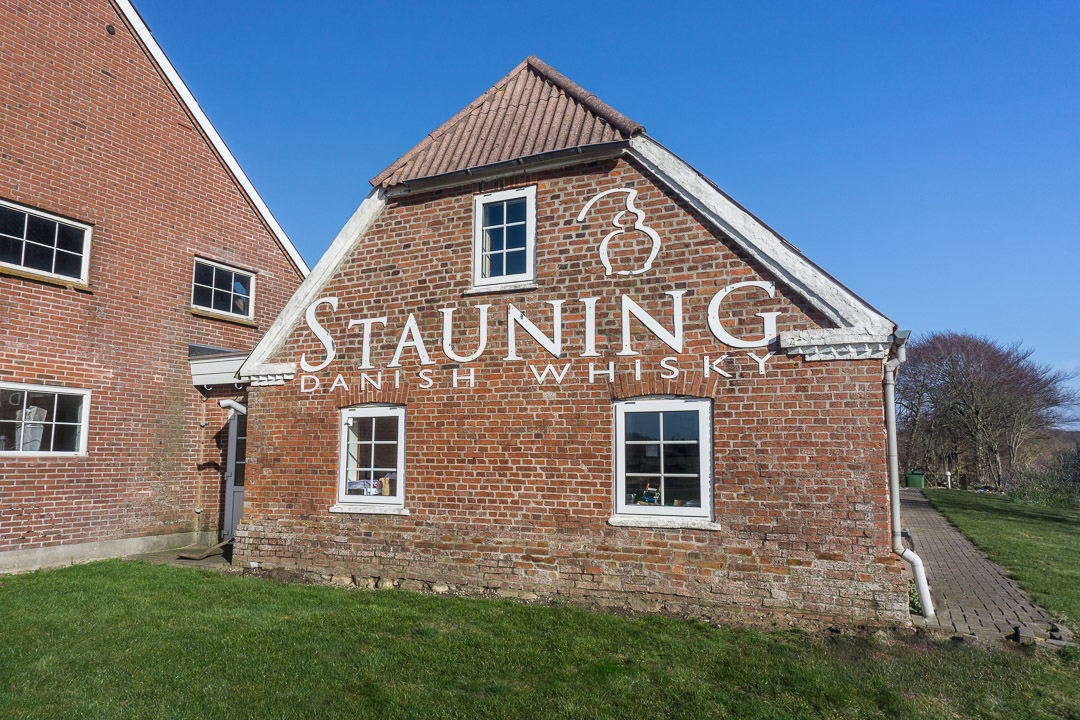
Welcome to day 2. Today we have a danish whisky for you. For a distillery opened in 2009 this whisky is quite tasty it probably has something to do with its barrel lineage with I am sure you will agree is quite unique. Todays dram is the first of the whiskys that we managed to collect from the BCL premium release. Well that is enough to get you going lets dig in and enjoy

Whisky

Country: Denmark

Age: Matured for 5-6 years in a mix of 1st Fill bourbon casks, 1st Fill Madeira casks, 1st Fill Jamaica Rum casks and Virgin American Oak casks

ABV: 47%

About

Stauning Whisky is a whisky distillery in Denmark. It is located in the western part of Jutland just south of a small village called Stauning near Skjern. The distillery was founded in May 2005 by nine Danish whisky enthusiasts and is the oldest whisky distillery in the Kingdom of Denmark. The idea was originally to create a whisky resembling the peated whisky produced on the Scottish isle of Islay. The production is done mainly by hand using local grain and water. Everything is produced following the traditional Scottish mStauning Whisky | A Danish Whisky Distilleryethods of whisky production. The preparations started in a building owned by one of the nine founders, formerly used as a private slaughter-house. The building was renovated and official permission obtained.
The first distillation took place in August 2006 and the following months the test production continued with ongoing improvements and streamlining of the process. In the fall of 2006 the nine owners met the whisky expert Jim Murray and presented the new spirit to him for a tasting. Murray was very positive and compared the results to the Ardbeg of the 1970s while recommending the owners to increase production. The chance meeting with Murray became the decision maker for the founders and in 2007 they purchased a small farm and moved the distillery from the private slaughter-house in the village of Stauning, to its current placement approximately 1.5 kilometers south of the village.

In March 2009 production finally restarted. The production was increased to 6-8000 liters of whisky a year, from the 2-400 liters the owners had originally planned for. In March the first grain was malted and in April the distillation started for the first time in the new surroundings. Since then Stauning Whisky has received the prize for the best European rye whisky below seven years in the Whisky magazine awards, and the best European single malt. The distillery has also won critical acclaim in Murray’s “Whisky Bible”, where their Peated 1st Edition received 94 points out of 100. It was described as a “Superstar whisky that give us all a reason to live”.

Tasting Notes

Nose: hay and woody smok, a touch of bright lemon.
Taste: thin, wood smoke, leather, sweet white bread
Finish:

Purchase Links

BC Liquor

Day 1 — Bourbon Dev

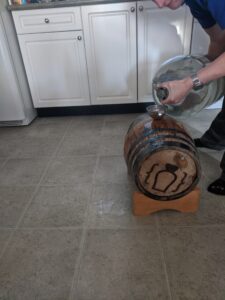
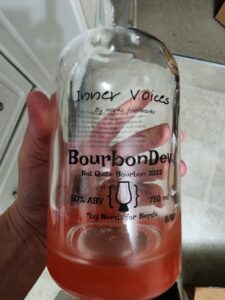
Day 1.  First of all I would like to apologise to most of you. Although I was able to get more boxes in time I was not able to get the deviders so we had to do without. But hey ho we will be set back to normal for next year. Now to the whisky.  As those of you that have been on this journey can attest i like to have some fun in the calendar and especially with day 1 and when we encountered today’s dram we knew it needed to be first. While not strictly a bourbon because of where it made I say nuts to that. This is WhiskyDev first with Bourbon 63% corn, 13% Rye, 24% 2 row so other than the fact that its not made in the USA its technically Bourbon

Whisky

Country: Canada

Age: 3 years

ABV: 46%

Story


Made in a little side distillery in the middle of nowhere. Some people say its a mad monk that makes this shit who actually knows. But it might come from some one we know and we thing the voices are madness


Tasting Notes

Nose: light brown sugar, Caramel, dirty Gym Socks,
Taste: little warm, chocolate, Peppers
Finish:

Purchase Links

Very small batch you would really need to know someone

Day 25 — Your Own Whisky

Welcome to Day 25.  When we are planning for this calendar we always try to make day 25 a unique and special whisky option. What is more special than a group of whisky the you make yourself. Now you take to roll of the master blender and take these unique and individual whiskies and make a blend that is 100% your own.

The kit includes:

  • Five-year-old double distilled — A light, smooth whisky with dried fruits, English toffee, caramel and vanilla on the nose, and toasted grain, rich toffee, vanilla and subtle pepper on the palate. Its body is rounded and smooth, with a finish that is velvety and sweet.
  • Single column distilled whisky — A bold whisky with a lingering spice finish. It has rye bread, dried berries and cherry on the nose, and a palate that is grainy with hints of green apple and pepper.
  • Double distilled wine barrel whisky — Smooth and silky, this whisky has a nose of white plum, rich wood and hazelnut and displays dark ripe fruit, roasted nuts and cinnamon on the palate. The finish is lingering warmth.
  • Double distilled smoky whisky — With hints of fresh cut wood, cinnamon, clove and roasted nuts on the palate, this sample is a rich and complex whisky. The finish is black tea, with walnut, clove, leather and pipe tobacco on the nose.
  • Double distilled spice whisky — A rich, medium-bodied whisky with a finish of dried herbs and spices. The nose offers vanilla, oregano, sage and subtle coffee, with sweet toffee, dried fruit, ginger and sour dough bread on the palate.

Whisky is all about the story and the influence the the master blender had on it can you do the job? We are up to the task see our notes in slack at some point to day we hoe to see yours.

Whisky

Country: Canada

ABV: 40%

Tasting Notes

You tell us

Purchase Links

BC Liquor stores

Day 25 — Storm – King Rattus XXV

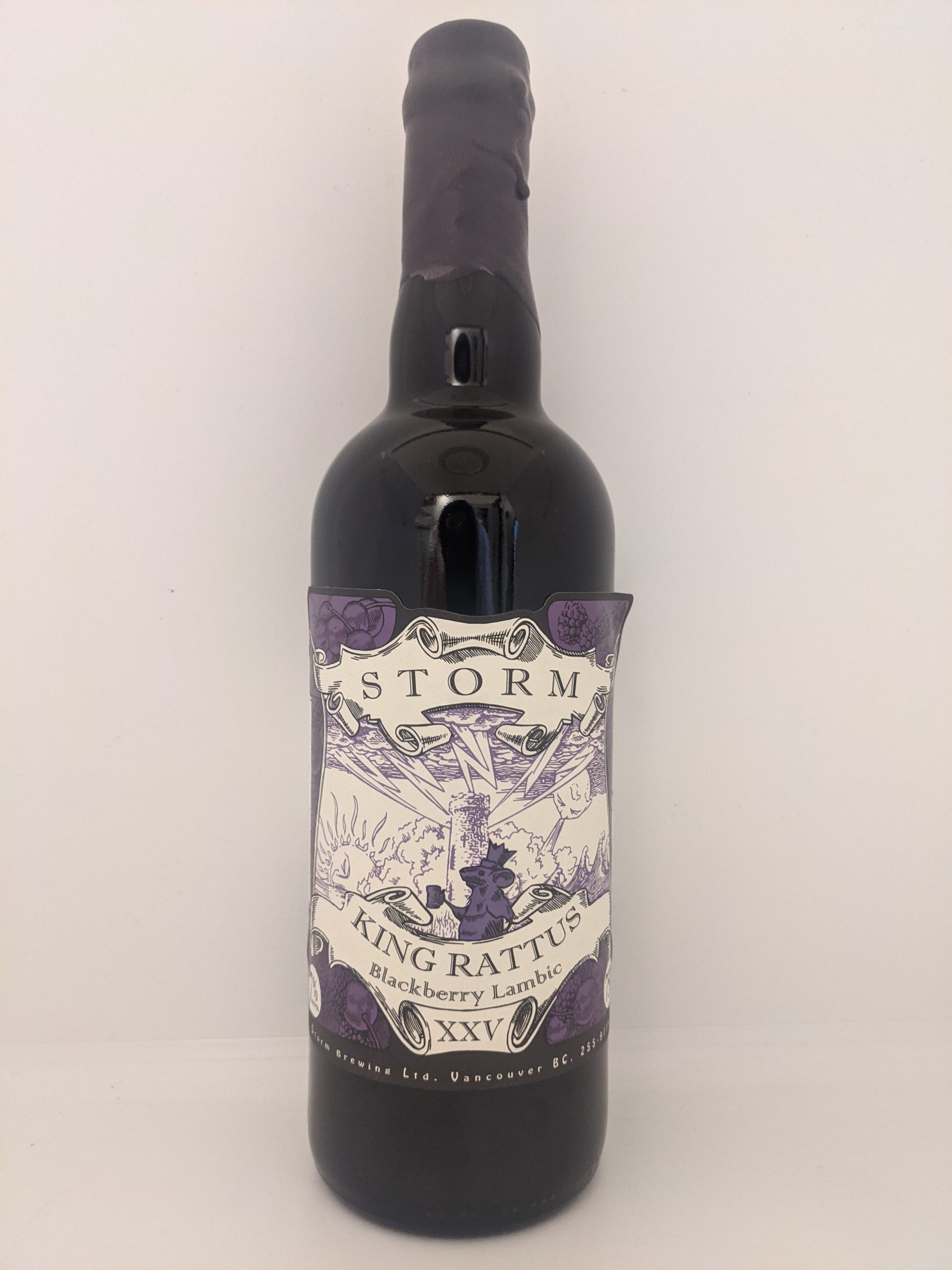
Day 25 has arrived and with great excitement we present to you King Rattus XXV form Storm. We love Storm the are the kind of brewery that we would love to start some day. Making only the best and craziest ideas of beers in years past even their bad beers are great and a experience to be had. If you like this beer good luck getting more this beer was specifically made for their 25th anniversary and obviously made the cut  but in typical storm fashion when its gone its gone.  We hope you enjoyed this journey with us and hope to see you around again next year


Storm Brewing King Rattus XXV Blackberry Lambic - Darby's Liquor Store &  Alcohol DeliveryBrewery: Storm

Name: King Rattus XXV

Untapped: https://untappd.com//b/storm-brewing-british-columbia-king-rattus-blackberry-lambic/3447148

ABV: 10.7

Type: Lambic

Day 24 — SMWS Smokey McSmokeFace

Welcome to day 24. We love some good stupidness. When we saw the name of this whisky we just had to add it to the calendar and share it with you. Turns out its also tasty

Whisky

Country: Scotland

Age: 11 years

ABV: 64.4%

History

The SMWS was founded in 1983 by a group of friends including tax accountant Philip ‘Pip’ Hills, actor Russel Hunter, contractor David Alison, writer W Gordon Smith and architect Ben Tindall.

Hills was already an avid whisky enthusiast and travelled around Scotland visiting distilleries. The group of friends purchased a cask of Glenfarlcas, from which they would occasionally draw bottles and share. In 1983 part of the Vaults buildings in Leith became available as previous occupants J G Thomson had been re-located to Glasgow by owner Tennent Caledonian Breweries.

A membership society was established and the cask of Glenfarclas owned by Hills and his cohorts – a 1975 Sherry cask – was released as the first SMWS bottling – labelled 1.1 – in August 1983. Further bottlings were released monthly thereafter until the Society started to grow in size.

In 1995 Hills resigned as a director and it continued as a private company without him. The following year the SMWS offered its members a private share scheme, and the money raised was re-invested into the acquisition of a second members’ club at Greville Street in London.

In 2004 the SMWS opened its third venue at 28 Queen Street in Edinburgh, and was sold later the same year to Glenmorangie.

In 2008, to mark its 25th anniversary, the SMWS updated its livery quite dramatically for the first time in its history with a change to the bottle shape and slight alterations to the label to include a more extensive tasting note. The bottlers were updated again in 2017 to better highlight the whisky styles.

The SMWS was sold to a private consortium of investors in 2015.


Elliot Silver (@elliot_silver) / TwitterTasting Notes

Nose: Peat smoked honey, an old leather armchair, coal scuttles
Taste: Dark chocolate with chili, vanilla panna cotta and campfire embers
Finish: Smoke

Purchase Links

NA