Day 12 — Michter’s Kentucky Straight Bourbon

Day 12 we are approaching the mid point we try to throw something a little extra special into the mix. This year if you like bourbon we got a top notch one for you heck even if you dont you might enjoy this one.  without much adieu lets enjoy today’s whisky

Whisky

Country: USA

Age: 10 years

ABV: 46%

Story

In 1753, John and Michael Shenk, Swiss Mennonite farmers, began distilling rye whiskey at the site. John Shenk’s son-in-law, Rudolph Meyer, acquired the distillery and another relative, John Kratzer, ran the business from 1827 to about 1860. Several of the buildings date to Kratzer’s tenure. About 1860, Abraham Bomberger, a Pennsylvania Dutchman who had ties to the Shenk family, purchased the distillery from the Kratzer family. With Prohibition the distillery closed in 1919. Ephraim Sechrist bought the distillery in 1920, but did not operate it until 1934 after Prohibition ended, selling it to Louis Forman in 1942. Forman sold the distillery soon after he was drafted for service in World War II, but repurchased it in 1950 after two other owners. One of these owners was Schenley Distilleries.

Forman and his master distiller, Charles Everett Beam, of the well known Kentucky distilling family, designed a premium old-fashioned pot-still mash whiskey that they named “Michter’s Original Sour Mash Whiskey” after Forman’s sons Michael and Peter.

In 1951 Forman distilled the first batch of Michter’s, but by the time it had aged the required six years[clarification needed] a recession prevented him from selling it. The distillery was acquired by Pennco Distillers, while Forman kept the formula and the aged whiskey. Pennco then used the facility for contract distilling until 1978 and Forman distributed Michter’s Whiskey through his liquor wholesaling business. About 1978 Forman and his Lebanon County backers organized Michter’s Distillery, Inc., which bought the distillery at the foreclosure sale of Pennco. Michter’s and the distillery finally closed in 1989 after a bankruptcy filling.

Old distillery, tower, and jug
Today the distillery is severely deteriorated from lack of maintenance and the former owner, a woodworker named Dwight Hostetter, sold it in 2011 to John Barry of JJC Investments.

Since 2004, whiskeys, including bourbon, rye, and a version of the Michter’s Original Sour Mash brand, made in Kentucky, have been sold under the Michter’s label, now owned by Chatham Imports, Inc. The company has built a new distillery in Louisville, also known as the Michter’s Distillery, with spirit production having commenced.

In 2014, Heritage Spirits began using the Bomberger’s Distillery brand name on a small-production blend of straight whiskeys sourced from other distilleries. The blending and bottling of the new brand is done at the Thistle Finch Distillery in Lancaster, Pennsylvania. As of October 2017 the company built and operates a distillery in Lititz, Pennsylvania just 8 miles south of the original location operating under the name of Stoll & Wolfe Distillery. People involved in the new venture include Dick Stoll, the 1974 master distiller of the Michter’s and A. H. Hirsch brands, and local residents Erik and Avianna Wolfe.


Tasting Notes

Nose: coconut cherry chocolate, Lemon werthers originals, Bourbon sweetness, toasty, hint of pineapple juice
Taste: X-tra butter butterscotch cookies, baking spices, hot buttered sweet corn on the cob
Finish: Cherry fishermans friends, Old caramel pudding, cinnamon, clove, vanilla, warm caramels

Purchase Links

Legacy Liquor

Day 11 — Aecht Rauchbier Smoked Spirit

Welcome to Day 11. Today we have not strictly a whisky but a German product in the idea of whisky. They started with a smoked beer and distilled it down to make today’s product. If you with us last year we have a similar product from two brewers but they started with a stout see here and once again its a very unique product. It is products like theses that show us that even with only a couple simple ingredients your options are still near limitless and to top it off they use some barrels from Michel Couvreur whose vision that whisky could be about more than just the distillers touch. Let us all dig in and enjoy

Whisky

Country: Germany

Age: NAS

ABV: 40%

Story

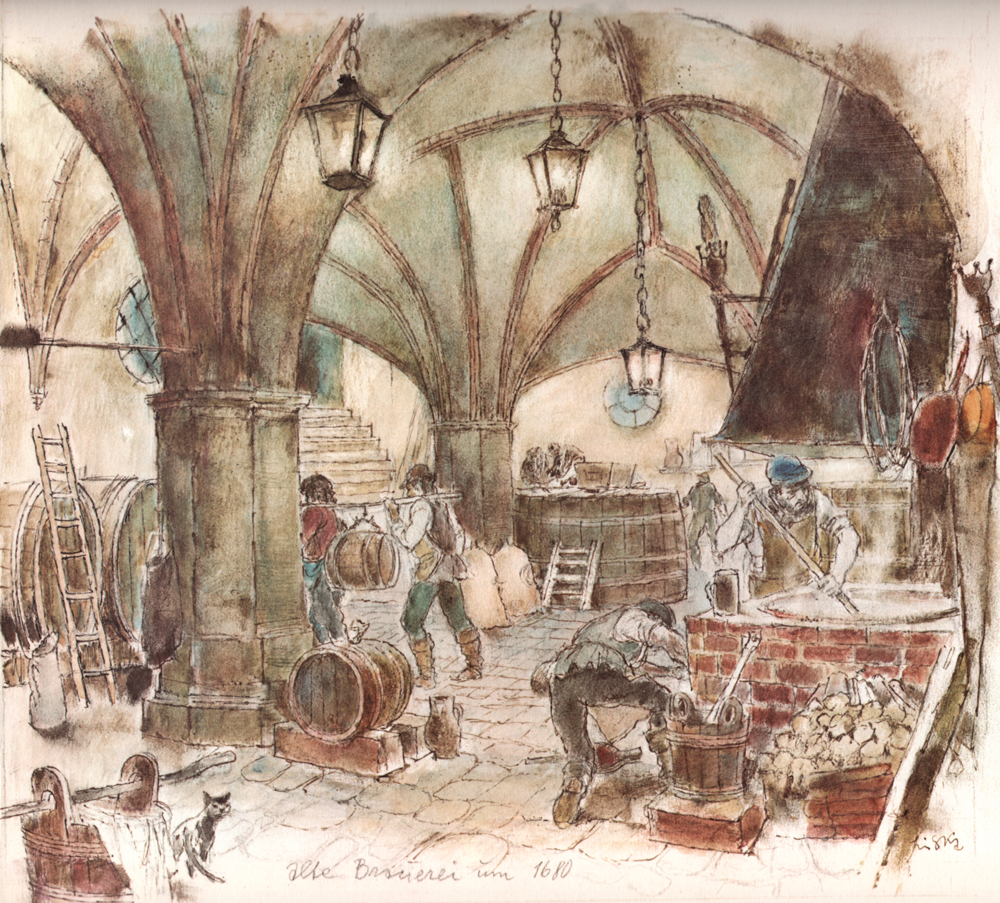
IBrewery around 1680f the former owners of the house in Dominikanerstrasse 6 had had less self-esteem and initiative, today we would know much less about the history of the Schlenkerla Tavern building. As they were constantly building on, buying additional land and – mostly because of that – having trouble with their pious neighbours, the inhabitants of the powerful Dominican monastery, many trial records and land register entries give us important information about the former building BLUE LION belonging to the property UNDER THE STORKS.

The history of the Schlenkerla Tavern building starts together with that of the monastery, which was founded in the 14th century.

In the time between 1405 and 1615 the building was sold a number of times. During the 30 Year’s War (1618-1648) the house was destroyed and rebuilt. The reports before 1678 are scarce, but in that year the brewery was founded and from that time on one can find more and more in the records.

Since 1678 there have been numerous owners of the brewery. Very important of whom was Johann Wolfgang Heller, who took over in mid 18th century. He already owned an old rock-cellar for beer storage up on the hill “Kaulberg” just outside Bamberg. Later on, this storage facility was moved to another hill, called “Stephansberg”, which is nowadays in the middle of town. In the 19th and 20th century the brewery was moved step by step to that location just above the ancient cellars on Stephansberg. In the trade-registry the official name of the brewery is “Heller-Bräu”, even if everybody just calls it Schlenkerla.

The tavern around 1670

1877 was a very important year for the tavern, as Andreas Graser became the new owner. He was a little bit handicapped and moved his arms in a funny way when he walked. In the Franconian dialect this is called “schlenkern”. People soon started to call the place Schlenkerla, and the name has remained until today.

In 1907 his son Michael Graser took over the brewery. More and more guests came to the tavern, and a part of the former monastery was taken on lease from the Bavarian government, which had become the owner during secularization. The paintings in the beautiful gothic-arched sealing of this “Dominikanerklause” were being restored by the Germanic Museum of Nürnberg in the 1920s.

In 1960 this part of the tavern was bought from the state and Michael Graser’s daughter, Elisabeth, and her husband, Jakob Trum, took over the brewery. In 1967 they handed over the brewery and tavern to their son German Trum.


Aecht Smoke Malt Rauchbier Spirit (40% abv) | Craft Cellars | Beer Wine  SpiritsTasting Notes

Nose: Whisky tales, Day old house fire, hints of cherry honey, fermeted cherry, dutch chees rind,
Taste: Candied cherries, Chocolate, expired veggie pickle juice,
Finish: sweet house fire, Lingering honey, dried berries, hints of smoke, morning mouth

Purchase Links

NA

Day 11 — Barnside – Port Guichon

Day 11 we have our first porter and we cant believe it took so long to get to one but its here and its good. Just imagine yourself out at the beach, a roaring campfire, this beer and all of us. Doesn’t that sound amazing? Well we will be there.


Port Guichon Oat Porter (650ml) – Barnside BrewingBrewery: Barnside

Name: Port Guichon

Untapped: https://untappd.com/b/barnside-brewing-co-port-guichon-oat-porter/4038904

ABV: 5.6

Type: Porter

Day 10 — Glen Scotia Double Cask

Day 10 is here and today we bring you some tasty sherryness from Glen Scotia one of the few remaining distilleries in Campbeltown who in 1835 here home to 29 different distilleries. But the cream rises to the top, the fat gets cut, ect. ect. and we have a fine example of Campbeltown pride to help us along our journey. We welcome you to dig in and enjoy

Whisky

Country: Scotland

Age: NAS

ABV: 46%

History

Glen Scotia DistilleryGlen Scotia Distillery was founded in 1832, and has been operating for one hundred and eighty years. Situated in Campbeltown, one of the recognised 5 Whisky producing regions of Scotland, the distillery has a formidable pedigree.
Campbeltown is a small town on the Kintyre Peninsula on the west coast of Scotland. It is affectionately known as the “Wee Toon”, and the Victorian Whisky Capital of the World. At its peak in the 1800s, there were 21 distilleries in this small town with approximately 170 distilleries operating at that time in the UK (129 of those in Scotland) Campbeltown still has 3 operating distilleries: Glen Scotia, Springbank, and Glengyle. These distilleries give a remarkable insight into the history of making whisky in this remote, once prolific, whisky making region of Scotland.

Glen Scotia was formerly known as ‘Scotia’ when it was first founded in 1832 by Stewart & Galbraith and Company. Stewart & Galbraith Co. ran the Distillery for almost 60 years. Notable industrialist Duncan MacCallum purchased the distillery in 1891 and he constructed the large frontage (Malting Floors) which run along High Street.

The distillery was acquired from the trustees of the late Duncan McCallum by the Bloch Brothers in 1933. Production was suspended in 1942 on account of the Second World War but was restarted early in 1945.

Bloch Brothers was acquired by Hiram Walker and Sons of Dumbarton in 1954. In 1955 A. Gilles took ownership and in 1970 this merged with three other companies into Amalgamated Distilled Products (ADP). In 1987, Ian Lockwood, former group marketing director of Amalgamated Distilled Product led a management buyout of part of the business and the sale included the Glen Scotia Distillery, which operated as Gibson International.

In 2014, the distillery was bought by Loch Lomond Group who have invested heavily in the site by developing the brand, increasing capacity, opening warehouses and developing a distillery visitor centre.

Today, the distillery still maintains much of its original design, including the mashtun, the stillroom and the dunnage warehouse which dates back to the 1830s. Glen Scotia distillery currently operates with a staff of just 8 employees: one distillery manager, assistant distillery manager, visitor centre manager and five distillery operators. The visitor centre is open to the public and runs daily distillery tours and tastings, with a Victorian style shop to purchase the whisky, branded merchandise and other goods.


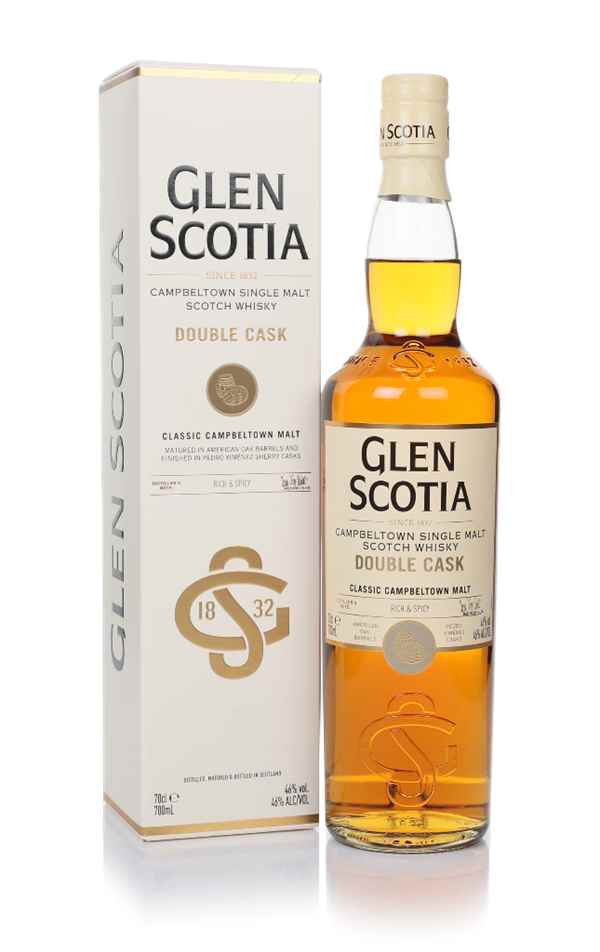
Glen Scotia Double CaskTasting Notes

Nose: chewy vanilla fudge, a hint of salinity,array of oak-y spices including some char.
Taste: fudge, powdered sugar, oily, german brandy
Finish: Sherry

Purchase Links

Tudor house liquor

Day 9 — Speyburn 10

Welcome to day 10. Today we have a light a refreshing number from Speyburn simple and affordable enough to be a daily drinker but also complicated enough to be enjoyed on its own but not so complicated that you need a earlier dram to really get all the flavours out of it. We hope you do enjoy.

Whisky

Country: Scotland

Age: 10 years

ABV: 46%

History

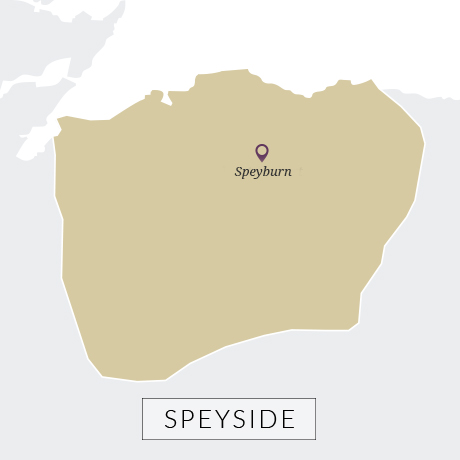
MapLocated in a tight little glen opposite Glen Grant, Speyburn started operation in 1897 and was one of a number of distilleries designed by local architect Charles Doig (the inventor of the distillery pagoda, for most people the defining feature of any plant). The pagoda was originally built to help ventilate the distillery’s kiln. It would have worked hard as Doig also installed the first ‘pneumatic’ (drum) maltings in the Highlands on site, allowing Speyburn’s production not to be tied to the size of its malting floors. These stayed in use at Speyburn until 1968.

Like many distilleries it was absorbed into Scottish Malt Distillers (the malt arm of DCL) but changed hands in 1991 becoming part of Inver House.

In recent years, Speyburn has been marketed as a value for money malt in the US. While this has resulted in large volumes in terms of sales, the price pot hasn’t helped the whisky’s reputation. Strangely for a top-10 malt brand, it is still unknown to most of the world and probably under-appreciated where it’s a best-seller.


Speyburn 10 Year Old Single Malt Scotch Whisky | LCBOTasting Notes

Nose: hints of orange, mandarin and cooking apple. A touch of oak, peppermint and spice.
Taste: soft malt, sweet, toasty barley with liquorice and dried herbs.
Finish: Just a touch of smoke trails

Purchase Links

Tutor house liquor

Day 9 — Siren – Maiden 2018

Day 9 as the order of the calendar has been decided and we begin to type the notes out we would like to acknowledge that we attempt to space out the heavy hitters but sometimes we miss things. Todays beer Hallowed Be Thy Name  probably should have been better placed so it could Fly Like a Eagle. That said if you do not like this beer we will be surprised but if you do not just remember to Die with Your Boots On  . Thankfully Only the Good die Young and we call all Remember Tomorrow is a fresh new beer.


Maiden 2018 - Siren Craft Brew - Barrel Aged Barley Wine, 11%, 375ml B –  Raynville SuperstoreBrewery: Siren

Name: Maiden

Untapped: https://untappd.com/b/siren-craft-brew-maiden-2018/3122145

ABV: 11

Type: Barleywine

Day 8 — Paul John — Peated Select Cask

Day 8 direct from India we have a nice peated offering. If you like this whisky we have good news for you as it is commonly available from most whisky stores even though this whisky is likely quite young we find that it still has a reasonable amount of depth. We do home you enjoy

Whisky

Country: India

Age: NAS

ABV: 55.5%

History

John Distilleries were founded in Bangalore in 1992 by owner and chairman Paul P. John. The first Whisky produced here was marketed as “National Distilleries” and sold on the Indian low-price market. In 1995, the company was renamed John Distilleries and released the Original Choice Blend, which was much more focused on quality and became successful very soon. An argument with Allied Distillers due to the similarity in name with their ‘Officer’s Choice’ brand could only shortly delay the rise of Original choice.

In 2008, John Distilleries bought Chitali Distilleries Limited for approximately 4.3 million US dollars, which enabled them to produce enough neutral alcohol to further increase the production of their Blends.

John Distilleries have meanwhile broadened their range by brandies such as Mont Castle and Roulette, and by Wine and Salute Vodka.


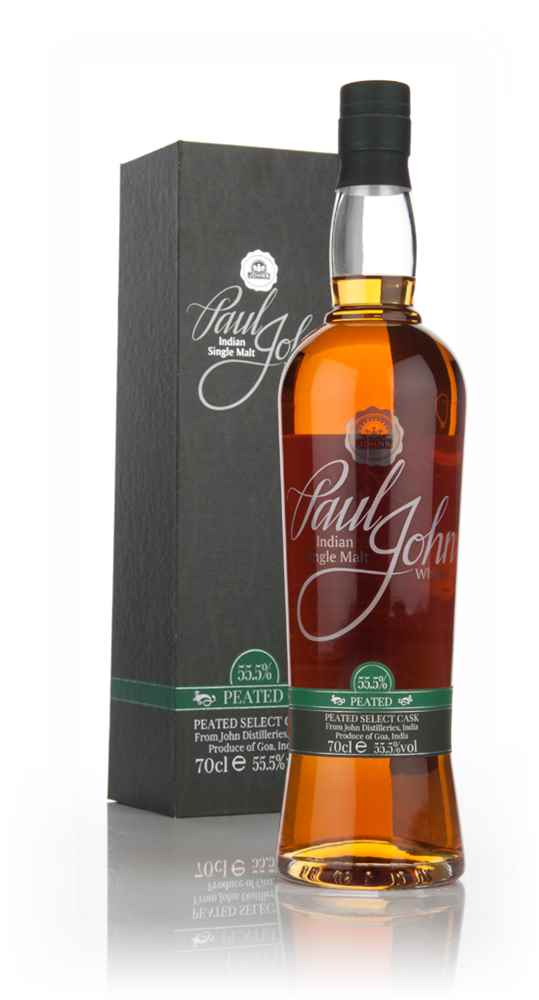
Paul John Peated Select CaskTasting Notes

Nose: Walnut, barley sugar sweets and classic earthy peat notes. A touch of salt.
Taste: More BBQ smoke, more sugar, more slightly damp earthy notes. Hints of tropical fruit and spice.
Finish: Bitter orange peels on the finish.

Purchase Links

Strath Liquor

Tudor house Liquor